Nobel Prize in Literature Winners, Chronological
From Sully Prudhomme in 1901 to the present: the complete chronological roster of Nobel Literature laureates represented in our catalog.
The Nobel Prize in Literature has been given almost every year since 1901, when the Swedish Academy awarded it to the French poet Sully Prudhomme. The prize's early decades now look eccentric, the Academy missed Tolstoy, missed Proust, missed Joyce, missed Kafka, missed Chekhov, missed Woolf, missed Zola, but as the century wore on the selections grew less provincial and the list became, in effect, a rolling canon of world literature.
The laureates below are listed in the order they received the prize. The book shown next to each author's name is the catalog entry most representative of their work, sometimes a single masterpiece, sometimes a collected edition, sometimes the novel that was cited in the Nobel committee's speech. Publication years on the cards are the work's date, not the prize year, which is why a book from 1854 appears under "1902" (Mommsen) and a book from 1815 appears under "1902" differently from one from 2007 appearing under the 2018 prize.
A few observations are worth making. The Nobel has strongly favored novelists and dramatists over poets in the twentieth century. It has oscillated between rewarding safe middlebrow careers and making startling bets on writers the wider world hadn't heard of (Knut Hamsun in 1920, Elias Canetti in 1981, Herta Müller in 2009, Jon Fosse in 2023). The prize's geography has slowly broadened, from its early concentration on Western Europe, to the Americas from mid-century on, to Africa and Asia in the final decades of the twentieth century.
The next name joins this list on 8 October 2026. Who the betting markets favour, and what the Academy's own record says about the kind of writer it reaches for, is set out in our guide to the 2026 prize; the 2026 prize page updates the moment the announcement is made.
For a score-ranked list of the century's best regardless of whether the Academy noticed, see the greatest books of the 20th century.
Buy links are affiliate links. As an Amazon Associate I earn from qualifying purchases. We are also a Bookshop.org affiliate and earn from qualifying purchases there.
Get the Great Books Wall Poster
All 350 books across 4,100 years, organized by era, with a checkbox for each. Print it, frame it, mark your progress. Enter your email and we'll send it over, plus the occasional reading path worth your time. No noise.
Free forever. Unsubscribe anytime. We never share your email.
- 1
 Sully Prudhomme · 1865 AD · France
Prudhomme's Parnassian verse, the first-ever Nobel Prize in Literature, awarded in 1901; an institutional milestone whose literary stock has since diminished.
- 2
 The History of Rome 7/10Theodor Mommsen · 1854 AD · Germany
Mommsen's massive nineteenth-century history and the foundation of modern Roman scholarship, awarded the 1902 Nobel Prize in Literature, the first historian ever so honored.
- 3
 Arne / The Fisher Maiden 5.5/10Bjørnstjerne Bjørnson · 1858 AD · Norway
Bjørnson's early Norwegian novels, the 1903 Nobel laureate and Norway's national poet, whose literary realism paralleled Ibsen's transformation of Scandinavian drama.
- 4
 Mirèio (Mireille) 6.5/10Frédéric Mistral · 1859 AD · France
Mistral's twelve-canto Provençal poem, single-handedly elevated Provençal from a peasant dialect back into a literary language; 1904 Nobel Prize for Literature.
- 5
 The Great Galeoto 5/10José Echegaray · 1881 AD · Spain
Echegaray's 1881 melodrama, the dominant Spanish dramatist of his era; shared the 1904 Nobel Prize with Mistral.
- 6
 Quo Vadis 6.5/10Henryk Sienkiewicz · 1896 AD · Poland (Russian Empire)
Sienkiewicz's 1896 Rome-under-Nero epic, an international bestseller, the foundation of multiple film adaptations, and the book that secured the 1905 Nobel Prize.
- 7
 Hymn to Satan / Poems 5.5/10Giosuè Carducci · 1865 AD · Italy
Carducci's provocative 1865 poem and collected verse, Italy's national poet during unification and the 1906 Nobel Prize in Literature.
- 8
 Rudyard Kipling · 1894 AD · Britain (India)
Kipling's Mowgli tales and his novel of British India, the 1907 Nobel and the most vivid fiction of imperial India ever written, for better and worse.
- 9
 Rudolf Christoph Eucken · 1908 AD · Germany
Eucken's Idealist philosophical works, a rearguard defense of spiritual truth against materialism and positivism; the 1908 Nobel Prize.
- 10
 Selma Lagerlöf · 1906 AD · Sweden
Lagerlöf's 1906 children's classic of Swedish geography, the book that made her in 1909 the first woman ever awarded the Nobel Prize in Literature.
- Free Download
Get the Great Books Wall Poster
All 350 books across 4,100 years, organized by era, with a checkbox for each. Print it, frame it, mark your progress. Enter your email and we'll send it over, plus the occasional reading path worth your time. No noise.
Free forever. Unsubscribe anytime. We never share your email.
- 11
 Selected Novellas 5/10Paul Heyse · 1855 AD · Germany
Heyse's German novellas, the 1910 Nobel Prize for the writer once considered the foremost master of the novella form, though his reputation has since faded.
- 12
 Maurice Maeterlinck · 1893 AD · Belgium
Maeterlinck's symbolist dramas, Pelléas became Debussy's 1902 opera, and the 1911 Nobel honored Maeterlinck's expansion of the theatre into dream and silence.
- 13
 The Weavers / Before Sunrise 6.5/10Gerhart Hauptmann · 1892 AD · Germany
Hauptmann's naturalist plays, the collective working-class uprising brought to the European stage with unprecedented directness; the 1912 Nobel and the founding works of naturalist drama.
- 14
 Poems (Tagore: Gitanjali) 7.5/10Rabindranath Tagore · 1912 AD · India (Bengal)
Tagore's 1912 prose poems, the work that earned him in 1913 the first non-European Nobel Prize in Literature, and the introduction of modern Bengali literature to the world.
- 15
 Jean-Christophe 6.5/10Romain Rolland · 1912 AD · France
Rolland's ten-volume bildungsroman of a German musician in prewar Europe, an impassioned plea for Franco-German reconciliation by the 1915 Nobel laureate.
- 16
 Poems (Selected) 5/10Verner von Heidenstam · 1895 AD · Sweden
Heidenstam's Swedish neo-Romantic verse, national landscape and historical grandeur; the 1916 Nobel Prize in Literature.
- 17
 Karl Adolph Gjellerup · 1889 AD · Denmark
Gjellerup's Danish-German novels exploring Buddhist themes and Scandinavian-German identity, shared the 1917 Nobel Prize with fellow Dane Henrik Pontoppidan.
- 18
 Lucky Per 6/10Henrik Pontoppidan · 1904 AD · Denmark
Pontoppidan's masterwork of Danish realism, a young man's ambition against his puritanical upbringing; the 1917 Nobel Prize in Literature (shared).
- 19
 Olympian Spring 5/10Carl Spitteler · 1910 AD · Switzerland
Spitteler's Swiss-German mythological epic, allegorical cosmos set against the mediocrity of modern life; the 1919 Nobel Prize.
- 20
 Hunger 8/10Knut Hamsun · 1890 AD · Norway
Hamsun's 1890 debut, a starving young writer wandering Christiania, a proto-modernist novel of interior consciousness that Kafka, Hesse, and Mann all credited as formative.
- 21
 Knut Hamsun · 1920 AD · Norway
Hamsun's 1920 Norwegian novel of a peasant settling the wilderness, awarded the 1920 Nobel Prize as the supreme celebration of primal human connection to the land.
- 22
 Anatole France · 1908 AD · France
France's satirical novels, Voltaire's literary heir, the 1921 Nobel laureate, and a Dreyfusard hero who could wound every French institution with a single well-turned sentence.
- 23
 Jacinto Benavente · 1907 AD · Spain
Benavente's 1907 Spanish commedia dell'arte social comedy, masked characters exposing cynicism; the 1922 Nobel Prize and early twentieth-century Spain's leading dramatist.
- 24
 W.B. Yeats · 1908 AD · Ireland
Yeats is the greatest poet in English of the twentieth century, his collected verse spans Celtic myth, Irish rebellion, occult vision, and old age's fierce lyric clarity.
- 25
 The Peasants 6/10Władysław Reymont · 1904 AD · Poland
Reymont's 1904 four-season epic of Polish village life, the 1924 Nobel Prize and the national novel Poland had been waiting for.
- 26
 Pygmalion / Saint Joan 7.5/10George Bernard Shaw · 1913 AD · Britain (Ireland)
Shaw's great comedy (adapted as My Fair Lady) and his historical drama, the most intellectually provocative English-language playwright since Shakespeare.
- 27
 Reeds in the Wind 5.5/10Grazia Deledda · 1913 AD · Italy (Sardinia)
Deledda's 1913 Sardinian novel, verismo and Mediterranean passion in isolated rural communities; the 1926 Nobel Prize and Italy's second female laureate.
- 28
 Creative Evolution 7.5/10Henri Bergson · 1907 AD · France
Bergson's 1907 treatise on the élan vital and lived duration, the most influential French philosopher of his generation, whose theory of time shaped Proust, Woolf, and modernism itself.
- 29
 Sigrid Undset · 1922 AD · Norway
Undset's three-volume historical trilogy of fourteenth-century Norway, the 1928 Nobel-winning novel-cycle and the greatest medieval historical fiction ever written.
- 30
 Buddenbrooks 8.5/10Thomas Mann · 1901 AD · Germany
Mann's 1901 debut traced the decline of a North German merchant family across four generations, the novel that established the modern German novel and launched a Nobel career.
- 31
 The Magic Mountain 8.5/10Thomas Mann · 1924 AD · Germany
Mann's 1924 novel uses a Swiss tuberculosis sanatorium as an allegory for pre-war Europe, humanism versus nihilism, reason versus decay, the old continent thinking its way toward ruin.
- 32
 Sinclair Lewis · 1920 AD · United States
Sinclair Lewis's satires of American provincialism, in 1930 the first American to win the Nobel Prize in Literature; his diagnosis of middle-class conformity defined a genre.
- 33
 Erik Axel Karlfeldt · 1898 AD · Sweden
Karlfeldt's Swedish provincial lyrics, Fridolin's garden, rural folklore, the 1931 Nobel Prize (uniquely, posthumously) for a poet of quiet regional devotion.
- 34
 The Forsyte Saga 6.5/10John Galsworthy · 1922 AD · Britain
Galsworthy's three-generation chronicle of the English upper-middle class, property, passion, and the cost of both; the work that secured the 1932 Nobel Prize.
- 35
 Ivan Bunin · 1930 AD · Russia (émigré)
Bunin's autobiographical novel and his late story collection, in 1933 the first Russian Nobel laureate; lyrical prose that preserved pre-Revolutionary Russia in exile.
- 36
 Luigi Pirandello · 1921 AD · Italy
Pirandello's 1921 meta-theatrical play, characters walking onto a stage demanding their story be finished; the founding work of twentieth-century meta-drama.
- 37
 Eugene O'Neill · 1956 AD · United States
O'Neill's autobiographical tragedy and his Aeschylean trilogy, the peak of American drama, from the only American playwright ever awarded the Nobel.
- 38
 The Thibaults 5.5/10Roger Martin du Gard · 1936 AD · France
Martin du Gard's family saga through the First World War, the 1937 Nobel Prize, wide-ranging realism of a scale that few French novelists have since attempted.
- 39
 The Good Earth 6.5/10Pearl S. Buck · 1931 AD · United States (about China)
Buck's 1931 Pulitzer and 1938 Nobel novel, Chinese peasant life rendered for Western readers; a vital cultural bridge between the United States and pre-revolutionary China.
- 40
 Meek Heritage 5/10Frans Eemil Sillanpää · 1919 AD · Finland
Sillanpää's 1919 Finnish peasant novel, the 1939 Nobel Prize, Finland's sole laureate, and a lyrical naturalism attentive to landscape and hardship.
- 41
 The Long Journey 5.5/10Johannes V. Jensen · 1908 AD · Denmark
Jensen's ambitious novel cycle of human evolution from prehistoric origins to the modern age, the 1944 Nobel Prize and an early anticipation of ecological fiction.
- 42
 Collected Poems 7/10Gabriela Mistral · 1945 AD · Chile
Mistral's lyric poetry, motherhood, grief, the Chilean landscape; in 1945 the first Latin American writer to win the Nobel Prize in Literature.
- 43
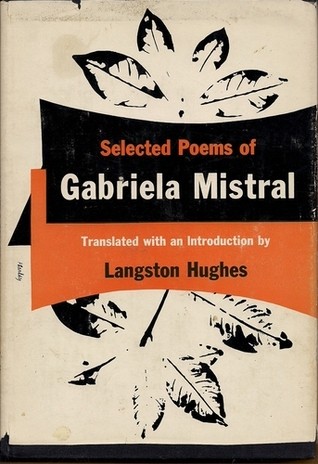 Gabriela Mistral · 1945 AD · Chile
Mistral's selected verse, emotional directness and formal refinement that made her the first Latin American laureate and the voice of women's suffering in twentieth-century Spanish poetry.
- 44
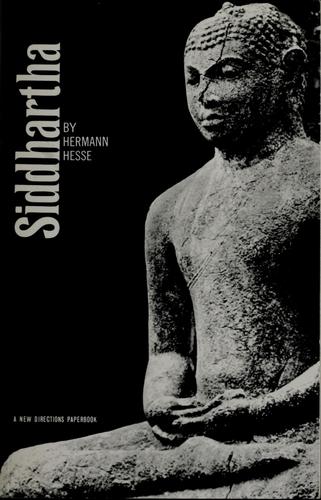 Siddhartha 7.5/10Hermann Hesse · 1922 AD · Germany
Hesse's 1922 parable of a young Brahmin's enlightenment, the most-read Western novel of Eastern philosophy and a countercultural classic of the 1960s.
- 45
 The Counterfeiters 7.5/10André Gide · 1902 AD · France
Gide's 1925 novel-within-a-novel, the first great experimental French novel after Proust, and the book that announced a new era in European fiction.
- 46
 The Waste Land 9/10T.S. Eliot · 1922 AD · Britain (USA)
Eliot's 1922 poem fractured modernist poetry open, 434 lines of collage, allusion, and ruin that became the signature literary artifact of its century.
- 47
 Four Quartets 8.5/10T.S. Eliot · 1943 AD · Britain (USA)
Eliot's 1943 philosophical poem cycle, four meditations on time, history, and redemption, generally considered the supreme achievement in twentieth-century religious poetry.
- 48
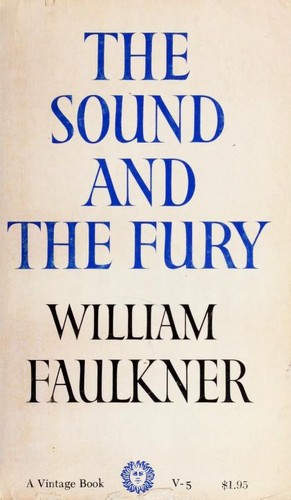 William Faulkner · 1929 AD · United States
Faulkner's Mississippi masterpiece tells one story four times, each from a different consciousness, American modernism's most ambitious formal experiment.
- 49
 Bertrand Russell · 1945 AD · Britain
Russell's 1945 survey, the most widely read history of Western philosophy ever written; combined intellectual rigor with prose so elegant it earned its author the Nobel Prize in Literature.
- 50
 Barabbas 6/10Pär Lagerkvist · 1950 AD · Sweden
Lagerkvist's existentialist biblical novel, the man freed in place of Christ, condemned to search for meaning in the shadow of the crucifixion; the 1951 Nobel.
- 51
 Thérèse Desqueyroux 6/10François Mauriac · 1927 AD · France
Mauriac's 1927 novel of a poisoning attempt in provincial France, Catholic moral theology meeting modern psychological fiction; the 1952 Nobel.
- 52
 Winston Churchill · 1953 AD · Britain
Churchill's six-volume memoir-history, a wartime leader's account of the conflict he shaped, written in prose that earned him the 1953 Nobel Prize in Literature.
- 53
 The Old Man and the Sea 7.5/10Ernest Hemingway · 1952 AD · United States
Hemingway's 1952 novella, the old fisherman and the marlin; the work that won the Pulitzer and helped secure his 1954 Nobel.
- 54
 Independent People 7.5/10Halldór Laxness · 1935 AD · Iceland
Laxness's 1935 Icelandic saga of a stubborn sheep farmer, the greatest modern Icelandic novel and the work that earned Laxness the 1955 Nobel Prize.
- 55
 Juan Ramón Jiménez · 1914 AD · Spain
Jiménez's prose poem and selected lyrics, Andalusian landscape rendered with exquisite restraint; the 1956 Nobel Prize and Spain's greatest modernist poet.
- 56
 The Stranger 8.5/10Albert Camus · 1942 AD · France (Algeria)
Camus's 1942 novel of the absurd, Meursault's refusal to perform the emotions society demands, the most widely read philosophical novel of the twentieth century.
- 57
 The Plague 8/10Albert Camus · 1947 AD · France
Camus's 1947 novel of an epidemic in Algerian Oran, an allegory of moral resistance against suffering, read again urgently during every pandemic since.
- 58
 Doctor Zhivago 8/10Boris Pasternak · 1957 AD · Soviet Union
Pasternak's 1957 novel of a poet-physician through the Russian Revolution, the book he was forced by Soviet authorities to decline the Nobel Prize for; its smuggling out of Russia is a story in itself.
- 59
 Selected Poems 5.5/10Salvatore Quasimodo · 1942 AD · Italy
Quasimodo's hermetic poetry, evolving into wartime Resistance verse, the 1959 Nobel and the Italian hermetic movement's most widely read representative.
- 60
 Anabasis / Selected Poems 6.5/10Saint-John Perse · 1924 AD · France (Guadeloupe)
Saint-John Perse's epic Anabasis and selected lyrics, translated into English by T.S. Eliot, who also championed the book that eventually won the 1960 Nobel.
- 61
 The Bridge on the Drina 7.5/10Ivo Andrić · 1945 AD · Yugoslavia
Andrić's 1945 Bosnian novel, four centuries seen through a single Ottoman bridge; the book that secured the 1961 Nobel and remains the finest novel from the former Yugoslavia.
- 62
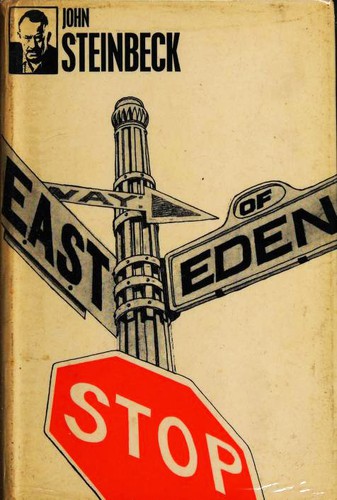 East of Eden 8/10John Steinbeck · 1952 AD · United States
Steinbeck's multigenerational California saga, his most ambitious novel and the one he considered his magnum opus, transposing Cain and Abel onto the Salinas Valley.
- 63
 Collected Poems (Seferis) 6.5/10Giorgos Seferis · 1961 AD · Greece
Seferis's poems of exile and Hellenic landscape, the 1963 Nobel Prize and the first Greek laureate, whose verse distills the Greek sea and the weight of classical memory.
- 64
 Jean-Paul Sartre · 1938 AD · France
Sartre's philosophical treatise and its fictional companion, existence precedes essence, man is condemned to be free, the founding texts of postwar existentialism.
- 65
 And Quiet Flows the Don 6.5/10Mikhail Sholokhov · 1928 AD · Soviet Union
Sholokhov's epic of Don Cossacks through revolution and civil war, the 1965 Nobel and the most widely read Soviet novel of its era, though its authorship has been contested.
- 66
 Shmuel Yosef Agnon · 1945 AD · Israel
Agnon's modern Hebrew fiction, from the Galician shtetl to early Palestine; the 1966 Nobel laureate and the foremost master of the Hebrew literary revival.
- 67
 Nelly Sachs · 1947 AD · Germany/Sweden
Nelly Sachs's Holocaust lyric poetry, a Berlin Jew who fled to Sweden in 1940 and bore witness in German verse; shared the 1966 Nobel with Agnon.
- 68
 Miguel Ángel Asturias · 1946 AD · Guatemala
Asturias's Guatemalan novels, Maya mythology fused with political nightmare; the pioneering works of magical realism that predated García Márquez and won the 1967 Nobel.
- 69
 Snow Country 7/10Yasunari Kawabata · 1948 AD · Japan
Kawabata's 1948 novel, a geisha in a mountain village, aesthetic beauty and impermanence rendered in prose of crystalline precision; the 1968 Nobel and Japan's first laureate.
- 70
 Waiting for Godot 9/10Samuel Beckett · 1952 AD · France (Ireland)
Beckett's 1952 play, two tramps waiting for someone who never arrives, stripped drama to its bones and invented absurdist theatre in a single stage.
- 71
 Aleksandr Solzhenitsyn · 1973 AD · Soviet Union
Solzhenitsyn's three-volume documentary indictment of the Soviet camp system, the book whose publication in 1973 ended Western intellectual sympathy with communism.
- 72
 Canto General 8/10Pablo Neruda · 1950 AD · Chile
Neruda's 1950 epic poem of the Americas, a political and geographical hymn from the Andes to the Caribbean; probably the most ambitious Latin American poem of the twentieth century.
- 73
 Heinrich Böll · 1963 AD · Germany
Böll's postwar German novels, moral conscience against the economic miracle's amnesia; the 1972 Nobel and the novelist West Germany most needed.
- 74
 Patrick White · 1957 AD · Australia
White's novels of Australian landscape and interior life, the 1973 Nobel, still considered the greatest Australian novelist; a visionary prose style that made the continent literary.
- 75
 Return to Ithaca 5/10Eyvind Johnson · 1946 AD · Sweden
Johnson's 1946 working-class reworking of The Odyssey, shared the 1974 Nobel Prize; the Swedish autodidact novelist's most enduring book.
- 76
 Aniara 6/10Harry Martinson · 1956 AD · Sweden
Martinson's 1956 science-fiction epic poem, refugees drifting on a lost spaceship from a devastated Earth; the 1974 Nobel (shared) and the strangest Swedish modernist work.
- 77
 Eugenio Montale · 1975 AD · Italy
Montale's hermetic lyric poetry, the 1975 Nobel and Italy's greatest modern poet, whose Cuttlefish Bones compressed meaning into dense allusive images.
- 78
 Saul Bellow · 1964 AD · United States
Bellow's two masterworks, the Jewish intellectual novel at its pinnacle, and the reason Bellow is still considered the greatest American novelist of the postwar period.
- 79
 Selected Poems (Aleixandre) 5.5/10Vicente Aleixandre · 1944 AD · Spain
Aleixandre's surrealist verse, the 1977 Nobel Prize and the last surviving major voice of Spain's Generation of 1927.
- 80
 Isaac Bashevis Singer · 1962 AD · United States
Singer's Yiddish-language stories and novels, the last master of Yiddish literature and the 1978 Nobel; the vanished Polish-Jewish shtetl rendered with uncanny vividness.
- 81
 Odysseas Elytis · 1979 AD · Greece
Elytis's Aegean poetry, sunlight, sea, Greek landscape rendered in lyric verse; the 1979 Nobel and the twentieth century's greatest Greek lyricist.
- 82
 Collected Poems (Miłosz) 7.5/10Czesław Miłosz · 1980 AD · Poland/USA
Miłosz's collected poems, wartime Poland, Stalinism's corruption of the mind (in The Captive Mind), Californian exile; the 1980 Nobel laureate and the conscience of twentieth-century Polish literature.
- 83
 Elias Canetti · 1935 AD · Austria
Canetti's only novel, a reclusive sinologist destroyed by the irrational crowd, a foretaste of the themes of Crowds and Power for which Canetti won the 1981 Nobel.
- 84
 Gabriel García Márquez · 1967 AD · Colombia
García Márquez's novel of seven generations in a fictional Colombian town, the founding masterpiece of magical realism and the most influential Spanish-language novel of the twentieth century.
- 85
 Gabriel García Márquez · 1985 AD · Colombia
García Márquez's 1985 companion to One Hundred Years of Solitude, a fifty-year unrequited love against the backdrop of a Caribbean port city; the greatest novel about romantic persistence.
- 86
 Lord of the Flies 8/10William Golding · 1954 AD · Britain
Golding's 1954 parable of British schoolboys on a deserted island descending into savagery, the most concentrated twentieth-century argument for the fragility of civilization.
- 87
 Selected Poems (Seifert) 5.5/10Jaroslav Seifert · 1967 AD · Czechoslovakia
Seifert's Czech lyric poetry, from avant-garde exuberance through Nazi occupation and Communist rule; the 1984 Nobel Prize for Czechoslovakia.
- 88
 The Flanders Road 6.5/10Claude Simon · 1960 AD · France
Simon's kaleidoscopic 1960 novel of a cavalry officer's retreat in 1940, a defining work of the French nouveau roman and the basis for Simon's 1985 Nobel.
- 89
 Wole Soyinka · 1965 AD · Nigeria
Soyinka's plays fusing Yoruba ritual with Greek tragic structure, in 1986 the first African Nobel laureate in Literature.
- 90
 Collected Poems (Brodsky) 7.5/10Joseph Brodsky · 1987 AD · USSR/USA
Brodsky's collected poems, the Russian lyric tradition carried into English by an exile; 1987 Nobel laureate, and one of the greatest Russian poets of the late Soviet period.
- 91
 Naguib Mahfouz · 1956 AD · Egypt
Mahfouz's three-volume Cairo family saga, the work that made him in 1988 the first Arabic-language Nobel laureate and the Arab novel's arrival on the world stage.
- 92
 Camilo José Cela · 1942 AD · Spain
Cela's 1989 Nobel, the pioneer of tremendismo, whose unsentimental portrayal of Spanish rural violence and postwar urban life redefined the Spanish novel.
- 93
 Octavio Paz · 1950 AD · Mexico
Paz's 1950 meditation on Mexican identity paired with his luminous lyric poetry, the work of Mexico's greatest poet-intellectual, honored with the Nobel in 1990.
- 94
 Nadine Gordimer · 1979 AD · South Africa
Gordimer's novels of apartheid South Africa, the moral predicaments of white liberal conscience under institutionalized racism; 1991 Nobel laureate.
- 95
 Omeros 7.5/10Derek Walcott · 1990 AD · Saint Lucia
Walcott's 1990 Caribbean reimagining of Homer, Saint Lucian fishermen as Hector and Achilles, postcolonial epic at its peak; the work that sealed Walcott's 1992 Nobel.
- 96
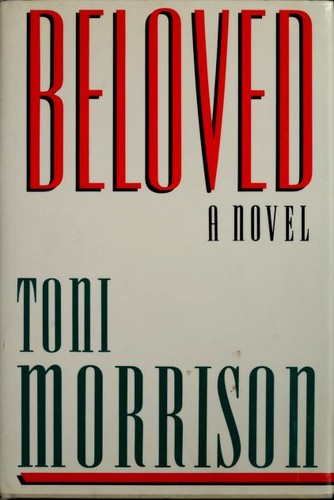 Beloved 8.5/10Toni Morrison · 1987 AD · United States
Morrison's 1987 novel confronts slavery's lasting trauma through the ghost of a child a mother killed to save from bondage, the novel that secured Morrison's Nobel and the American canon's reckoning with its founding wound.
- 97
 A Personal Matter 7/10Kenzaburō Ōe · 1964 AD · Japan
Ōe's autobiographical novel, a father confronting his son's brain damage; the 1994 Nobel laureate's most personal and devastating work.
- 98
 Collected Poems (Heaney) 7.5/10Seamus Heaney · 1995 AD · Ireland
Heaney's collected verse, Irish landscape, history, and vernacular speech rendered with Latin precision; the most widely read English-language poet since Frost and the 1995 Nobel laureate.
- 99
 Wisława Szymborska · 1996 AD · Poland
Szymborska's ironic philosophical lyrics, the 1996 Nobel and the "Mozart of poetry" whose deceptively simple verse carries profound philosophical weight.
- 100
 Dario Fo · 1970 AD · Italy
Fo's political farces, commedia dell'arte and medieval giullare traditions fused with radical leftist satire; the 1997 Nobel and Italy's most inventive postwar dramatist.
- 101
 Blindness 7.5/10José Saramago · 1995 AD · Portugal
Saramago's 1995 novel of an unexplained blindness epidemic, social collapse and the fragility of civilization; the work that secured the 1998 Nobel.
- 102
 The Tin Drum 8/10Günter Grass · 1959 AD · Germany
Grass's 1959 novel, Oskar Matzerath, the boy who refuses to grow, the greatest German novel after 1945 and the masterwork that secured Grass's Nobel.
- 103
 Soul Mountain 6.5/10Gao Xingjian · 1990 AD · China/France
Gao Xingjian's 2000 Nobel-winning novel, the Chinese writer who fled in exile, composed in France, and became China's first Nobel laureate in Literature.
- 104
 A Bend in the River 7.5/10V.S. Naipaul · 1979 AD · Trinidad/Britain
Naipaul's 1979 novel of a newly independent African nation, the most penetrating postcolonial fiction of its decade, from the writer who won the 2001 Nobel.
- 105
 Fatelessness 7/10Imre Kertész · 1975 AD · Hungary
Kertész's Holocaust novel, the camps experienced through a teenager who finds the routine almost ordinary; the 2002 Nobel and the most disquieting account of what Auschwitz felt like from inside.
- 106
 Disgrace 7.5/10J.M. Coetzee · 2003 AD · South Africa
Coetzee's 1999 novel of a disgraced academic in post-apartheid South Africa, shame, atonement, and the new country's unfinished reckoning; secured Coetzee's 2003 Nobel.
- 107
 The Piano Teacher 6.5/10Elfriede Jelinek · 1983 AD · Austria
Jelinek's 1983 novel of Austrian patriarchy and repression, the 2004 Nobel laureate's most widely read fiction, later filmed by Haneke.
- 108
 The Homecoming / Betrayal 7.5/10Harold Pinter · 1965 AD · Britain
Pinter's plays, menace, ellipsis, pauses so precisely weighted "Pinteresque" entered English as an adjective; the most influential postwar British dramatist.
- 109
 My Name Is Red / Snow 7.5/10Orhan Pamuk · 1998 AD · Turkey
Pamuk's novel of sixteenth-century Ottoman miniaturists and his novel of contemporary Turkish fracture, the two works that most defined his 2006 Nobel Prize.
- 110
 The Golden Notebook 7.5/10Doris Lessing · 1962 AD · Britain (Zimbabwe)
Lessing's 1962 feminist classic, the fragmented narrative of Anna Wulf in four color-coded notebooks; the novel that earned Lessing the 2007 Nobel.
- 111
 J.M.G. Le Clézio · 1980 AD · France
Le Clézio's novels of displaced and indigenous peoples, the 2008 Nobel Prize "explorer of humanity beyond and below the reigning civilization."
- 112
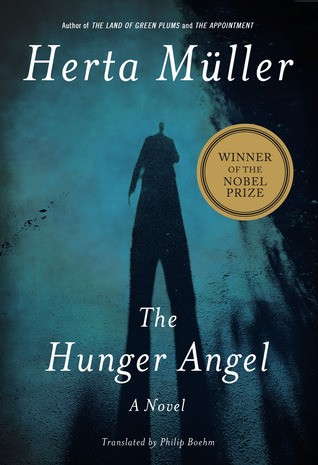 The Hunger Angel 7/10Herta Müller · 2009 AD · Germany (Romania)
Müller's novel of post-war Soviet labor camps, Romanian-German memory rendered in haunted prose; the 2009 Nobel and the most formally refined Holocaust-adjacent novel of its decade.
- 113
 Mario Vargas Llosa · 1981 AD · Peru
Vargas Llosa's 1981 novel of the Canudos rebellion in nineteenth-century Brazil, fanaticism, idealism, and the collision of archaic and modern worlds; Latin American epic political fiction at its peak.
- 114
 Selected Poems (Tranströmer) 6.5/10Tomas Tranströmer · 1954 AD · Sweden
Tranströmer's luminous Swedish lyrics, striking metaphorical precision, Scandinavian landscape turned into epiphany; the 2011 Nobel Prize for Literature.
- 115
 Mo Yan · 1987 AD · China
Mo Yan's hallucinatory novels of rural Shandong, myth and folk tradition and the history of twentieth-century China; the 2012 Nobel and China's first laureate.
- 116
 Selected Stories 7.5/10Alice Munro · 2012 AD · Canada
Munro's selected stories, small-town Ontario rendered with Chekhovian precision; the 2013 Nobel Committee called her "the master of the contemporary short story."
- 117
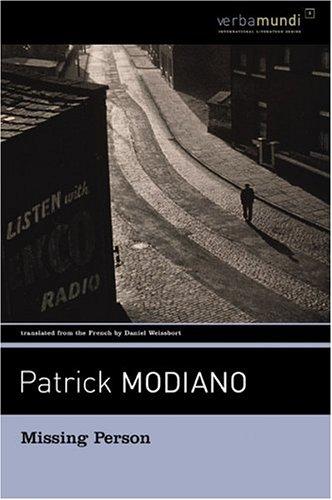 Patrick Modiano · 1978 AD · France
Modiano's novels of Occupation-era Paris, memory, lost identity, vanished lives; the 2014 Nobel Prize for his "art of memory."
- 118
 Secondhand Time 7.5/10Svetlana Alexievich · 2013 AD · Belarus
Alexievich's oral history of Soviet collapse, hundreds of edited testimonies into a choral portrait no single narrator could construct; documentary literature as a new art form, recognized with the 2015 Nobel.
- 119
 The Lyrics: 1961-2012 7.5/10Bob Dylan · 1963 AD · United States
Dylan's collected lyrics, the 2016 Nobel Committee citation honored them as "new poetic expressions within the great American song tradition"; the first time a songwriter was granted the literary prize.
- 120
 Kazuo Ishiguro · 1989 AD · Britain (Japan)
Ishiguro's 1989 Booker winner, a butler's quiet reckoning with a life of misplaced service, and the novel that set Ishiguro on the path to the Nobel.
- 121
 Olga Tokarczuk · 2007 AD · Poland
Tokarczuk's novels, Flights's fragmentary meditation on movement, and The Books of Jacob's panorama of eighteenth-century Eastern European Jewry; 2018 Nobel.
- 122
 Peter Handke · 1970 AD · Austria
Handke's experimental fiction and drama, the Austrian 2019 Nobel laureate (amid controversy) whose work interrogates the relationship between language and perception.
- 123
 Louise Glück · 1992 AD · United States
Glück's selected verse, The Wild Iris as a three-way dialogue between gardener, flowers, and a distant god; the 2020 Nobel and one of the most widely read American poets of her generation.
- 124
 Paradise / Afterlives 6.5/10Abdulrazak Gurnah · 1994 AD · Tanzania/Britain
Gurnah's Zanzibari novels, German colonial rule, Indian Ocean migration, and displacement across East Africa; the 2021 Nobel Prize.
- 125
 The Years 7/10Annie Ernaux · 2008 AD · France
Ernaux's 2008 collective autobiography, postwar French history through the lens of one woman's memory; the 2022 Nobel and a new form Ernaux essentially invented.
- 126
 Septology 7/10Jon Fosse · 2019 AD · Norway
Fosse's seven-volume novel in unbroken minimalist prose, grief, art, and Catholic faith through the consciousness of an aging painter; the 2023 Nobel.
- 127
 The Vegetarian 7/10Han Kang · 2007 AD · South Korea
Han Kang's 2007 novel, a woman's refusal to eat meat triggers escalating family violence; International Booker 2016, Nobel 2024, Korea's first Nobel laureate.
- 128
 Satantango 7.5/10László Krasznahorkai · 1985 AD · Hungary
Krasznahorkai's 1985 novel of apocalyptic decline in a Hungarian collective farm, the spiraling sentences Béla Tarr adapted into his 1994 seven-hour masterpiece.
Get the Great Books Wall Poster
All 350 books across 4,100 years, organized by era, with a checkbox for each. Print it, frame it, mark your progress. Enter your email and we'll send it over, plus the occasional reading path worth your time. No noise.
Free forever. Unsubscribe anytime. We never share your email.