The 25 Greatest Books of the 20th Century
The century that broke literary form, survived two world wars, and produced more masterpieces than any age since the Renaissance.
The twentieth century broke the inherited forms of literature and rebuilt them. The novel, which had reached an apparent peak of perfection in the nineteenth century with Tolstoy and Dostoevsky, was demolished in 1922 by Joyce's Ulysses and reassembled in unrecognizable shape, a stream of consciousness, a structure of allusions, a single day in Dublin made to carry the freight of all of The Odyssey. Proust spent the same years writing the longest novel ever attempted in French. Kafka invented modern alienation. Faulkner, Woolf, and Beckett pushed the form further still, until by mid-century what had been called "the novel" had splintered into a dozen mutually unintelligible practices.
The century also produced the most consequential political writing in modern history. Orwell's 1984 and Animal Farm gave democracies their working vocabulary for resisting totalitarianism. Hannah Arendt diagnosed how totalitarianism arose. Solzhenitsyn documented what it actually felt like to live inside it. Heidegger and Wittgenstein, working from opposite ends of philosophy, dismantled and rebuilt the discipline. The two world wars cast their long shadow over almost every serious book on this list, written either in their immediate aftermath, in their anticipation, or in the long Cold War that followed.
The list below is restricted to books first published between 1900 and 1999. It draws from the 174 twentieth-century works in our catalog and ranks them by Great Books of Mankind score, with chronological order breaking ties. The American century is well represented, Faulkner, Hemingway, Morrison, but so are the great Latin American novelists who emerged in the second half of the century, and the Eastern European witnesses (Solzhenitsyn, Kundera) who wrote at considerable personal cost.
For the canon's deeper backbone, see our 50 greatest books of all time. For the century that taught the twentieth how to write a novel, see the greatest books of the 19th century.
Buy links are affiliate links. As an Amazon Associate I earn from qualifying purchases. We are also a Bookshop.org affiliate and earn from qualifying purchases there.
Get the Great Books Wall Poster
All 350 books across 4,100 years, organized by era, with a checkbox for each. Print it, frame it, mark your progress. Enter your email and we'll send it over, plus the occasional reading path worth your time. No noise.
Free forever. Unsubscribe anytime. We never share your email.
- 1
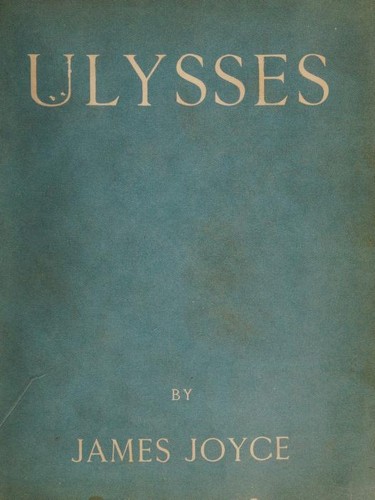 Ulysses 10/10James Joyce · 1922 AD · Ireland
Joyce's eighteen-chapter remake of The Odyssey set in Dublin on a single day in 1904, the most ambitious and most quoted novel of the twentieth century.
- 2
 In Search of Lost Time 9.5/10Marcel Proust · 1913 AD · France
Proust's four-thousand-page novel of memory, time, and Parisian society, the most thorough and exquisite act of self-examination ever set down in prose.
- 3
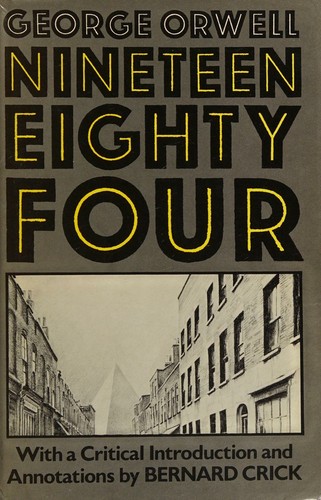 1984 9.5/10George Orwell · 1949 AD · Britain
Orwell's dystopia gave the language Big Brother, doublethink, thoughtcrime, and Newspeak, the most useful political vocabulary the twentieth century produced.
- 4
 Gabriel García Márquez · 1967 AD · Colombia
García Márquez's novel of seven generations in a fictional Colombian town, the founding masterpiece of magical realism and the most influential Spanish-language novel of the twentieth century.
- 5
 W.B. Yeats · 1908 AD · Ireland
Yeats is the greatest poet in English of the twentieth century, his collected verse spans Celtic myth, Irish rebellion, occult vision, and old age's fierce lyric clarity.
- 6
 The Waste Land 9/10T.S. Eliot · 1922 AD · Britain (USA)
Eliot's 1922 poem fractured modernist poetry open, 434 lines of collage, allusion, and ruin that became the signature literary artifact of its century.
- 7
 Being and Time 9/10Martin Heidegger · 1927 AD · Germany
Heidegger's 1927 treatise rebuilt continental philosophy from the ground up, Sartre, Arendt, Gadamer, Derrida, and Foucault all wrote in its long shadow.
- 8
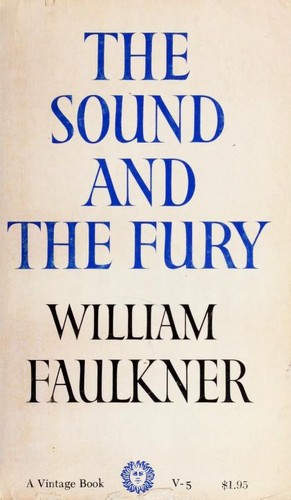 William Faulkner · 1929 AD · United States
Faulkner's Mississippi masterpiece tells one story four times, each from a different consciousness, American modernism's most ambitious formal experiment.
- 9
 Ficciones 9/10Jorge Luis Borges · 1944 AD · Argentina
Borges's short stories invented most of postmodern fiction before it existed, labyrinths, infinite libraries, books that contain all other books.
- 10
 Waiting for Godot 9/10Samuel Beckett · 1952 AD · France (Ireland)
Beckett's 1952 play, two tramps waiting for someone who never arrives, stripped drama to its bones and invented absurdist theatre in a single stage.
- Free Download
Get the Great Books Wall Poster
All 350 books across 4,100 years, organized by era, with a checkbox for each. Print it, frame it, mark your progress. Enter your email and we'll send it over, plus the occasional reading path worth your time. No noise.
Free forever. Unsubscribe anytime. We never share your email.
- 11
 J.R.R. Tolkien · 1954 AD · Britain
Tolkien's trilogy invented modern fantasy as a genre, a fully imagined world with its own languages and twenty centuries of history, still the most popular novel of the twentieth century.
- 12
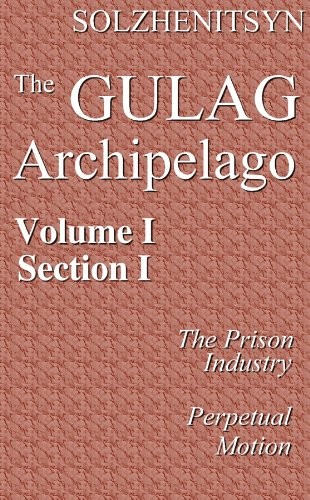 Aleksandr Solzhenitsyn · 1973 AD · Soviet Union
Solzhenitsyn's three-volume documentary indictment of the Soviet camp system, the book whose publication in 1973 ended Western intellectual sympathy with communism.
- 13
 Robert A. Caro · 1974 AD · United States
Widely considered the greatest American biography ever written, Robert Caro's Pulitzer-winning anatomy of Robert Moses is really a study of how unelected power reshaped a city, and the modern benchmark for biography as literature.
- 14
 Blood Meridian 9/10Cormac McCarthy · 1985 AD · United States
McCarthy's novel of scalp-hunters in the 1850s borderlands, the most violent and most beautifully written American novel of the late twentieth century.
- 15
 Buddenbrooks 8.5/10Thomas Mann · 1901 AD · Germany
Mann's 1901 debut traced the decline of a North German merchant family across four generations, the novel that established the modern German novel and launched a Nobel career.
- 16
 The Metamorphosis 8.5/10Franz Kafka · 1915 AD · Austria-Hungary
Kafka's 1915 novella, Gregor Samsa wakes transformed into an insect, the most famous opening image in twentieth-century literature and a diagnosis of modern alienation.
- 17
 Ludwig Wittgenstein · 1921 AD · Austria/Britain
Wittgenstein's 1921 attempt to delineate the logical structure of language, "Whereof one cannot speak, thereof one must be silent," and the founding text of analytic philosophy.
- 18
 The Magic Mountain 8.5/10Thomas Mann · 1924 AD · Germany
Mann's 1924 novel uses a Swiss tuberculosis sanatorium as an allegory for pre-war Europe, humanism versus nihilism, reason versus decay, the old continent thinking its way toward ruin.
- 19
 The Trial 8.5/10Franz Kafka · 1925 AD · Austria-Hungary
Kafka's novel of a man arrested and prosecuted by an inscrutable authority for an unspecified crime, the twentieth century's defining nightmare of guilt without transgression.
- 20
 The Great Gatsby 8.5/10F. Scott Fitzgerald · 1925 AD · United States
Fitzgerald's 1925 dissection of the American Dream, Jay Gatsby's doomed pursuit of Daisy, wealth, and reinvention, told in the most lyrical prose in American fiction.
- 21
 Mrs Dalloway 8.5/10Virginia Woolf · 1925 AD · Britain
Woolf's 1925 novel compresses a single June day in post-war London into a masterpiece of stream-of-consciousness, and one of the founding works of literary feminism.
- 22
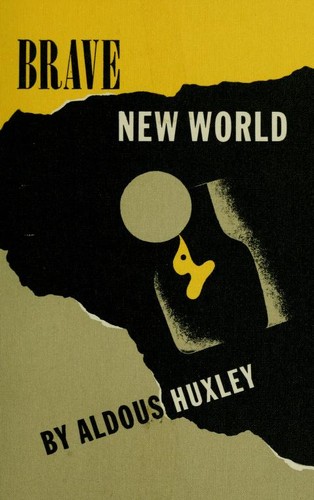 Brave New World 8.5/10Aldous Huxley · 1932 AD · Britain
Huxley's 1932 dystopia imagines a society controlled not by terror but by pleasure, genetic engineering, conditioning, and the sedative drug soma, the twentieth century's other dystopian classic.
- 23
 L.-F. Céline · 1932 AD · France
Céline's 1932 debut shattered French literary prose with its raw, colloquial voice and its pitiless view of war, colonialism, and Depression-era America.
- 24
 Fernando Pessoa · 1934 AD · Portugal
Pessoa's Book of Disquiet and the heteronyms, poetry attributed to entirely invented poets with their own biographies and philosophies, the strangest literary experiment of the twentieth century.
- 25
 Jean-Paul Sartre · 1938 AD · France
Sartre's philosophical treatise and its fictional companion, existence precedes essence, man is condemned to be free, the founding texts of postwar existentialism.
Get the Great Books Wall Poster
All 350 books across 4,100 years, organized by era, with a checkbox for each. Print it, frame it, mark your progress. Enter your email and we'll send it over, plus the occasional reading path worth your time. No noise.
Free forever. Unsubscribe anytime. We never share your email.