Where to Buy
As an Amazon Associate I earn from qualifying purchases. Thanks for supporting the project.
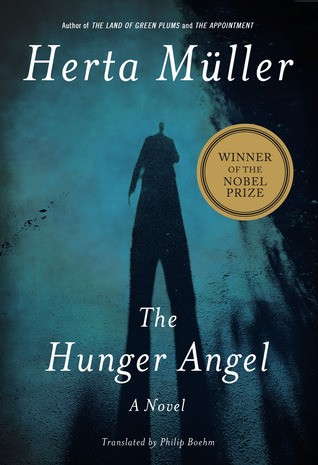
The Hunger Angel
7Herta Müller
Ranked 293rd of 350 in the Great Books of Mankind catalog, scored 7/10. How we rank
Müller's novel of post-war Soviet labor camps, Romanian-German memory rendered in haunted prose; the 2009 Nobel and the most formally refined Holocaust-adjacent novel of its decade.
Get this book
ISBN 9780805093018Summary & Critical Assessment (Score: 7/10)
The Hunger Angel draws on the testimony of those deported to Soviet labor camps after the Second World War, transmuting suffering into prose of haunting beauty. Herta Müller brings the experiences of Romanian-German communities under Soviet and Communist oppression into world literature with striking poetic intensity. Her writing achieves the rare feat of rendering extreme deprivation in language that is itself rich, precise, and luminous. Müller was awarded the Nobel Prize in Literature in 2009.
In 1945, the Soviet Union deported tens of thousands of ethnic Germans from Romania to labor camps, where many perished from starvation, disease, and exhaustion. This largely forgotten episode of postwar ethnic cleansing forms the historical foundation of The Hunger Angel. Müller herself grew up in Romania's Banat Swabian community under Ceaușescu's repressive regime before emigrating to Germany in 1987, and her entire body of work bears witness to the surveillance, fear, and moral compromise that defined life under totalitarianism in Eastern Europe.
Germany (Romania), 2009
The global financial crisis reshapes politics. Muller publishes The Hunger Angel, based on Romanian-German deportation to Soviet labor camps. Obama's first year. The political pressures that will erupt in the Arab Spring are already mounting across North Africa and the Middle East.
Awards & Adaptations
NOBEL 2009.
Recommended Edition
Philip Boehm trans. (2012 - exception)