The 50 Greatest Books of All Time
Four thousand years of literature, ranked. From the cuneiform tablets of Gilgamesh to the modernist labyrinth of Ulysses, these are the works that built civilization's library.
Any list of the greatest books ever written is, at some level, an argument. There is no neutral vantage point from which to measure The Iliad against The Tale of Genji, or to weigh Don Quixote against the Quran. But the refusal to rank, the polite multicultural shrug that treats all books as incomparable, is its own kind of failure. It abandons the reader to the marketing department. The Great Books of Mankind project was built on the conviction that some books matter more than others, and that the work of distinguishing them is worth doing carefully and out loud.
The fifty books below are the highest-scoring works in our 350-title catalog, drawn from a 4,100-year span beginning in 2100 BC. Each was rated on a ten-point scale across four criteria: literary achievement (originality, mastery of form, beauty of language), historical influence (how decisively the work shaped subsequent thought, art, or events), endurance (whether it has remained in continuous readership for centuries or millennia), and civilizational weight (the degree to which it founded, defined, or transformed a tradition). A score of 10 is reserved for works without which the literary inheritance of mankind would be unrecognizably poorer, books like The Iliad, the Hebrew and Christian Bibles, Shakespeare's First Folio, and Dante's Commedia. A score of 9 marks works that any serious reader must eventually confront.
The list leans toward the Western canon, toward Greece, Rome, Christendom, and the European literatures that grew out of them, because the Western canon is, simply, the deepest and most documented continuous literary tradition in human history. But the great non-Western works that shaped their own civilizations on a comparable scale are here too: Confucius, the Quran, Laozi, Ferdowsi, the Sanskrit and Arabic epics. The ranking is chronological within each score band, so older works appear first when tied, a small concession to the fact that being first matters, and that everything written after Homer was written under his shadow.
Use this list as a reading map, an argument starter, or a quiet rebuke to anyone who tells you that nothing important was ever settled. Each title links to a full editorial entry with translation recommendations, historical context, and where to read it, including free public-domain editions where they exist.
Buy links are affiliate links. As an Amazon Associate I earn from qualifying purchases. We are also a Bookshop.org affiliate and earn from qualifying purchases there.
Get the Great Books Wall Poster
All 350 books across 4,100 years, organized by era, with a checkbox for each. Print it, frame it, mark your progress. Enter your email and we'll send it over, plus the occasional reading path worth your time. No noise.
Free forever. Unsubscribe anytime. We never share your email.
- 1
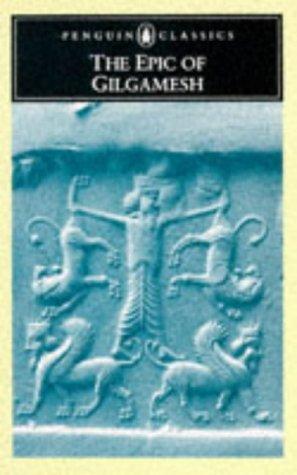 The Epic of Gilgamesh 10/10Anonymous · 2100 BC · Mesopotamia
Humanity's oldest surviving long poem, written on clay tablets four thousand years before paper, the source of every later story about a hero confronting his own death.
- 2
 The Iliad 10/10Homer · 750 BC · Greece
Homer founded Western literature in this poem, a portrait of human rage so exact that no later epic, from Virgil to Tolstoy, has escaped its shadow.
- 3
 The Odyssey 10/10Homer · 725 BC · Greece
The original journey narrative, its word entered every European language, and its plot architecture still structures storytelling from Joyce to Pixar three thousand years later.
- 4
 The Analects 10/10Confucius · 500 BC · China
A collection of sayings that became the operating manual of East Asian civilization for two and a half millennia, shaping ethics, governance, and education across China, Korea, and Japan.
- 5
 Oedipus Rex 10/10Sophocles · 429 BC · Greece (Athens)
Sophocles wrote the play that defined tragedy itself, the form Aristotle dissected, Freud diagnosed, and every dramatist since has tried to escape.
- 6
 Dialogues (Complete) 10/10Plato · 380 BC · Greece (Athens)
The thirty-six conversations that founded Western philosophy, every later thinker, in Whitehead's phrase, has merely written footnotes to Plato.
- 7
 The Aeneid 10/10Virgil · 19 BC · Roman Empire
Virgil's national epic legitimized Rome to itself and gave the Christian Middle Ages its template for poetic seriousness, Dante's chosen guide through hell.
- 8
 Various (traditional) · 33 AD · Israel/Roman Empire
The single most influential book in human history, foundation of Western art, law, ethics, and language for two thousand years, and still the most widely read book on Earth.
- 9
 The Quran 10/10Revealed to Muhammad · 632 AD · Arabia
The book that built Islamic civilization, recited from Mecca to Mali within a century of its revelation, and read by more than a billion people today.
- 10
 The Divine Comedy 10/10Dante Alighieri · 1320 AD · Italy (Florence)
Dante invented the Italian literary language to write this poem, and in doing so produced the most ambitious vision of the afterlife ever composed.
- Free Download
Get the Great Books Wall Poster
All 350 books across 4,100 years, organized by era, with a checkbox for each. Print it, frame it, mark your progress. Enter your email and we'll send it over, plus the occasional reading path worth your time. No noise.
Free forever. Unsubscribe anytime. We never share your email.
- 11
 Martin Luther · 1534 AD · Germany
Luther's German Bible broke the Catholic Church's monopoly on scripture, standardized modern German, and lit the fuse on the Reformation.
- 12
 Don Quixote 10/10Miguel de Cervantes · 1605 AD · Spain
The first modern novel, the first novel about a novel, and the first comic masterpiece, Cervantes invented prose fiction's self-awareness in 1605 and no one has surpassed him since.
- 13
 47 scholars, commissioned by King James I · 1611 AD · England
The most influential English book ever published, its cadences shaped Shakespeare's afterlife, Lincoln's speeches, and nearly all subsequent English prose.
- 14
 William Shakespeare · 1623 AD · England
The collected plays of the writer who, more than any other, shaped how speakers of English think, feel, and curse, preserved by two friends seven years after his death.
- 15
 Critique of Pure Reason 10/10Immanuel Kant · 1781 AD · Prussia
Kant rebuilt philosophy from the ground up, every serious thinker since 1781 has had to position himself in relation to this book, whether he could finish it or not.
- 16
 Faust (Parts I & II) 10/10J.W. von Goethe · 1832 AD · Germany
Goethe's lifelong drama of a man who sells his soul for knowledge, the founding modern myth of overreach and the cost of becoming the person you wanted to be.
- 17
 War and Peace 10/10Leo Tolstoy · 1869 AD · Russian Empire
Tolstoy's twelve-hundred-page panorama of Russia under Napoleon, the largest, fullest, most generous novel ever written, and the standard against which all later epics are measured.
- 18
 The Brothers Karamazov 10/10Fyodor Dostoevsky · 1880 AD · Russian Empire
Dostoevsky's final novel and his summation, a murder mystery, a theological argument, and a portrait of human freedom that Freud called the most magnificent novel ever written.
- 19
 Thus Spoke Zarathustra 10/10Friedrich Nietzsche · 1885 AD · Germany
Nietzsche's prose-poem of the death of God and the birth of the overman, the book that, more than any other, shaped twentieth-century thought, art, and catastrophe.
- 20
 Ulysses 10/10James Joyce · 1922 AD · Ireland
Joyce's eighteen-chapter remake of The Odyssey set in Dublin on a single day in 1904, the most ambitious and most quoted novel of the twentieth century.
- 21
 The Oresteia 9.5/10Aeschylus · 458 BC · Greece (Athens)
Aeschylus's trilogy traces the birth of justice itself, the moment a civilization replaces blood vengeance with the institution of the law court.
- 22
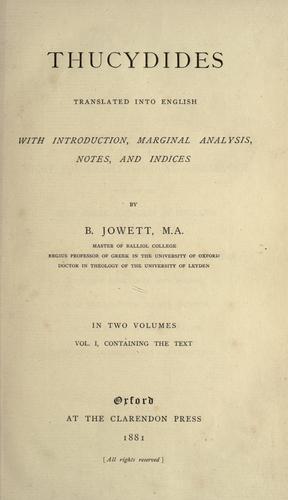 Thucydides · 400 BC · Greece (Athens)
Thucydides invented historical analysis in this account of Athens versus Sparta, read at every war college from Athens to West Point for two and a half millennia.
- 23
 Nicomachean Ethics 9.5/10Aristotle · 340 BC · Greece (Athens)
Aristotle's treatise on how to live well, the foundational text of Western moral philosophy and still, after twenty-three centuries, the clearest account of human flourishing ever written.
- 24
 Confessions 9.5/10Augustine of Hippo · 397 AD · N. Africa (Roman)
The first true autobiography in Western literature, Augustine invented the modern interior life in 397 AD, and every memoir since has worked in the form he created.
- 25
 Summa Theologica 9.5/10Thomas Aquinas · 1274 AD · Italy
Aquinas's three-thousand-page synthesis of Christianity and Aristotle, the intellectual architecture of the Catholic Church and the high-water mark of medieval thought.
- 26
 The Prince 9.5/10Niccolò Machiavelli · 1532 AD · Italy (Florence)
Machiavelli stripped the moral pretense from political power and produced the founding text of modern political realism, read every century, denied every century, applied every century.
- 27
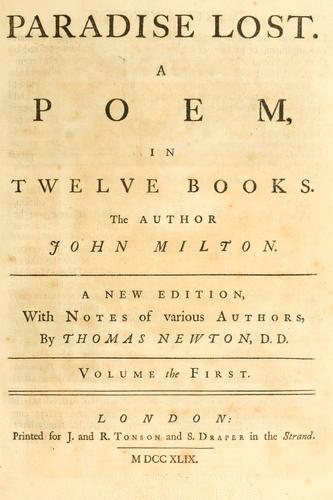 Paradise Lost 9.5/10John Milton · 1667 AD · England
Milton's twelve-book epic of the Fall, the last great work in the Homeric tradition and the most ambitious poem ever written in English.
- 28
 Isaac Newton · 1687 AD · England
Newton's three-volume foundation of modern physics, the book that proved the heavens and the earth obey the same mathematical laws, and rewrote Western science overnight.
- 29
 The Wealth of Nations 9.5/10Adam Smith · 1776 AD · Britain (Scotland)
Adam Smith's eighteenth-century anatomy of how markets work, the founding text of modern economics and the intellectual scaffolding of every capitalist economy on earth.
- 30
 The Phenomenology of Spirit 9.5/10G.W.F. Hegel · 1807 AD · Germany
Hegel's history of consciousness, notoriously difficult, foundational to Marx, existentialism, and the entire continental tradition that followed.
- 31
 The Communist Manifesto 9.5/10Karl Marx & Friedrich Engels · 1848 AD · Germany/Belgium
Forty pages that reshaped the twentieth century, Marx and Engels wrote the most consequential political pamphlet in modern history, for better and for worse.
- 32
 Moby-Dick 9.5/10Herman Melville · 1851 AD · United States
Melville's vast meditation on obsession, God, and the white whale, the great American novel, ignored in its time, recovered as a masterpiece in the twentieth century.
- 33
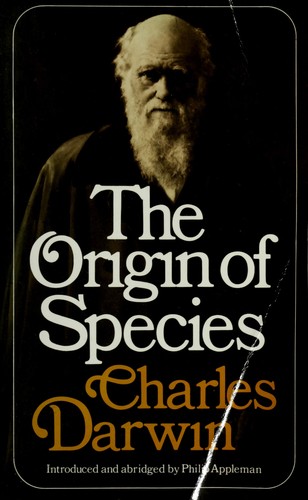 On the Origin of Species 9.5/10Charles Darwin · 1859 AD · England
Darwin's calm, careful book that ended teleology in biology and gave the modern world its only coherent account of where we came from.
- 34
 Crime and Punishment 9.5/10Fyodor Dostoevsky · 1866 AD · Russian Empire
Dostoevsky's psychological novel of a murder and its aftermath, the work that inaugurated the modern novel of conscience and inspired everyone from Nietzsche to Kafka.
- 35
 In Search of Lost Time 9.5/10Marcel Proust · 1913 AD · France
Proust's four-thousand-page novel of memory, time, and Parisian society, the most thorough and exquisite act of self-examination ever set down in prose.
- 36
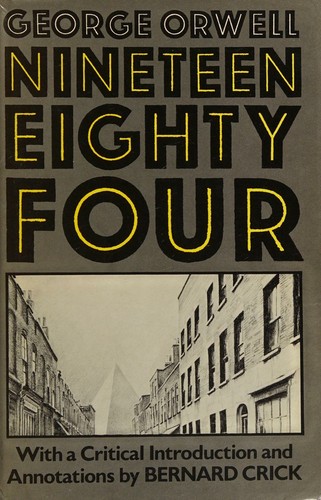 1984 9.5/10George Orwell · 1949 AD · Britain
Orwell's dystopia gave the language Big Brother, doublethink, thoughtcrime, and Newspeak, the most useful political vocabulary the twentieth century produced.
- 37
 Gabriel García Márquez · 1967 AD · Colombia
García Márquez's novel of seven generations in a fictional Colombian town, the founding masterpiece of magical realism and the most influential Spanish-language novel of the twentieth century.
- 38
 Antigone 9/10Sophocles · 441 BC · Greece (Athens)
Sophocles's drama of a woman who defies the king to bury her brother, the founding Western statement of conscience against the state, debated every century since.
- 39
 The Histories 9/10Herodotus · 440 BC · Greece
Herodotus invented history writing in this sprawling account of the Persian Wars, the first European prose work to ask not just what happened but why.
- 40
 Medea 9/10Euripides · 431 BC · Greece (Athens)
Euripides's play of a woman who murders her own children to revenge a faithless husband, the most disturbing portrait of female rage in ancient literature.
- 41
 Dao De Jing 9/10Laozi (attr.) · 400 BC · China
Eighty-one short verses that founded Daoism, the second pillar of Chinese philosophy, paradoxical, lapidary, and quietly the most influential short book ever written.
- 42
 Politics 9/10Aristotle · 335 BC · Greece (Athens)
The first systematic treatise of political science, Aristotle classified the constitutions, defined the regime types, and set the agenda for every later political thinker.
- 43
 Metaphysics 9/10Aristotle · 335 BC · Greece (Athens)
Aristotle's investigation of being itself, the book that named the discipline of metaphysics and structured Western philosophy's deepest questions for twenty-three centuries.
- 44
 Elements 9/10Euclid · 300 BC · Greece (Alexandria)
Euclid's geometry textbook, the most successful textbook in human history, used continuously for two thousand three hundred years, still the model of how to build knowledge from axioms.
- 45
 Metamorphoses 9/10Ovid · 8 AD · Roman Empire
Ovid's two-hundred-and-fifty-tale Latin poem of mythological transformations, the single most influential source of imagery for European art and literature for two thousand years.
- 46
 The City of God 9/10Augustine of Hippo · 426 AD · N. Africa (Roman)
Augustine's response to the sack of Rome, the book that taught Christendom how to think about empire, history, and the relationship between earthly and heavenly power.
- 47
 Various (compiled, traditional) · 950 AD · Islamic Empire (Persia/Iraq/Egypt)
The frame-tale collection that gave the West Aladdin, Sinbad, Scheherazade, and Ali Baba, and gave the Arabic-speaking world its most famous popular literature.
- 48
 Ferdowsi · 1010 AD · Persia (Iran)
Ferdowsi's sixty-thousand-couplet epic preserved Persian language and identity through three centuries of Arab rule, Iran's national poem and the longest epic ever written by a single author.
- 49
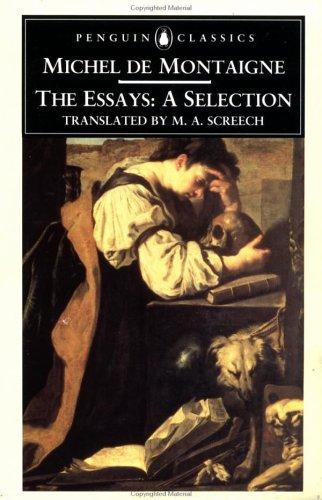 Essays 9/10Michel de Montaigne · 1580 AD · France
Montaigne invented the personal essay as a form, frank, digressive, self-questioning prose that became the model for everyone from Bacon to David Foster Wallace.
- 50
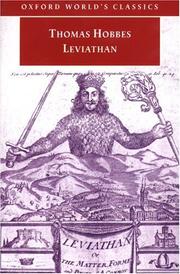 Leviathan 9/10Thomas Hobbes · 1651 AD · England
Hobbes built modern political philosophy from a single brutal premise, life without government is nasty, brutish, and short, and the state exists to prevent it.
Get the Great Books Wall Poster
All 350 books across 4,100 years, organized by era, with a checkbox for each. Print it, frame it, mark your progress. Enter your email and we'll send it over, plus the occasional reading path worth your time. No noise.
Free forever. Unsubscribe anytime. We never share your email.