Where to Buy
As an Amazon Associate I earn from qualifying purchases. Thanks for supporting the project.
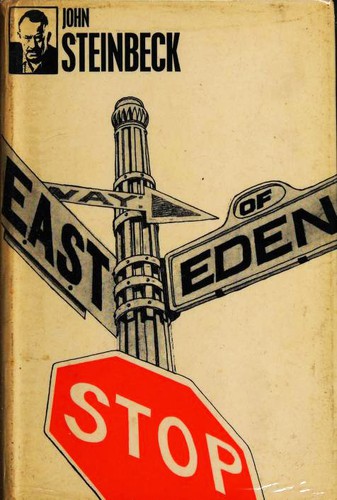
East of Eden
8John Steinbeck
Ranked 183rd of 350 in the Great Books of Mankind catalog, scored 8/10. How we rank
Steinbeck's multigenerational California saga, his most ambitious novel and the one he considered his magnum opus, transposing Cain and Abel onto the Salinas Valley.
Get this book
ISBN 9780670002788Summary & Critical Assessment (Score: 8/10)
East of Eden is John Steinbeck's most ambitious novel, a multigenerational saga that transposes the biblical story of Cain and Abel to California's Salinas Valley. Steinbeck, who received the Nobel Prize in 1962, considered it his magnum opus, weaving together themes of good and evil, free will, and the redemptive power of choice, crystallized in the Hebrew word 'timshel', 'thou mayest.' The novel's sprawling narrative and moral grandeur make it one of the defining works of mid-century American fiction.
The work was begun in post-war America during a period of national self-examination, East of Eden reflects Steinbeck's deep engagement with questions of moral responsibility and the American promise. The novel's exploration of inherited guilt and the possibility of transcending one's origins resonated powerfully with a generation emerging from the shadow of global conflict, and its 1955 film adaptation starring James Dean further cemented its place in American cultural memory.
Post-War America, 1951-1952
America in the early Cold War: conformity, suburbs, McCarthyism. Salinger voices alienation. Ellison confronts Black invisibility. Hemingway and Steinbeck publish major works. Beckett invents absurdist theater. Eisenhower is elected. Television enters homes.
Awards & Adaptations
NOBEL 1962. James Dean film.
Recommended Edition
First ed. (1952)