The 20 Greatest Books of Political Philosophy
From Plato's Republic to Rawls's Theory of Justice: the books that defined how Western civilization thinks about power, liberty, and the state.
Political philosophy is the branch of inquiry that asks how human beings ought to live together under some form of collective authority. The question sounds abstract, but it is not, every war, every constitution, every election, every revolution is, in the end, a response to the argument about legitimacy that political philosophy has been conducting for two and a half millennia. Almost every major political arrangement in the modern world can be traced back to a book.
The Western tradition begins in Athens, with Plato's Republic and Aristotle's Politics. These two works set the agenda for everything that followed: what is justice, what kinds of regimes are there, what makes a regime good or bad, what role does virtue play in political life, what is the relationship between the individual and the community. Every subsequent political philosopher has been, to some degree, arguing with Plato and Aristotle, Cicero, Augustine, Aquinas, Machiavelli, Hobbes, Locke, Rousseau, Hegel, Marx, Mill, Rawls, Nozick, all the way through.
The modern chapter of the story begins with Machiavelli in 1513 and Hobbes in 1651, the two writers who first treated political legitimacy as a human artifact rather than a divine appointment. Locke, Rousseau, and Montesquieu built the liberal vocabulary on their foundations. Marx and Engels built the revolutionary alternative. The twentieth century, from Schmitt and Strauss to Hayek, Berlin, Rawls, and Nozick, was in large part an attempt to work out which of these bequests was still defensible after the catastrophes of the world wars.
The list below ranks the twenty highest-scoring works of political philosophy in our catalog. For the deeper intellectual backbone these books sit on top of, see the 50 greatest books of all time.
Buy links are affiliate links. As an Amazon Associate I earn from qualifying purchases. We are also a Bookshop.org affiliate and earn from qualifying purchases there.
Get the Great Books Wall Poster
All 350 books across 4,100 years, organized by era, with a checkbox for each. Print it, frame it, mark your progress. Enter your email and we'll send it over, plus the occasional reading path worth your time. No noise.
Free forever. Unsubscribe anytime. We never share your email.
- 1
 The Prince 9.5/10Niccolò Machiavelli · 1532 AD · Italy (Florence)
Machiavelli stripped the moral pretense from political power and produced the founding text of modern political realism, read every century, denied every century, applied every century.
- 2
 The Wealth of Nations 9.5/10Adam Smith · 1776 AD · Britain (Scotland)
Adam Smith's eighteenth-century anatomy of how markets work, the founding text of modern economics and the intellectual scaffolding of every capitalist economy on earth.
- 3
 The Communist Manifesto 9.5/10Karl Marx & Friedrich Engels · 1848 AD · Germany/Belgium
Forty pages that reshaped the twentieth century, Marx and Engels wrote the most consequential political pamphlet in modern history, for better and for worse.
- 4
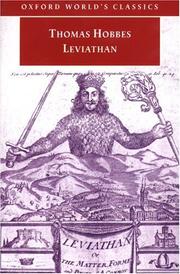 Leviathan 9/10Thomas Hobbes · 1651 AD · England
Hobbes built modern political philosophy from a single brutal premise, life without government is nasty, brutish, and short, and the state exists to prevent it.
- 5
 John Locke · 1689 AD · England
Locke's founding text of liberal democratic theory, natural rights to life, liberty, and property, and the right to overthrow governments that violate them.
- 6
 Democracy in America 9/10Alexis de Tocqueville · 1835 AD · France (about USA)
Tocqueville's nineteenth-century French analysis of the young American republic, still the most penetrating book ever written about how democracy actually works.
- 7
 Das Kapital 9/10Karl Marx · 1867 AD · Germany/Britain
Marx's thousand-page anatomy of capitalism, surplus value, commodity fetishism, class struggle, the foundational text of every socialist movement since 1867.
- 8
 The Spirit of the Laws 8.5/10Montesquieu · 1748 AD · France
Montesquieu's 1748 treatise introduced the separation of powers, the constitutional principle every liberal democracy since has borrowed from it.
- 9
 The Social Contract 8.5/10Jean-Jacques Rousseau · 1762 AD · France/Geneva
Rousseau's 1762 treatise, "Man is born free, and everywhere he is in chains", set the intellectual charge that detonated in the French Revolution twenty-seven years later.
- 10
 On Liberty 8.5/10John Stuart Mill · 1859 AD · England
Mill's 1859 treatise gave liberalism its core argument, the harm principle, and the claim that free speech and free thought are the only reliable engines of human progress.
- Free Download
Get the Great Books Wall Poster
All 350 books across 4,100 years, organized by era, with a checkbox for each. Print it, frame it, mark your progress. Enter your email and we'll send it over, plus the occasional reading path worth your time. No noise.
Free forever. Unsubscribe anytime. We never share your email.
- 11
 The Road to Serfdom 8.5/10Friedrich Hayek · 1944 AD · Britain (Austria)
Hayek's 1944 warning, that central planning leads inevitably to totalitarianism, became the intellectual foundation of postwar classical liberalism and the Thatcher–Reagan revolution.
- 12
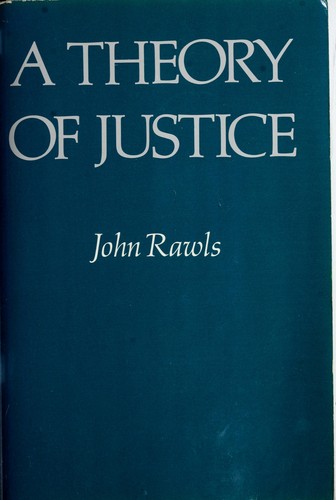 A Theory of Justice 8.5/10John Rawls · 1971 AD · United States
Rawls's 1971 treatise, the veil of ignorance, justice as fairness, the most important work of political philosophy since Marx and the foundational text of postwar liberalism.
- 13
 Cicero · 51 BC · Roman Republic
Cicero articulated the concept of natural law, the Roman political vocabulary that shaped medieval legal thought, the Enlightenment, and the American founding.
- 14
 Max Weber · 1905 AD · Germany
Weber's 1905 thesis, that Calvinist anxiety over predestination created the psychological conditions for capitalism, one of the founding works of sociology and still endlessly debated.
- 15
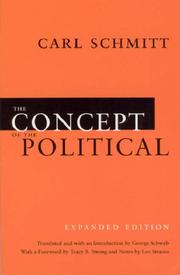 Carl Schmitt · 1932 AD · Germany
Schmitt's treatise, politics reduced to the friend/enemy distinction, the twentieth century's most penetrating critique of liberal democracy, whose influence on the authoritarian right remains undiminished.
- 16
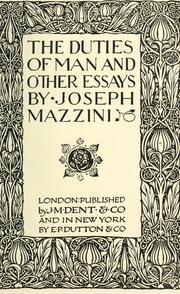 The Duties of Man 7.5/10Giuseppe Mazzini · 1860 AD · Italy
Mazzini's treatise and the ideological architecture of Italian unification, the most influential theorist of nineteenth-century democratic nationalism and a shaping influence on everyone from Weizmann to Gandhi.
- 17
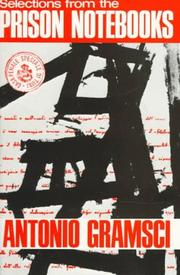 Antonio Gramsci · 1935 AD · Italy
Gramsci's fragmentary Marxist theory, written in Italian prison to evade Mussolini's censors, the origin of "hegemony" and the theoretical grounding of Western Marxism and cultural studies.
- 18
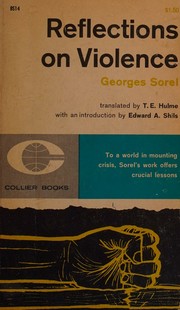 Georges Sorel · 1908 AD · France
Sorel's 1908 treatise, politics as driven by myth, not rational programs; the intellectual bridge between revolutionary socialism and fascism, and a book whose influence exceeds its readership.
- 19
 The Worker 7/10Ernst Jünger · 1932 AD · Germany
Jünger's 1932 treatise, total mobilization, the Worker-Soldier figure; the work that shaped Heidegger's thinking and remains a central document of the European conservative revolution.
- 20
 Dario Fo · 1970 AD · Italy
Fo's political farces, commedia dell'arte and medieval giullare traditions fused with radical leftist satire; the 1997 Nobel and Italy's most inventive postwar dramatist.
Get the Great Books Wall Poster
All 350 books across 4,100 years, organized by era, with a checkbox for each. Print it, frame it, mark your progress. Enter your email and we'll send it over, plus the occasional reading path worth your time. No noise.
Free forever. Unsubscribe anytime. We never share your email.