Where to Buy
As an Amazon Associate I earn from qualifying purchases. Thanks for supporting the project.
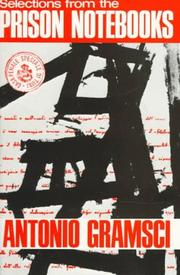
Selections from the Prison Notebooks
7.5Antonio Gramsci
Ranked 226th of 350 in the Great Books of Mankind catalog, scored 7.5/10. How we rank
Gramsci's fragmentary Marxist theory, written in Italian prison to evade Mussolini's censors, the origin of "hegemony" and the theoretical grounding of Western Marxism and cultural studies.
Get this book
ISBN 9780717803972Summary & Critical Assessment (Score: 7.5/10)
Selections from the Prison Notebooks represent the fragmentary but decisively influential political thought of Antonio Gramsci, written in code to evade Mussolini's censors during eleven years of imprisonment. The notebooks are unfinished and organized by later editors, but their concepts, above all "cultural hegemony," transformed how subsequent thinkers understood power, ideology, and the mechanisms by which ruling classes maintain consent without overt coercion.
Gramsci was imprisoned by Mussolini from 1926 until shortly before his death in 1937. The prosecutor at his trial declared: "We must stop this brain from functioning for twenty years." He wrote 3,000 pages in prison nonetheless. Gramsci is the most cited Marxist thinker after Marx himself, and his ideas permeate cultural studies, postcolonial theory, critical pedagogy, and media criticism worldwide.
Europe Under Fascism, 1934-1935
Mussolini's Italy and Hitler's Germany consolidate totalitarian power. Gramsci writes in Mussolini's prisons, producing 3,000 pages of political theory in code. Pessoa works in obscurity in Lisbon, creating an entire literary universe that will not be discovered until after his death. Stalin's purges begin in the Soviet Union. Spain teeters on the brink of civil war. European intellectual life is being crushed, imprisoned, or driven into exile.
Awards & Adaptations
Foundation of cultural studies, postcolonial theory, critical pedagogy. Most-cited Marxist thinker after Marx himself. "Cultural hegemony" entered common vocabulary. Gramsci's ideas permeate media criticism, education theory, and political strategy across the political spectrum, the right's critique of "institutional capture" is itself a Gramscian analysis turned against the left.
Recommended Edition
Quintin Hoare & Geoffrey Nowell Smith eds. and trans. (International Publishers, 1971); Joseph A. Buttigieg trans. (Columbia, 1992–2007, 3 vols)