Where to Buy
As an Amazon Associate I earn from qualifying purchases. Thanks for supporting the project.
Read / Listen Free
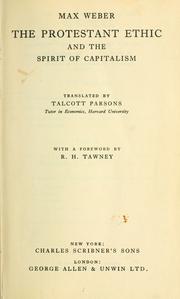
The Protestant Ethic and the Spirit of Capitalism
8Max Weber
Ranked 166th of 350 in the Great Books of Mankind catalog, scored 8/10. How we rank
Weber's 1905 thesis, that Calvinist anxiety over predestination created the psychological conditions for capitalism, one of the founding works of sociology and still endlessly debated.
Get this book
ISBN 9780140439212Public-domain editions also available free, see below.
Summary & Critical Assessment (Score: 8/10)
The Protestant Ethic and the Spirit of Capitalism is one of the founding texts of modern sociology and a debated theses in social science. Max Weber's argument that Calvinist theology, particularly the anxiety over predestination, created the psychological conditions for capitalist accumulation transformed the understanding of the relationship between religion, culture, and economic life.
Crafted during Imperial Germany's academic zenith, when German universities dominated world scholarship, Weber's thesis responded to Marx's economic determinism by demonstrating how religious ideas could drive material transformation. "Iron cage" and "disenchantment" entered common vocabulary, and the work remains the most cited text in sociology, foundational to economic sociology, organizational theory, and the sociology of religion.
Europe, 1905-1908
The old order trembles. Russia's 1905 revolution shakes the autocracy. Einstein publishes special relativity. The syndicalist movement peaks in France. Weber writes during the Second Industrial Revolution as Germany rivals Britain economically. The Dreyfus Affair's aftermath reshapes French politics. Picasso paints Les Demoiselles d'Avignon. The foundations of twentieth-century social thought are being laid.
Awards & Adaptations
Most-cited work in sociology. "Iron cage" and "disenchantment" entered common vocabulary. Foundation of economic sociology, organizational theory, and the sociology of religion.
Recommended Edition
Talcott Parsons trans. (Scribner's, 1930); Stephen Kalberg trans. (Oxford, 2010)


