Where to Buy
As an Amazon Associate I earn from qualifying purchases. Thanks for supporting the project.
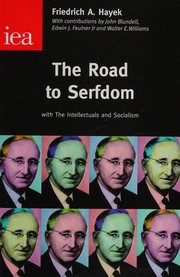
The Road to Serfdom
8.5Friedrich Hayek
Ranked 121st of 350 in the Great Books of Mankind catalog, scored 8.5/10. How we rank
Hayek's 1944 warning, that central planning leads inevitably to totalitarianism, became the intellectual foundation of postwar classical liberalism and the Thatcher–Reagan revolution.
Get this book
ISBN 9780226320557Summary & Critical Assessment (Score: 8.5/10)
The Road to Serfdom is the most influential defense of classical liberalism and free markets in the twentieth century. Friedrich Hayek's argument, that central economic planning inevitably leads to totalitarianism and that socialism and fascism share a common collectivist root, reshaped the global political landscape. The book provided the intellectual foundation for the free-market revolution that would transform Western economies in the final decades of the century.
Brought out during the Second World War alongside Orwell's Animal Farm, both warning against the same danger from different angles, The Road to Serfdom appeared as Britain's wartime planned economy was generating enthusiasm for permanent state control. The Reader's Digest condensation in 1945 reached millions. Hayek received the Nobel Prize in Economics in 1974, and his ideas shaped the policies of Thatcher, Reagan, and the global neoliberal turn.
World War II, 1942-1945
The most destructive conflict in history. The Holocaust. Stalingrad, D-Day, Hiroshima. Camus publishes The Stranger in occupied France. Saint-Exupery writes The Little Prince in New York exile before dying on a reconnaissance mission. Eliot completes Four Quartets. Orwell writes Animal Farm. Borges publishes Ficciones in Buenos Aires. Hayek publishes The Road to Serfdom, warning that central economic planning leads inevitably to totalitarianism. The postwar world is being imagined even as the war rages.
Awards & Adaptations
Nobel Prize in Economics (1974). Reader's Digest condensation (1945) reached millions. Thatcher, Reagan, and the global neoliberal turn. Companion Medal of Honor from the US (1991). Continuously in print.
Recommended Edition
First edition (Routledge, 1944); University of Chicago Press definitive ed. (2007)


