Where to Buy
As an Amazon Associate I earn from qualifying purchases. Thanks for supporting the project.
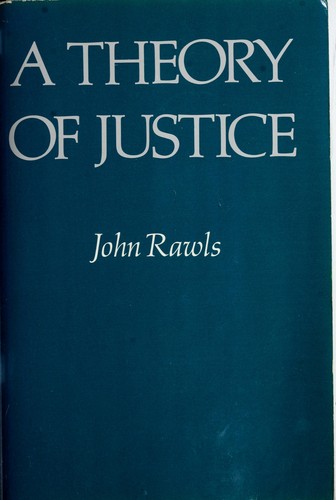
A Theory of Justice
8.5John Rawls
Ranked 130th of 350 in the Great Books of Mankind catalog, scored 8.5/10. How we rank
Rawls's 1971 treatise, the veil of ignorance, justice as fairness, the most important work of political philosophy since Marx and the foundational text of postwar liberalism.
Get this book
ISBN 9780674017726Summary & Critical Assessment (Score: 8.5/10)
A Theory of Justice is the most important work of political philosophy since Marx. John Rawls's "veil of ignorance" thought experiment, asking readers to imagine designing a society without knowing their place in it, has entered common discourse alongside Adam Smith's "invisible hand" and Hobbes's "state of nature" as one of the defining concepts of Western political thought.
Issued during the Vietnam era and the aftermath of the Civil Rights movement, A Theory of Justice provided the philosophical justification for the welfare state, progressive taxation, and the priority of equal basic liberties. Rawls received the National Humanities Medal in 1999, and the work remains the most cited text in political philosophy of the twentieth century, taught in every major philosophy and political science department worldwide.
United States, 1971
The Vietnam War continues. Nixon is president. The Civil Rights Act of 1964 and Great Society programs are recent history. The counterculture is fading into disillusionment. Rawls provides the philosophical justification for the liberal welfare state at the moment when it faces its first serious intellectual challenge from the libertarian right. The Pentagon Papers are published. Attica prison uprising. The postwar consensus is fracturing.
Awards & Adaptations
National Humanities Medal (1999). Most-cited work in political philosophy of the 20th century. "Veil of ignorance" entered common vocabulary alongside Smith's "invisible hand" and Hobbes's "state of nature." Foundation of the entire liberal egalitarian tradition in philosophy
Recommended Edition
First edition (Harvard/Belknap, 1971); revised edition (1999)