The 25 Greatest Works of German Literature
Luther, Goethe, Kant, Hegel, Nietzsche, Marx, Mann, Kafka: the literature and philosophy of the German-speaking world, from the Reformation to the modernist century.
The Germans call their country the land of poets and thinkers, and no other tradition has fused the two so completely. German literature begins, in a sense, with a translation: Luther's Bible did not just carry Scripture into the vernacular, it created the modern German language, giving a fractured collection of dialects a single written standard to write toward. Two centuries later Goethe made that language into a literature capable of anything, and Faust became the national poem, the myth of the modern man who trades everything for knowledge and experience.
But the German genius has been, above all, philosophical. From Kant through Hegel, Schopenhauer, Marx, Nietzsche, and Heidegger, the German universities held the commanding heights of modern thought for a century and a half; the vocabulary in which the West still argues about mind, history, and value was largely worked out in German. The same seriousness runs through the literature, Mann's great novels of ideas, Kafka's parables of the modern condition, the Austrian contribution of Freud and Wittgenstein, a tradition that treats the novel and the treatise as neighboring rooms in the same house.
The list below ranks the twenty-five highest-scoring German-language works in the Great Books of Mankind catalog, with chronological order breaking ties. It spans the German-speaking world, Germany, Austria, and Switzerland, and counts writers by the language they wrote in rather than the borders they were born inside. Twenty-five is a narrow window on one of the deepest literatures in Europe; the selection aims to represent its peaks fairly across philosophy, fiction, and poetry.
For the discipline this tradition did so much to shape, see the greatest philosophy books of all time. For the broader canon these works sit within, see the 50 greatest books of all time.
Buy links are affiliate links. As an Amazon Associate I earn from qualifying purchases. We are also a Bookshop.org affiliate and earn from qualifying purchases there.
Get the Great Books Wall Poster
All 350 books across 4,100 years, organized by era, with a checkbox for each. Print it, frame it, mark your progress. Enter your email and we'll send it over, plus the occasional reading path worth your time. No noise.
Free forever. Unsubscribe anytime. We never share your email.
- 1
 Martin Luther · 1534 AD · Germany
Luther's German Bible broke the Catholic Church's monopoly on scripture, standardized modern German, and lit the fuse on the Reformation.
- 2
 Critique of Pure Reason 10/10Immanuel Kant · 1781 AD · Prussia
Kant rebuilt philosophy from the ground up, every serious thinker since 1781 has had to position himself in relation to this book, whether he could finish it or not.
- 3
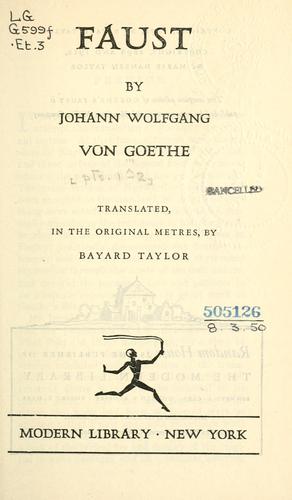 Faust (Parts I & II) 10/10J.W. von Goethe · 1832 AD · Germany
Goethe's lifelong drama of a man who sells his soul for knowledge, the founding modern myth of overreach and the cost of becoming the person you wanted to be.
- 4
 Thus Spoke Zarathustra 10/10Friedrich Nietzsche · 1885 AD · Germany
Nietzsche's prose-poem of the death of God and the birth of the overman, the book that, more than any other, shaped twentieth-century thought, art, and catastrophe.
- 5
 The Phenomenology of Spirit 9.5/10G.W.F. Hegel · 1807 AD · Germany
Hegel's history of consciousness, notoriously difficult, foundational to Marx, existentialism, and the entire continental tradition that followed.
- 6
 The Communist Manifesto 9.5/10Karl Marx & Friedrich Engels · 1848 AD · Germany/Belgium
Forty pages that reshaped the twentieth century, Marx and Engels wrote the most consequential political pamphlet in modern history, for better and for worse.
- 7
 Das Kapital 9/10Karl Marx · 1867 AD · Germany/Britain
Marx's thousand-page anatomy of capitalism, surplus value, commodity fetishism, class struggle, the foundational text of every socialist movement since 1867.
- 8
 Being and Time 9/10Martin Heidegger · 1927 AD · Germany
Heidegger's 1927 treatise rebuilt continental philosophy from the ground up, Sartre, Arendt, Gadamer, Derrida, and Foucault all wrote in its long shadow.
- 9
 Arthur Schopenhauer · 1818 AD · Germany
Schopenhauer's 1818 system, the world as blind striving Will behind all appearance, shaped Wagner, Nietzsche, Tolstoy, Freud, and the whole pessimistic modern temperament.
- 10
 The Ring of the Nibelung 8.5/10Richard Wagner · 1876 AD · Germany
Wagner's four-opera sixteen-hour cycle, the greatest work of music drama ever composed, and the aesthetic event that defined late nineteenth-century European culture.
- Free Download
Get the Great Books Wall Poster
All 350 books across 4,100 years, organized by era, with a checkbox for each. Print it, frame it, mark your progress. Enter your email and we'll send it over, plus the occasional reading path worth your time. No noise.
Free forever. Unsubscribe anytime. We never share your email.
- 11
 Beyond Good and Evil 8.5/10Friedrich Nietzsche · 1886 AD · Germany
Nietzsche's 1886 critique of the entire Western philosophical tradition, master versus slave morality, the will to power, and the first diagnosis of European nihilism.
- 12
 On the Genealogy of Morality 8.5/10Friedrich Nietzsche · 1887 AD · Germany
Nietzsche's 1887 genealogy traced good and evil, guilt and conscience, back to their origins in power and resentment, morality reconceived as a historical product.
- 13
 Friedrich Nietzsche · 1888 AD · Germany
Nietzsche's late masterpieces, written in his final productive year, "philosophy with a hammer," the most ferocious attack on Christianity ever composed, and his own autobiography.
- 14
 The Interpretation of Dreams 8.5/10Sigmund Freud · 1899 AD · Austria
Freud's 1899 book founded psychoanalysis, the unconscious, the Oedipus complex, dream interpretation, and the map of the modern mind that the twentieth century couldn't stop arguing with.
- 15
 Buddenbrooks 8.5/10Thomas Mann · 1901 AD · Germany
Mann's 1901 debut traced the decline of a North German merchant family across four generations, the novel that established the modern German novel and launched a Nobel career.
- 16
 The Metamorphosis 8.5/10Franz Kafka · 1915 AD · Austria-Hungary
Kafka's 1915 novella, Gregor Samsa wakes transformed into an insect, the most famous opening image in twentieth-century literature and a diagnosis of modern alienation.
- 17
 Ludwig Wittgenstein · 1921 AD · Austria/Britain
Wittgenstein's 1921 attempt to delineate the logical structure of language, "Whereof one cannot speak, thereof one must be silent," and the founding text of analytic philosophy.
- 18
 The Magic Mountain 8.5/10Thomas Mann · 1924 AD · Germany
Mann's 1924 novel uses a Swiss tuberculosis sanatorium as an allegory for pre-war Europe, humanism versus nihilism, reason versus decay, the old continent thinking its way toward ruin.
- 19
 The Trial 8.5/10Franz Kafka · 1925 AD · Austria-Hungary
Kafka's novel of a man arrested and prosecuted by an inscrutable authority for an unspecified crime, the twentieth century's defining nightmare of guilt without transgression.
- 20
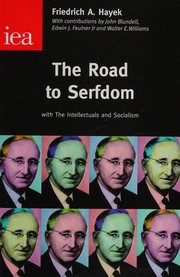 The Road to Serfdom 8.5/10Friedrich Hayek · 1944 AD · Britain (Austria)
Hayek's 1944 warning, that central planning leads inevitably to totalitarianism, became the intellectual foundation of postwar classical liberalism and the Thatcher–Reagan revolution.
- 21
 J.W. von Goethe · 1774 AD · Germany
Goethe's 1774 epistolary novel launched European Romanticism, triggered "Werther fever" across the continent and was blamed for a generation of copycat suicides.
- 22
 On War 8/10Carl von Clausewitz · 1832 AD · Prussia
Clausewitz's treatise, "War is the continuation of politics by other means", the single most influential work of military theory ever composed.
- 23
 The Birth of Tragedy 8/10Friedrich Nietzsche · 1872 AD · Germany
Nietzsche's 1872 debut introduced the Apollonian and Dionysian, the distinction that reshaped aesthetic theory and the lens through which the twentieth century read Greek tragedy.
- 24
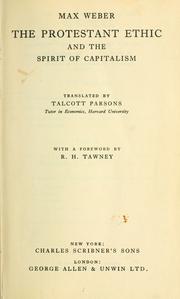 Max Weber · 1905 AD · Germany
Weber's 1905 thesis, that Calvinist anxiety over predestination created the psychological conditions for capitalism, one of the founding works of sociology and still endlessly debated.
- 25
 Storm of Steel 8/10Ernst Jünger · 1920 AD · Germany
Jünger's 1920 memoir of the Western Front, unlike Remarque's pacifism, Jünger portrays combat as ecstatic and transformative; the most controversial of all WWI memoirs.
Get the Great Books Wall Poster
All 350 books across 4,100 years, organized by era, with a checkbox for each. Print it, frame it, mark your progress. Enter your email and we'll send it over, plus the occasional reading path worth your time. No noise.
Free forever. Unsubscribe anytime. We never share your email.