The 25 Greatest Philosophy Books of All Time
Plato, Aristotle, Kant, Hegel, Nietzsche, Confucius, Laozi: the books that taught the human race how to reason about knowledge, God, justice, and how to live.
Philosophy is the oldest of the serious disciplines and the one from which the others broke away. Physics, psychology, political science, and logic were all once branches of it; what remains under the name is the hardest core, the questions that do not resolve into experiment. The Greeks invented the enterprise as we know it. Plato and Aristotle between them set the agenda for two thousand years, and Whitehead's remark that all European philosophy is a series of footnotes to Plato is less exaggeration than summary. The Western spine runs from Athens through the medieval synthesis of Aristotle with Christian theology to the modern rupture.
That rupture is the second great story. Beginning with the seventeenth century and reaching its height in the German universities, philosophy turned to ask what the mind can know before it asks what is true. Kant's Critique of Pure Reason is the hinge of the modern age; Hegel, Schopenhauer, Marx, and Nietzsche are the tradition working out its consequences. The one non-European tradition that produced philosophy of comparable weight and continuity is the Chinese, Confucius and Laozi founded schools that shaped a civilization for two and a half millennia, and both are here.
The list below ranks the twenty-five highest-scoring works of philosophy in the Great Books of Mankind catalog, with chronological order breaking ties. It leans, as the discipline itself does, toward Greece, Germany, and the analytic and continental traditions that grew out of them, while giving the Chinese founders their due. Twenty-five is a narrow window on a vast subject; the selection is meant to represent the peaks fairly across schools and centuries.
For the political branch of the discipline, see the greatest books of political philosophy. For the broader canon these works sit within, see the 50 greatest books of all time.
Buy links are affiliate links. As an Amazon Associate I earn from qualifying purchases. We are also a Bookshop.org affiliate and earn from qualifying purchases there.
Get the Great Books Wall Poster
All 350 books across 4,100 years, organized by era, with a checkbox for each. Print it, frame it, mark your progress. Enter your email and we'll send it over, plus the occasional reading path worth your time. No noise.
Free forever. Unsubscribe anytime. We never share your email.
- 1
 The Analects 10/10Confucius · 500 BC · China
A collection of sayings that became the operating manual of East Asian civilization for two and a half millennia, shaping ethics, governance, and education across China, Korea, and Japan.
- 2
 Dialogues (Complete) 10/10Plato · 380 BC · Greece (Athens)
The thirty-six conversations that founded Western philosophy, every later thinker, in Whitehead's phrase, has merely written footnotes to Plato.
- 3
 Critique of Pure Reason 10/10Immanuel Kant · 1781 AD · Prussia
Kant rebuilt philosophy from the ground up, every serious thinker since 1781 has had to position himself in relation to this book, whether he could finish it or not.
- 4
 Thus Spoke Zarathustra 10/10Friedrich Nietzsche · 1885 AD · Germany
Nietzsche's prose-poem of the death of God and the birth of the overman, the book that, more than any other, shaped twentieth-century thought, art, and catastrophe.
- 5
 Nicomachean Ethics 9.5/10Aristotle · 340 BC · Greece (Athens)
Aristotle's treatise on how to live well, the foundational text of Western moral philosophy and still, after twenty-three centuries, the clearest account of human flourishing ever written.
- 6
 The Prince 9.5/10Niccolò Machiavelli · 1532 AD · Italy (Florence)
Machiavelli stripped the moral pretense from political power and produced the founding text of modern political realism, read every century, denied every century, applied every century.
- 7
 Isaac Newton · 1687 AD · England
Newton's three-volume foundation of modern physics, the book that proved the heavens and the earth obey the same mathematical laws, and rewrote Western science overnight.
- 8
 The Phenomenology of Spirit 9.5/10G.W.F. Hegel · 1807 AD · Germany
Hegel's history of consciousness, notoriously difficult, foundational to Marx, existentialism, and the entire continental tradition that followed.
- 9
 The Communist Manifesto 9.5/10Karl Marx & Friedrich Engels · 1848 AD · Germany/Belgium
Forty pages that reshaped the twentieth century, Marx and Engels wrote the most consequential political pamphlet in modern history, for better and for worse.
- 10
 Dao De Jing 9/10Laozi (attr.) · 400 BC · China
Eighty-one short verses that founded Daoism, the second pillar of Chinese philosophy, paradoxical, lapidary, and quietly the most influential short book ever written.
- Free Download
Get the Great Books Wall Poster
All 350 books across 4,100 years, organized by era, with a checkbox for each. Print it, frame it, mark your progress. Enter your email and we'll send it over, plus the occasional reading path worth your time. No noise.
Free forever. Unsubscribe anytime. We never share your email.
- 11
 Politics 9/10Aristotle · 335 BC · Greece (Athens)
The first systematic treatise of political science, Aristotle classified the constitutions, defined the regime types, and set the agenda for every later political thinker.
- 12
 Metaphysics 9/10Aristotle · 335 BC · Greece (Athens)
Aristotle's investigation of being itself, the book that named the discipline of metaphysics and structured Western philosophy's deepest questions for twenty-three centuries.
- 13
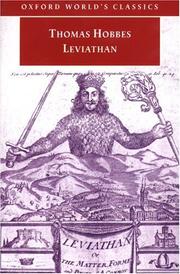 Leviathan 9/10Thomas Hobbes · 1651 AD · England
Hobbes built modern political philosophy from a single brutal premise, life without government is nasty, brutish, and short, and the state exists to prevent it.
- 14
 John Locke · 1689 AD · England
Locke's founding text of liberal democratic theory, natural rights to life, liberty, and property, and the right to overthrow governments that violate them.
- 15
 Being and Time 9/10Martin Heidegger · 1927 AD · Germany
Heidegger's 1927 treatise rebuilt continental philosophy from the ground up, Sartre, Arendt, Gadamer, Derrida, and Foucault all wrote in its long shadow.
- 16
 Poetics 8.5/10Aristotle · 335 BC · Greece (Athens)
Aristotle invented literary criticism in this short treatise, catharsis, mimesis, the unities, the six elements of tragedy, the vocabulary every critic still uses.
- 17
 Meditations 8.5/10Marcus Aurelius · 170 AD · Roman Empire
Marcus Aurelius's private notebook, the diary of a Roman emperor training himself in Stoic discipline, and the most personally affecting philosophical text in the ancient world.
- 18
 Ethics 8.5/10Baruch Spinoza · 1677 AD · Netherlands
Spinoza's 1677 metaphysical system, built Euclid-style from axioms, the radical identification of God with Nature that scandalized his century and shaped every later philosophy.
- 19
 The Spirit of the Laws 8.5/10Montesquieu · 1748 AD · France
Montesquieu's 1748 treatise introduced the separation of powers, the constitutional principle every liberal democracy since has borrowed from it.
- 20
 The Social Contract 8.5/10Jean-Jacques Rousseau · 1762 AD · France/Geneva
Rousseau's 1762 treatise, "Man is born free, and everywhere he is in chains", set the intellectual charge that detonated in the French Revolution twenty-seven years later.
- 21
 Arthur Schopenhauer · 1818 AD · Germany
Schopenhauer's 1818 system, the world as blind striving Will behind all appearance, shaped Wagner, Nietzsche, Tolstoy, Freud, and the whole pessimistic modern temperament.
- 22
 Nature/ Essays 8.5/10Ralph Waldo Emerson · 1836 AD · United States
Emerson's Nature and Essays are the founding documents of American Transcendentalism, the intellectual declaration of independence that made an American literature possible.
- 23
 On Liberty 8.5/10John Stuart Mill · 1859 AD · England
Mill's 1859 treatise gave liberalism its core argument, the harm principle, and the claim that free speech and free thought are the only reliable engines of human progress.
- 24
 Beyond Good and Evil 8.5/10Friedrich Nietzsche · 1886 AD · Germany
Nietzsche's 1886 critique of the entire Western philosophical tradition, master versus slave morality, the will to power, and the first diagnosis of European nihilism.
- 25
 On the Genealogy of Morality 8.5/10Friedrich Nietzsche · 1887 AD · Germany
Nietzsche's 1887 genealogy traced good and evil, guilt and conscience, back to their origins in power and resentment, morality reconceived as a historical product.
Get the Great Books Wall Poster
All 350 books across 4,100 years, organized by era, with a checkbox for each. Print it, frame it, mark your progress. Enter your email and we'll send it over, plus the occasional reading path worth your time. No noise.
Free forever. Unsubscribe anytime. We never share your email.