How to Read the Great Books
Where to start with 350 books spanning 4,100 years, without giving up by February.
The great books have a recruitment problem. Every list of them, including ours, opens with works that are four thousand years old, and every well-meaning reader who decides to "start at the beginning" finds themselves three weeks deep in Sumerian flood narratives wondering whether they are allowed to want something with a plot. You are. The canon is not a syllabus and nobody is grading you. It is a shelf, the best shelf ever assembled, and the only rule that matters is to keep taking books down from it.
This page is the practical, opinionated answer to the question we get most: where do I actually start? Three principles, a first ten, and the free editions.
1. Don't start chronologically
Chronological order is the scholar's order. It front-loads the most alien material (oral epics, wisdom literature, fragmentary poetry) when your reading muscles are weakest. Read the ancient world, absolutely, but read it interleaved with books whose pleasures are more immediate. The catalog's timeline view is there when you want the full sweep; your reading order doesn't have to follow it.
2. Alternate weight classes
Pair every long book with a short one. Crime and Punishment is ~500 pages; Marcus Aurelius' Meditations is ~200 and can be read in fragments on a train. The pattern that survives contact with real life is: one substantial novel going at all times, one short work of philosophy or poetry alongside it, and no guilt about pace. Our 25 shortest great books list exists precisely for the weeks when the long novel is winning.
3. Track it, or it dissolves
A project this size runs on momentum, and momentum runs on visible progress. Readers who keep a simple record (what they read, when, what they thought) stay with the project; readers who don't, drift. That conviction is why we built the reading tracker (a spreadsheet with a progress dashboard, at exactly 1¢ per book) and the free 24×36" wall poster with a checkbox for every title. Use ours or use a notebook, but use something.
A First Ten
Ten books from the catalog chosen for a first year: varied in era and mood, none hostile to newcomers, every one a major work you'll never need to re-justify. Read them in any order, though Gilgamesh first is a quiet thrill: the oldest story we have, and it still works.
- 1
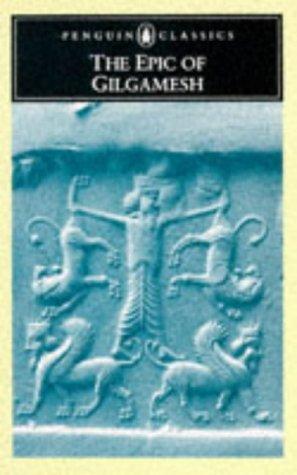 The Epic of GilgameshAnonymous · 2100 BC · ~128 pages
Humanity's oldest surviving long poem, written on clay tablets four thousand years before paper, the source of every later story about a hero confronting his own death.
- 2
 The OdysseyHomer · 725 BC · ~352 pages
The original journey narrative, its word entered every European language, and its plot architecture still structures storytelling from Joyce to Pixar three thousand years later.
- 3
 MeditationsMarcus Aurelius · 170 AD · ~203 pages
Marcus Aurelius's private notebook, the diary of a Roman emperor training himself in Stoic discipline, and the most personally affecting philosophical text in the ancient world.
- 4
 CandideVoltaire · 1759 AD · ~152 pages
Voltaire's 1759 novella demolished Leibnizian optimism with comic precision, the most quoted Enlightenment book, and "We must cultivate our garden" its most famous final sentence.
- 5
 Pride and PrejudiceJane Austen · 1813 AD · ~351 pages
Austen's 1813 novel of manners, Elizabeth Bennet, ironic social observation, and the model of free indirect discourse every later English novelist has studied.
- 6
 Crime and PunishmentFyodor Dostoevsky · 1866 AD · ~493 pages
Dostoevsky's psychological novel of a murder and its aftermath, the work that inaugurated the modern novel of conscience and inspired everyone from Nietzsche to Kafka.
- 7
 The Great GatsbyF. Scott Fitzgerald · 1925 AD · ~186 pages
Fitzgerald's 1925 dissection of the American Dream, Jay Gatsby's doomed pursuit of Daisy, wealth, and reinvention, told in the most lyrical prose in American fiction.
- 8
 1984George Orwell · 1949 AD
Orwell's dystopia gave the language Big Brother, doublethink, thoughtcrime, and Newspeak, the most useful political vocabulary the twentieth century produced.
- 9
 Things Fall ApartChinua Achebe · 1958 AD · ~192 pages
Achebe's 1958 novel founded modern African literature, Okonkwo's Igbo world dismantled by British colonialism, and the first African answer to the European novel of Africa.
- 10
 One Hundred Years of SolitudeGabriel García Márquez · 1967 AD
García Márquez's novel of seven generations in a fictional Colombian town, the founding masterpiece of magical realism and the most influential Spanish-language novel of the twentieth century.
Reading for free
Roughly 180 of the 350 books in this catalog are in the public domain, free to download, legally, in any format. That includes almost everything on the first-ten list published before 1928. Our guide to the greatest books free on Project Gutenberg ranks the best of them, and every book page on this site links directly to its free edition when one exists.
When you're ready for a longer path
After the first ten, the question changes from "where do I start" to "what's my route." That's what the curated lists are for: the 50 greatest of all time if you want the summits, the lists by tradition, century, and genre if you want a region of the map, or the 12 curated reading guides, which sequence the whole catalog into named paths: The Core 50, the Philosophy Path, the Novel's Evolution, the Eastern Canon, and more.
Tools for a Lifetime of Reading
Reading the canon is a long project. These keep it organized, starting with a free poster.
Wall Poster
FreeAll 350 books with checkboxes, print it, frame it, mark your progress.
Reading Tracker
$3.50Spreadsheet with auto-calculated dashboard and reading log. 1¢ per book.
Reading Guides
$4.9912 curated paths through the catalog, The Core 50, Philosophy Path, and more.
Complete Collection
$9.99Everything, e-book, tracker, guides, bookmarks, maps, poster. Save 31%.