The 20 Greatest Epic Poems Ever Written
From Gilgamesh and Homer to Milton and Byron: the longest, grandest, and most ambitious poetic form in world literature.
The epic is the oldest and most demanding poetic form. It was already mature in Mesopotamia four thousand years ago, when an anonymous scribe composed the version of The Epic of Gilgamesh that has come down to us on cuneiform tablets. It reached its first canonical peak in Homer, the two poems that would define Western literature for the next three thousand years. And it kept mattering, in a way that is genuinely surprising, for much longer than anyone might have predicted. Virgil wrote The Aeneid in 19 BC. Dante finished The Divine Comedy in 1320. Ferdowsi completed the Shahnameh in 1010. Milton published Paradise Lost in 1667. That is roughly thirty-five hundred years of continuous epic composition, a form that outlasted the empires it was written for.
What unites these works is less a fixed set of formal features than a particular ambition: to tell a story at civilizational scale. The epic is where a culture writes down what it thinks it is, what its gods are like, what heroism means, and what the relationship is between the individual hero and the community he represents. The invocation, the catalog, the journey to the underworld, the epic simile, the intervention of the divine, these are the machinery a poet uses to make the reader feel that something larger than a single human life is at stake.
The list below is restricted to works the catalog tags as epic. It ranks by Great Books of Mankind score, with chronological order breaking ties. The ancient poems dominate the top half of the list, unsurprisingly, since being first is a considerable advantage in any canon, but Milton, Dante, Ferdowsi, and Tasso hold their own among them.
For what came after the epic form began to decline, see the 25 greatest novels ever written.
Buy links are affiliate links. As an Amazon Associate I earn from qualifying purchases. We are also a Bookshop.org affiliate and earn from qualifying purchases there.
Get the Great Books Wall Poster
All 350 books across 4,100 years, organized by era, with a checkbox for each. Print it, frame it, mark your progress. Enter your email and we'll send it over, plus the occasional reading path worth your time. No noise.
Free forever. Unsubscribe anytime. We never share your email.
- 1
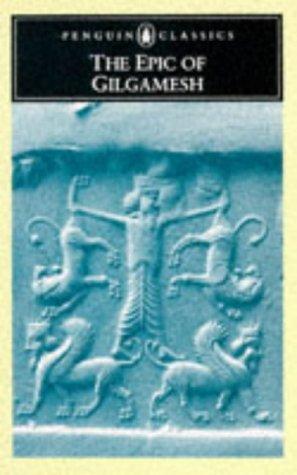 The Epic of Gilgamesh 10/10Anonymous · 2100 BC · Mesopotamia
Humanity's oldest surviving long poem, written on clay tablets four thousand years before paper, the source of every later story about a hero confronting his own death.
- 2
 The Iliad 10/10Homer · 750 BC · Greece
Homer founded Western literature in this poem, a portrait of human rage so exact that no later epic, from Virgil to Tolstoy, has escaped its shadow.
- 3
 The Odyssey 10/10Homer · 725 BC · Greece
The original journey narrative, its word entered every European language, and its plot architecture still structures storytelling from Joyce to Pixar three thousand years later.
- 4
 The Aeneid 10/10Virgil · 19 BC · Roman Empire
Virgil's national epic legitimized Rome to itself and gave the Christian Middle Ages its template for poetic seriousness, Dante's chosen guide through hell.
- 5
 The Divine Comedy 10/10Dante Alighieri · 1320 AD · Italy (Florence)
Dante invented the Italian literary language to write this poem, and in doing so produced the most ambitious vision of the afterlife ever composed.
- 6
 Paradise Lost 9.5/10John Milton · 1667 AD · England
Milton's twelve-book epic of the Fall, the last great work in the Homeric tradition and the most ambitious poem ever written in English.
- 7
 Metamorphoses 9/10Ovid · 8 AD · Roman Empire
Ovid's two-hundred-and-fifty-tale Latin poem of mythological transformations, the single most influential source of imagery for European art and literature for two thousand years.
- 8
 Ferdowsi · 1010 AD · Persia (Iran)
Ferdowsi's sixty-thousand-couplet epic preserved Persian language and identity through three centuries of Arab rule, Iran's national poem and the longest epic ever written by a single author.
- 9
 J.R.R. Tolkien · 1954 AD · Britain
Tolkien's trilogy invented modern fantasy as a genre, a fully imagined world with its own languages and twenty centuries of history, still the most popular novel of the twentieth century.
- 10
 De Rerum Natura 8.5/10Lucretius · 55 BC · Roman Republic
Lucretius's Latin verse treatise on Epicurean atomism, rediscovered in 1417 by Poggio Bracciolini, it helped ignite the Renaissance and still startles with its modernity.
- Free Download
Get the Great Books Wall Poster
All 350 books across 4,100 years, organized by era, with a checkbox for each. Print it, frame it, mark your progress. Enter your email and we'll send it over, plus the occasional reading path worth your time. No noise.
Free forever. Unsubscribe anytime. We never share your email.
- 11
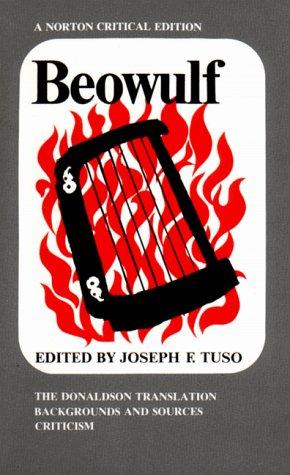 Beowulf 8.5/10Anonymous · 750 AD · England
The greatest surviving work of Old English literature, an eighth-century epic that Tolkien's 1936 essay rescued from the philologists and restored to the canon.
- 12
 Os Lusíadas (The Lusiads) 8.5/10Luís de Camões · 1572 AD · Portugal
Camões's 1572 epic turned Vasco da Gama's voyage to India into a new Aeneid, the supreme literary monument of the Portuguese Age of Exploration.
- 13
 Theogony 8/10Hesiod · 700 BC · Greece
Hesiod's genealogy of the Greek gods, the mythological framework on which all Greek literature was built, and the text Herodotus said gave the Greeks their religion.
- 14
 The Cantos 8/10Ezra Pound · 1925 AD · United States / Italy
Pound's lifelong attempt at a modern epic, multilingual, encyclopedic, sometimes crazy, sometimes sublime; Pound was also the midwife of every major modernist other than himself.
- 15
 Bertolt Brecht · 1941 AD · Germany
Brecht's 1941 epic theatre masterwork, the anti-war play that invented the alienation effect and shaped twentieth-century drama, film, and political rhetoric.
- 16
 Canto General 8/10Pablo Neruda · 1950 AD · Chile
Neruda's 1950 epic poem of the Americas, a political and geographical hymn from the Andes to the Caribbean; probably the most ambitious Latin American poem of the twentieth century.
- 17
 Omeros 7.5/10Derek Walcott · 1990 AD · Saint Lucia
Walcott's 1990 Caribbean reimagining of Homer, Saint Lucian fishermen as Hector and Achilles, postcolonial epic at its peak; the work that sealed Walcott's 1992 Nobel.
- 18
 Mirèio (Mireille) 6.5/10Frédéric Mistral · 1859 AD · France
Mistral's twelve-canto Provençal poem, single-handedly elevated Provençal from a peasant dialect back into a literary language; 1904 Nobel Prize for Literature.
- 19
 Anabasis / Selected Poems 6.5/10Saint-John Perse · 1924 AD · France (Guadeloupe)
Saint-John Perse's epic Anabasis and selected lyrics, translated into English by T.S. Eliot, who also championed the book that eventually won the 1960 Nobel.
- 20
 Aniara 6/10Harry Martinson · 1956 AD · Sweden
Martinson's 1956 science-fiction epic poem, refugees drifting on a lost spaceship from a devastated Earth; the 1974 Nobel (shared) and the strangest Swedish modernist work.
Get the Great Books Wall Poster
All 350 books across 4,100 years, organized by era, with a checkbox for each. Print it, frame it, mark your progress. Enter your email and we'll send it over, plus the occasional reading path worth your time. No noise.
Free forever. Unsubscribe anytime. We never share your email.