Where to Buy
As an Amazon Associate I earn from qualifying purchases. Thanks for supporting the project.
Read / Listen Free
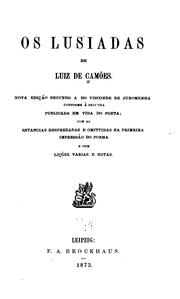
Os Lusíadas (The Lusiads)
8.5Luís de Camões
Ranked 75th of 350 in the Great Books of Mankind catalog, scored 8.5/10. How we rank
Camões's 1572 epic turned Vasco da Gama's voyage to India into a new Aeneid, the supreme literary monument of the Portuguese Age of Exploration.
Get this book
ISBN 9780199539963Public-domain editions also available free, see below.
Summary & Critical Assessment (Score: 8.5/10)
Os Lusiadas is the national epic of Portugal and the supreme literary monument of the Age of Exploration. Luis de Camoes narrates Vasco da Gama's 1497-1499 voyage to India as a new Aeneid, casting the Portuguese people as heirs to the classical heroes and their maritime enterprise as a civilizational achievement on the scale of Rome's founding. The poem stands alongside the Iliad, the Aeneid, and the Divine Comedy in the canon of European epic poetry.
Camoes wrote from direct experience, having spent seventeen years in the Portuguese Empire's Asian territories in Goa, Macau, and Mozambique. Portugal's national day, June 10, is named "Dia de Camoes," and his tomb in the Jeronimos Monastery in Lisbon stands alongside Vasco da Gama's. The poem is the foundation text of Portuguese literary culture across four continents.
The Great Navigations, 1572
Portugal at its imperial zenith. Lisbon is the richest city in Europe, the hub of a maritime empire stretching from Brazil to Macau. Camoes returns after seventeen years in the Portuguese Empire's Asian territories, having survived shipwreck, imprisonment, and combat. He publishes Os Lusiadas two years after his return, casting Vasco da Gama's voyage to India as a new Aeneid. Spain under Philip II is absorbing Portugal (the union comes in 1580). The Council of Trent has just concluded, consolidating the Counter-Reformation. Lepanto (1571) has checked Ottoman naval power in the Mediterranean. The Age of Exploration is remaking the world's geography, economy, and imagination.
Awards & Adaptations
Portugal's national day (June 10) is "Dia de Camões." His tomb is in the Jerónimos Monastery in Lisbon alongside Vasco da Gama himself. Foundation text of Portuguese literary culture across four continents (Portugal, Brazil, Angola, Mozambique, Goa). Continuously in print for 450+ years. Referenced by every subsequent Portuguese-language writer. Fernando Pessoa called Camões "our Homer." Influenced the Luso-Tropical cultural theory of Gilberto Freyre that shaped Brazilian identity.
Recommended Edition
William Julius Mickle trans. (1776); Landeg White trans. (Oxford World's Classics, 1997);, the standard modern English edition