The 25 Greatest Novels Ever Written
From Cervantes' invention of the form in 1605 to the modernist masterpieces of the 20th century: the most ambitious works of prose fiction ever attempted.
The novel is a young form. It does not exist in any meaningful sense before 1605, when Cervantes published the first part of Don Quixote and inadvertently invented the literary mode that would become Western prose's signature achievement. Before Cervantes there were romances, picaresques, allegories, frame-tale collections, lives of saints, and the long Greek prose fictions of late antiquity, but the novel as we know it, with its psychological interiority, its ironic narrator, its self-awareness, and its capacity to absorb every other form into itself, begins with Don Quixote charging the windmills.
What followed in the next four hundred years is, by any reasonable measure, one of the great cultural phenomena in human history. Defoe and Richardson produced the early English novel. Austen perfected its social anatomy. The nineteenth century turned it into the dominant literary form of the West, Stendhal, Balzac, Flaubert, Dickens, the Brontës, Eliot, Tolstoy, Dostoevsky. The twentieth century broke it open and reassembled it: Joyce's Ulysses, Proust's In Search of Lost Time, Kafka's nightmares, Faulkner's Mississippi, García Márquez's Macondo. The list below traces this arc through the 25 highest-scoring works of long-form prose fiction in our catalog.
The selection is restricted to works the catalog tags as Fiction (or genre as novel/novella). It excludes the great epic poems, Homer, Virgil, Dante, Milton, which belong to a different tradition and a different list. It also excludes drama, history, philosophy, and sacred texts, even when they happen to read as narrative. Within those bounds it ranks by Great Books of Mankind score, with chronological order breaking ties.
For the canon's full backbone across all forms, see the 50 greatest books of all time. For the century in which the novel reached its first peak, see the 19th-century list.
Buy links are affiliate links. As an Amazon Associate I earn from qualifying purchases. We are also a Bookshop.org affiliate and earn from qualifying purchases there.
Get the Great Books Wall Poster
All 350 books across 4,100 years, organized by era, with a checkbox for each. Print it, frame it, mark your progress. Enter your email and we'll send it over, plus the occasional reading path worth your time. No noise.
Free forever. Unsubscribe anytime. We never share your email.
- 1
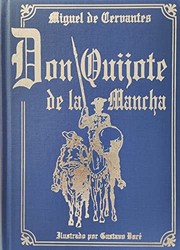 Don Quixote 10/10Miguel de Cervantes · 1605 AD · Spain
The first modern novel, the first novel about a novel, and the first comic masterpiece, Cervantes invented prose fiction's self-awareness in 1605 and no one has surpassed him since.
- 2
 War and Peace 10/10Leo Tolstoy · 1869 AD · Russian Empire
Tolstoy's twelve-hundred-page panorama of Russia under Napoleon, the largest, fullest, most generous novel ever written, and the standard against which all later epics are measured.
- 3
 The Brothers Karamazov 10/10Fyodor Dostoevsky · 1880 AD · Russian Empire
Dostoevsky's final novel and his summation, a murder mystery, a theological argument, and a portrait of human freedom that Freud called the most magnificent novel ever written.
- 4
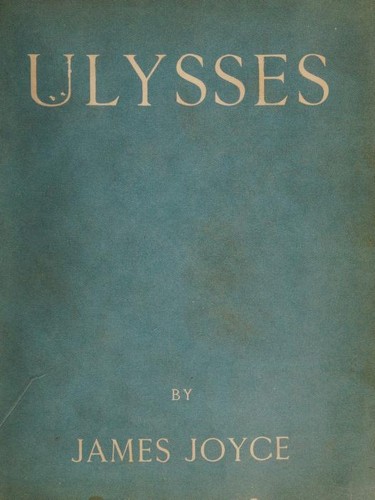 Ulysses 10/10James Joyce · 1922 AD · Ireland
Joyce's eighteen-chapter remake of The Odyssey set in Dublin on a single day in 1904, the most ambitious and most quoted novel of the twentieth century.
- 5
 Moby-Dick 9.5/10Herman Melville · 1851 AD · United States
Melville's vast meditation on obsession, God, and the white whale, the great American novel, ignored in its time, recovered as a masterpiece in the twentieth century.
- 6
 Crime and Punishment 9.5/10Fyodor Dostoevsky · 1866 AD · Russian Empire
Dostoevsky's psychological novel of a murder and its aftermath, the work that inaugurated the modern novel of conscience and inspired everyone from Nietzsche to Kafka.
- 7
 In Search of Lost Time 9.5/10Marcel Proust · 1913 AD · France
Proust's four-thousand-page novel of memory, time, and Parisian society, the most thorough and exquisite act of self-examination ever set down in prose.
- 8
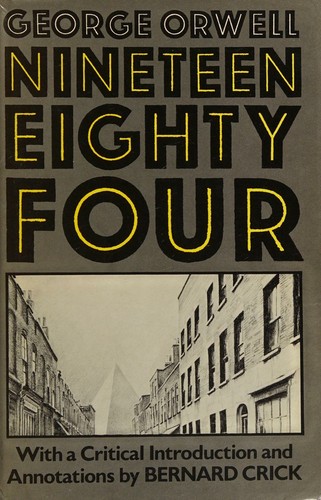 1984 9.5/10George Orwell · 1949 AD · Britain
Orwell's dystopia gave the language Big Brother, doublethink, thoughtcrime, and Newspeak, the most useful political vocabulary the twentieth century produced.
- 9
 Gabriel García Márquez · 1967 AD · Colombia
García Márquez's novel of seven generations in a fictional Colombian town, the founding masterpiece of magical realism and the most influential Spanish-language novel of the twentieth century.
- 10
 Various (compiled, traditional) · 950 AD · Islamic Empire (Persia/Iraq/Egypt)
The frame-tale collection that gave the West Aladdin, Sinbad, Scheherazade, and Ali Baba, and gave the Arabic-speaking world its most famous popular literature.
- Free Download
Get the Great Books Wall Poster
All 350 books across 4,100 years, organized by era, with a checkbox for each. Print it, frame it, mark your progress. Enter your email and we'll send it over, plus the occasional reading path worth your time. No noise.
Free forever. Unsubscribe anytime. We never share your email.
- 11
 Cao Xueqin · 1791 AD · China
Widely regarded as the greatest Chinese novel ever written, Cao Xueqin's eighteenth-century portrait of an aristocratic family's decline sustains an entire field of Chinese literary criticism (Hongxue) devoted to it.
- 12
 Anna Karenina 9/10Leo Tolstoy · 1877 AD · Russian Empire
Tolstoy's other masterpiece, a portrait of adultery, family, and faith whose opening sentence is the most famous first line in fiction.
- 13
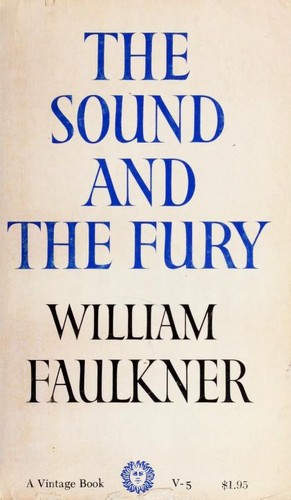 William Faulkner · 1929 AD · United States
Faulkner's Mississippi masterpiece tells one story four times, each from a different consciousness, American modernism's most ambitious formal experiment.
- 14
 Ficciones 9/10Jorge Luis Borges · 1944 AD · Argentina
Borges's short stories invented most of postmodern fiction before it existed, labyrinths, infinite libraries, books that contain all other books.
- 15
 J.R.R. Tolkien · 1954 AD · Britain
Tolkien's trilogy invented modern fantasy as a genre, a fully imagined world with its own languages and twenty centuries of history, still the most popular novel of the twentieth century.
- 16
 Blood Meridian 9/10Cormac McCarthy · 1985 AD · United States
McCarthy's novel of scalp-hunters in the 1850s borderlands, the most violent and most beautifully written American novel of the late twentieth century.
- 17
 The Tale of Genji 8.5/10Murasaki Shikibu · 1010 AD · Japan
Murasaki Shikibu's eleventh-century Heian-court novel is arguably the first novel in world history, psychologically deeper than anything in Europe until Austen.
- 18
 Journey to the West 8.5/10Wu Cheng'en · 1592 AD · China
China's most globally influential novel, Wu Cheng'en's sixteenth-century pilgrimage epic produced the Monkey King, whose adventures still shape East Asian popular culture from Dragon Ball to Hong Kong cinema.
- 19
 Frankenstein 8.5/10Mary Shelley · 1818 AD · England
Mary Shelley invented science fiction at age nineteen, the Promethean parable of a scientist who creates life he cannot control still frames every debate about biotechnology.
- 20
 Honoré de Balzac · 1835 AD · France
The gateway to Balzac's Comédie humaine, ninety interconnected novels that together map French society more completely than any fiction ever attempted before or since.
- 21
 Madame Bovary 8.5/10Gustave Flaubert · 1857 AD · France
Flaubert's 1857 novel set the standard for literary realism, precision, psychological detachment, and the obsessive search for le mot juste that every later novelist has envied.
- 22
 Charles Dickens · 1861 AD · England
Dickens's greatest novels, the most popular English novelist of any era, whose characters (Pip, Scrooge, Miss Havisham) have outlived most literary criticism of his work.
- 23
 Les Misérables 8.5/10Victor Hugo · 1862 AD · France
Hugo's 1862 thousand-page French epic of justice, mercy, and redemption, Jean Valjean and Javert remain two of the most enduring figures in popular fiction.
- 24
 Notes from Underground 8.5/10Fyodor Dostoevsky · 1864 AD · Russian Empire
Dostoevsky's 1864 novella, the first existentialist work in fiction; the Underground Man's corrosive monologue is the taproot of Nietzsche, Kafka, and Camus.
- 25
 The Idiot 8.5/10Fyodor Dostoevsky · 1869 AD · Russian Empire
Dostoevsky's attempt to portray a "positively beautiful man", a Christ-like prince destroyed by the corrupt society into which he enters.
Get the Great Books Wall Poster
All 350 books across 4,100 years, organized by era, with a checkbox for each. Print it, frame it, mark your progress. Enter your email and we'll send it over, plus the occasional reading path worth your time. No noise.
Free forever. Unsubscribe anytime. We never share your email.