Non-fiction
17 works in this collection, sorted chronologically.
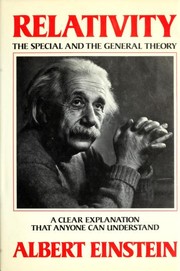
Non-fiction is the catalog's residual category, the works that mattered enough to include but didn't fit cleanly into Philosophy, History, Science, Religion, or any of the other prestige genres that have their own facet on this site. What's left is unusually heterogeneous. Byrhtferth's eleventh-century Enchiridion sits on the same shelf as Satoshi Nakamoto's Bitcoin whitepaper. Einstein's primer on relativity sits next to Frazer's comparative anthropology, Hayek's diagnosis of central planning, and Solzhenitsyn's catalogue of the Gulag. The fifteen works below span a thousand years and have almost nothing in common except the negative: they are not novels, not poems, not plays, not systematic philosophy.
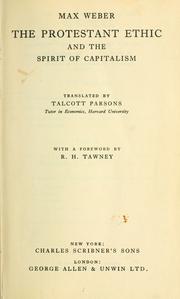
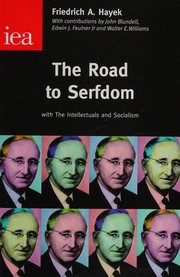
What does unify them is the posture. Each takes a real piece of the world, a religious tradition, an economy, a scientific concept, a historical horror, and tries to describe it directly. Frazer in The Golden Bough maps the comparative structure of religion across cultures the late-nineteenth-century West was just learning to see. Weber in The Protestant Ethic and the Spirit of Capitalism traces a specific cultural lineage from Calvinist theology to bourgeois work-discipline. Hayek in The Road to Serfdom explains why central planning, however well-intentioned, slides into authoritarianism. Solzhenitsyn in The Gulag Archipelago documents Soviet terror at scale, working from interviews with hundreds of survivors. Each is an argument by description: here is something real, look at it carefully, draw your own conclusions.
The twentieth and twenty-first centuries dominate the list because non-fiction in this honest reportorial mode is largely a modern invention, earlier centuries channeled their best descriptive work into theology, history, or scientific treatises that read more like philosophy than journalism. By the time you reach Annie Ernaux's collective memoir The Years, Svetlana Alexievich's oral history Secondhand Time, or the Yudkowsky–Soares warning about superhuman AI, the form has matured into something distinctly contemporary: serious, first-person where it needs to be, structurally inventive, and unafraid to take a position. The list below is sorted chronologically; the modern reader will recognize most of the second half.
Get the Great Books Wall Poster
All 350 books across 4,100 years, organized by era, with a checkbox for each. Print it, frame it, mark your progress. Enter your email and we'll send it over, plus the occasional reading path worth your time. No noise.
Free forever. Unsubscribe anytime. We never share your email.










Get the Great Books Wall Poster
All 350 books across 4,100 years, organized by era, with a checkbox for each. Print it, frame it, mark your progress. Enter your email and we'll send it over, plus the occasional reading path worth your time. No noise.
Free forever. Unsubscribe anytime. We never share your email.