Where to Buy
As an Amazon Associate I earn from qualifying purchases. Thanks for supporting the project.
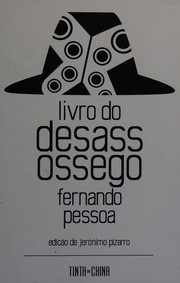
The Book of Disquiet / Poetry of the Heteronyms
8.5Fernando Pessoa
Ranked 117th of 350 in the Great Books of Mankind catalog, scored 8.5/10. How we rank
Pessoa's Book of Disquiet and the heteronyms, poetry attributed to entirely invented poets with their own biographies and philosophies, the strangest literary experiment of the twentieth century.
Get this book
ISBN 9780141183046Summary & Critical Assessment (Score: 8.5/10)
The Book of Disquiet and the poetry of the heteronyms represent the most radical literary experiment of the twentieth century. Fernando Pessoa created not pseudonyms but fully realized heteronyms: fictional poets each with a distinct biography, philosophy, aesthetic, and writing style. This unprecedented multiplication of artistic identity anticipated postmodern theories of the self by half a century and produced some of the finest poetry and prose in any language.
Pessoa lived his entire adult life in Lisbon, working as a commercial translator while creating an entire literary universe in obscurity. He published little in his lifetime, and it was only after his death in 1935 that the trunk containing over 25,000 manuscript pages revealed the scope of his achievement. Harold Bloom called Pessoa "the Whitman of the Portuguese language," and his cafe table statue at A Brasileira in Lisbon has become a site of literary pilgrimage.
Europe Under Fascism, 1934-1935
Mussolini's Italy and Hitler's Germany consolidate totalitarian power. Gramsci writes in Mussolini's prisons, producing 3,000 pages of political theory in code. Pessoa works in obscurity in Lisbon, creating an entire literary universe that will not be discovered until after his death. Stalin's purges begin in the Soviet Union. Spain teeters on the brink of civil war. European intellectual life is being crushed, imprisoned, or driven into exile.
Awards & Adaptations
Posthumous global recognition as one of the 20th century's greatest writers. Harold Bloom: "Pessoa is the Whitman of the Portuguese language." Café A Brasileira statue in Lisbon is a pilgrimage site. The trunk of 27,000 pages is Portugal's most important literary archive. Influenced Roberto Bolaño, Antonio Tabucchi (who devoted his career to Pessoa), and the broader postmodern exploration of fragmented identity. Tabucchi's novel Pereira Maintains is a Pessoa homage. UNESCO recognized his archives.
Recommended Edition
Richard Zenith trans., The Book of Disquiet (Penguin Classics, 2001; rev. 2024); Zenith ed., Fernando Pessoa & Co.: Selected Poems (Grove, 1998); Margaret Jull Costa & Patricio Ferrari trans., The Complete Works of Alberto Caeiro (New Directions, 2020)


