Where to Buy
As an Amazon Associate I earn from qualifying purchases. Thanks for supporting the project.
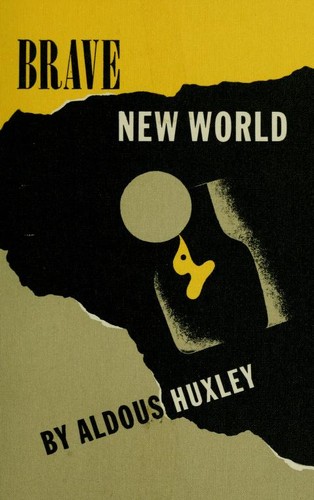
Brave New World
8.5Aldous Huxley
Ranked 115th of 350 in the Great Books of Mankind catalog, scored 8.5/10. How we rank
Huxley's 1932 dystopia imagines a society controlled not by terror but by pleasure, genetic engineering, conditioning, and the sedative drug soma, the twentieth century's other dystopian classic.
Get this book
ISBN 9781841593593Summary & Critical Assessment (Score: 8.5/10)
Aldous Huxley's Brave New World imagines a dystopia sustained not by force but by pleasure, through genetic engineering, psychological conditioning, and the sedative drug soma, making it a prescient novels of the twentieth century. Its vision of a society that trades freedom for comfort has grown only more relevant with advances in biotechnology, pharmacology, and mass entertainment.
Begun during the interwar period of deep anxiety about the future of civilization, Brave New World offers a counterpoint to George Orwell's later Nineteen Eighty-Four: where Orwell imagined control through pain, Huxley envisioned control through pleasure. The novel's warnings about consumerism, technological manipulation, and the erosion of individual autonomy have inspired multiple television adaptations and remain central to discussions of literature and society.
Depression-Era Literature, 1931-1932
The Depression deepens. Huxley's Brave New World imagines dystopia through pleasure. Celine's Journey revolutionizes French prose. Buck bridges East and West. Schmitt publishes The Concept of the Political the year before Hitler takes power, functioning as both a diagnosis of liberal democracy's crisis and, unwittingly, a blueprint. Japan invades Manchuria. The Weimar Republic enters its terminal crisis.
Awards & Adaptations
TV adaptations. Core alongside 1984.
Recommended Edition
First ed. (1932)