The 25 Greatest Books of the 19th Century
The century of the novel, the century of Marx and Darwin, and the century in which the Russians wrote books that no one has been able to surpass.
The nineteenth century is the high noon of the novel. The form had existed since Cervantes, but in the hundred years between Goethe's Faust and the death of Tolstoy it became the dominant literary mode of the West, the vehicle that did the cultural work that drama had done for the Greeks and the epic for the Romans. Stendhal, Balzac, and Flaubert built the realist novel in France. Dickens, Eliot, and the Brontës built it in English. And then, as if to settle the matter forever, Tolstoy and Dostoevsky in Russia produced the four or five novels, War and Peace, Anna Karenina, The Brothers Karamazov, Crime and Punishment, The Idiot, that every later novelist has had to reckon with.
But the century's greatest books are not all novels. Marx and Engels published The Communist Manifesto in 1848 and Capital in 1867, books whose political consequences would not be fully felt for another seventy years. Darwin's On the Origin of Species (1859) ended teleology in biology and started the modern argument about what it means to be human. Hegel, Schopenhauer, Kierkegaard, Nietzsche, and Mill produced philosophy that the twentieth century would still be trying to digest. Newton's universe was now Faraday and Maxwell's. The intellectual furniture of modernity was assembled in this hundred years.
The list below is restricted to books first published between 1800 and 1899. Drawn from the 74 nineteenth-century works in our catalog and ranked by Great Books of Mankind score, with chronological order breaking ties. The Russians are unmissable, but so are the German philosophers, the French novelists, and Melville, who in 1851 wrote a book about a whale that nobody read for sixty years and that nearly everyone now considers the great American novel.
For what came next, see the 20th century list. For the canon's full backbone, see the 50 greatest books of all time.
Buy links are affiliate links. As an Amazon Associate I earn from qualifying purchases. We are also a Bookshop.org affiliate and earn from qualifying purchases there.
Get the Great Books Wall Poster
All 350 books across 4,100 years, organized by era, with a checkbox for each. Print it, frame it, mark your progress. Enter your email and we'll send it over, plus the occasional reading path worth your time. No noise.
Free forever. Unsubscribe anytime. We never share your email.
- 1
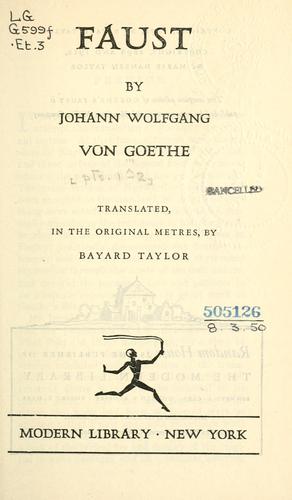 Faust (Parts I & II) 10/10J.W. von Goethe · 1832 AD · Germany
Goethe's lifelong drama of a man who sells his soul for knowledge, the founding modern myth of overreach and the cost of becoming the person you wanted to be.
- 2
 War and Peace 10/10Leo Tolstoy · 1869 AD · Russian Empire
Tolstoy's twelve-hundred-page panorama of Russia under Napoleon, the largest, fullest, most generous novel ever written, and the standard against which all later epics are measured.
- 3
 The Brothers Karamazov 10/10Fyodor Dostoevsky · 1880 AD · Russian Empire
Dostoevsky's final novel and his summation, a murder mystery, a theological argument, and a portrait of human freedom that Freud called the most magnificent novel ever written.
- 4
 Thus Spoke Zarathustra 10/10Friedrich Nietzsche · 1885 AD · Germany
Nietzsche's prose-poem of the death of God and the birth of the overman, the book that, more than any other, shaped twentieth-century thought, art, and catastrophe.
- 5
 The Phenomenology of Spirit 9.5/10G.W.F. Hegel · 1807 AD · Germany
Hegel's history of consciousness, notoriously difficult, foundational to Marx, existentialism, and the entire continental tradition that followed.
- 6
 The Communist Manifesto 9.5/10Karl Marx & Friedrich Engels · 1848 AD · Germany/Belgium
Forty pages that reshaped the twentieth century, Marx and Engels wrote the most consequential political pamphlet in modern history, for better and for worse.
- 7
 Moby-Dick 9.5/10Herman Melville · 1851 AD · United States
Melville's vast meditation on obsession, God, and the white whale, the great American novel, ignored in its time, recovered as a masterpiece in the twentieth century.
- 8
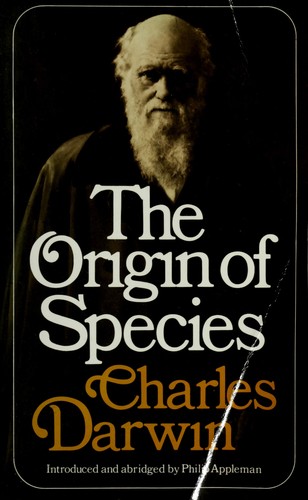 On the Origin of Species 9.5/10Charles Darwin · 1859 AD · England
Darwin's calm, careful book that ended teleology in biology and gave the modern world its only coherent account of where we came from.
- 9
 Crime and Punishment 9.5/10Fyodor Dostoevsky · 1866 AD · Russian Empire
Dostoevsky's psychological novel of a murder and its aftermath, the work that inaugurated the modern novel of conscience and inspired everyone from Nietzsche to Kafka.
- 10
 Democracy in America 9/10Alexis de Tocqueville · 1835 AD · France (about USA)
Tocqueville's nineteenth-century French analysis of the young American republic, still the most penetrating book ever written about how democracy actually works.
- Free Download
Get the Great Books Wall Poster
All 350 books across 4,100 years, organized by era, with a checkbox for each. Print it, frame it, mark your progress. Enter your email and we'll send it over, plus the occasional reading path worth your time. No noise.
Free forever. Unsubscribe anytime. We never share your email.
- 11
 Das Kapital 9/10Karl Marx · 1867 AD · Germany/Britain
Marx's thousand-page anatomy of capitalism, surplus value, commodity fetishism, class struggle, the foundational text of every socialist movement since 1867.
- 12
 Anna Karenina 9/10Leo Tolstoy · 1877 AD · Russian Empire
Tolstoy's other masterpiece, a portrait of adultery, family, and faith whose opening sentence is the most famous first line in fiction.
- 13
 Frankenstein 8.5/10Mary Shelley · 1818 AD · England
Mary Shelley invented science fiction at age nineteen, the Promethean parable of a scientist who creates life he cannot control still frames every debate about biotechnology.
- 14
 Arthur Schopenhauer · 1818 AD · Germany
Schopenhauer's 1818 system, the world as blind striving Will behind all appearance, shaped Wagner, Nietzsche, Tolstoy, Freud, and the whole pessimistic modern temperament.
- 15
 Honoré de Balzac · 1835 AD · France
The gateway to Balzac's Comédie humaine, ninety interconnected novels that together map French society more completely than any fiction ever attempted before or since.
- 16
 Nature/ Essays 8.5/10Ralph Waldo Emerson · 1836 AD · United States
Emerson's Nature and Essays are the founding documents of American Transcendentalism, the intellectual declaration of independence that made an American literature possible.
- 17
 Leaves of Grass 8.5/10Walt Whitman · 1855 AD · United States
Whitman's 1855 collection invented American poetry, free verse, democratic embrace, and a barbaric yawp that every later American poet has either answered or imitated.
- 18
 Madame Bovary 8.5/10Gustave Flaubert · 1857 AD · France
Flaubert's 1857 novel set the standard for literary realism, precision, psychological detachment, and the obsessive search for le mot juste that every later novelist has envied.
- 19
 The Flowers of Evil 8.5/10Charles Baudelaire · 1857 AD · France
Baudelaire's 1857 collection founded modern poetry, the beauty found in decadence, urban alienation, and corruption that shaped Rimbaud, Eliot, and the entire twentieth century.
- 20
 On Liberty 8.5/10John Stuart Mill · 1859 AD · England
Mill's 1859 treatise gave liberalism its core argument, the harm principle, and the claim that free speech and free thought are the only reliable engines of human progress.
- 21
 Charles Dickens · 1861 AD · England
Dickens's greatest novels, the most popular English novelist of any era, whose characters (Pip, Scrooge, Miss Havisham) have outlived most literary criticism of his work.
- 22
 Les Misérables 8.5/10Victor Hugo · 1862 AD · France
Hugo's 1862 thousand-page French epic of justice, mercy, and redemption, Jean Valjean and Javert remain two of the most enduring figures in popular fiction.
- 23
 Notes from Underground 8.5/10Fyodor Dostoevsky · 1864 AD · Russian Empire
Dostoevsky's 1864 novella, the first existentialist work in fiction; the Underground Man's corrosive monologue is the taproot of Nietzsche, Kafka, and Camus.
- 24
 The Idiot 8.5/10Fyodor Dostoevsky · 1869 AD · Russian Empire
Dostoevsky's attempt to portray a "positively beautiful man", a Christ-like prince destroyed by the corrupt society into which he enters.
- 25
 Middlemarch 8.5/10George Eliot · 1871 AD · England
Eliot's novel of provincial English life, the book Virginia Woolf called "one of the few English novels written for grown-up people," and the deepest novel of nineteenth-century English fiction.
Get the Great Books Wall Poster
All 350 books across 4,100 years, organized by era, with a checkbox for each. Print it, frame it, mark your progress. Enter your email and we'll send it over, plus the occasional reading path worth your time. No noise.
Free forever. Unsubscribe anytime. We never share your email.