The 25 Shortest Great Books
For readers who want civilization's best writing without committing to a thousand-page novel. Every work here is under 200 pages.
A disproportionate number of the most important books in history are short. Machiavelli's The Prince is about a hundred pages. The Communist Manifesto is forty. The Analects is essentially a small book of sayings. The Dao De Jing is eighty-one terse verses. The best of Kafka's stories fit in a slender volume. The novels that made Camus, Orwell, and Hemingway famous, The Stranger, Animal Farm, The Old Man and the Sea, are all under two hundred pages.
There is a reason for this. A short book is usually the result of a very long period of compression, of an author working out what he actually wants to say and then cutting away everything that isn't necessary. The Russian novelists wrote at a thousand pages because their ambition was architectural, they were building a whole society on the page. Most of the writers on this list are not doing that. They are doing something more like what a poet does: they are writing the single sentence, the single scene, the single argument that cannot be shortened any further.
For the reader with limited time, this list is a gift. Every book below is under two hundred pages, and every one of them is rated highly enough in our catalog to sit among the thousand most important books ever written. They range from The Prince and The Communist Manifesto at the political-philosophy end, to Kafka, Camus, and Borges at the fiction end, to Bashō and Sappho at the poetry end. The ranking is by Great Books of Mankind score, with shorter books breaking ties.
For the opposite problem, the thousand-page novels that repay the investment, see the longest great novels.
Buy links are affiliate links. As an Amazon Associate I earn from qualifying purchases. We are also a Bookshop.org affiliate and earn from qualifying purchases there.
Get the Great Books Wall Poster
All 350 books across 4,100 years, organized by era, with a checkbox for each. Print it, frame it, mark your progress. Enter your email and we'll send it over, plus the occasional reading path worth your time. No noise.
Free forever. Unsubscribe anytime. We never share your email.
- 1
 The Analects 10/10Confucius · 500 BC · China
A collection of sayings that became the operating manual of East Asian civilization for two and a half millennia, shaping ethics, governance, and education across China, Korea, and Japan.
- 2
 The Epic of Gilgamesh 10/10Anonymous · 2100 BC · Mesopotamia
Humanity's oldest surviving long poem, written on clay tablets four thousand years before paper, the source of every later story about a hero confronting his own death.
- 3
 The Communist Manifesto 9.5/10Karl Marx & Friedrich Engels · 1848 AD · Germany/Belgium
Forty pages that reshaped the twentieth century, Marx and Engels wrote the most consequential political pamphlet in modern history, for better and for worse.
- 4
 The Prince 9.5/10Niccolò Machiavelli · 1532 AD · Italy (Florence)
Machiavelli stripped the moral pretense from political power and produced the founding text of modern political realism, read every century, denied every century, applied every century.
- 5
 The Waste Land 9/10T.S. Eliot · 1922 AD · Britain (USA)
Eliot's 1922 poem fractured modernist poetry open, 434 lines of collage, allusion, and ruin that became the signature literary artifact of its century.
- 6
 Antigone 9/10Sophocles · 441 BC · Greece (Athens)
Sophocles's drama of a woman who defies the king to bury her brother, the founding Western statement of conscience against the state, debated every century since.
- 7
 Medea 9/10Euripides · 431 BC · Greece (Athens)
Euripides's play of a woman who murders her own children to revenge a faithless husband, the most disturbing portrait of female rage in ancient literature.
- 8
 Dao De Jing 9/10Laozi (attr.) · 400 BC · China
Eighty-one short verses that founded Daoism, the second pillar of Chinese philosophy, paradoxical, lapidary, and quietly the most influential short book ever written.
- 9
 Waiting for Godot 9/10Samuel Beckett · 1952 AD · France (Ireland)
Beckett's 1952 play, two tramps waiting for someone who never arrives, stripped drama to its bones and invented absurdist theatre in a single stage.
- 10
 Ficciones 9/10Jorge Luis Borges · 1944 AD · Argentina
Borges's short stories invented most of postmodern fiction before it existed, labyrinths, infinite libraries, books that contain all other books.
- Free Download
Get the Great Books Wall Poster
All 350 books across 4,100 years, organized by era, with a checkbox for each. Print it, frame it, mark your progress. Enter your email and we'll send it over, plus the occasional reading path worth your time. No noise.
Free forever. Unsubscribe anytime. We never share your email.
- 11
 Mark Twain · 1884 AD · United States
Twain's 1884 novel, "All modern American literature comes from" it, Hemingway said, a raft trip down the Mississippi that confronted slavery more honestly than any book of its century.
- 12
 Four Quartets 8.5/10T.S. Eliot · 1943 AD · Britain (USA)
Eliot's 1943 philosophical poem cycle, four meditations on time, history, and redemption, generally considered the supreme achievement in twentieth-century religious poetry.
- 13
 The Metamorphosis 8.5/10Franz Kafka · 1915 AD · Austria-Hungary
Kafka's 1915 novella, Gregor Samsa wakes transformed into an insect, the most famous opening image in twentieth-century literature and a diagnosis of modern alienation.
- 14
 L.-F. Céline · 1932 AD · France
Céline's 1932 debut shattered French literary prose with its raw, colloquial voice and its pitiless view of war, colonialism, and Depression-era America.
- 15
 The Trial 8.5/10Franz Kafka · 1925 AD · Austria-Hungary
Kafka's novel of a man arrested and prosecuted by an inscrutable authority for an unspecified crime, the twentieth century's defining nightmare of guilt without transgression.
- 16
 Animal Farm 8.5/10George Orwell · 1945 AD · Britain
Orwell's 1945 fable of a farmyard revolution that becomes a tyranny, "All animals are equal, but some animals are more equal than others," the clearest anti-Stalinist allegory ever written.
- 17
 Poetics 8.5/10Aristotle · 335 BC · Greece (Athens)
Aristotle invented literary criticism in this short treatise, catharsis, mimesis, the unities, the six elements of tragedy, the vocabulary every critic still uses.
- 18
 Pedro Páramo 8.5/10Juan Rulfo · 1955 AD · Mexico
Rulfo's 1955 Mexican novel of a ghost town and its tyrannical patriarch, the founding work of magical realism and the book García Márquez credited as the decisive influence on his own.
- 19
 Heart of Darkness 8.5/10Joseph Conrad · 1899 AD · Britain (Poland)
Conrad's 1899 novella, a journey up the Congo that is also a descent into the moral night of European imperialism; Kurtz's "The horror! The horror!" has become a culture's shorthand for the end of civilization.
- 20
 The Bacchae 8.5/10Euripides · 405 BC · Greece (Athens)
Euripides's final tragedy, reason versus ecstasy, the civic order destroyed by the wild god Dionysus; Nietzsche's The Birth of Tragedy is essentially a commentary on it.
- 21
 Beowulf 8.5/10Anonymous · 750 AD · England
The greatest surviving work of Old English literature, an eighth-century epic that Tolkien's 1936 essay rescued from the philologists and restored to the canon.
- 22
 Ludwig Wittgenstein · 1921 AD · Austria/Britain
Wittgenstein's 1921 attempt to delineate the logical structure of language, "Whereof one cannot speak, thereof one must be silent," and the founding text of analytic philosophy.
- 23
 The Flowers of Evil 8.5/10Charles Baudelaire · 1857 AD · France
Baudelaire's 1857 collection founded modern poetry, the beauty found in decadence, urban alienation, and corruption that shaped Rimbaud, Eliot, and the entire twentieth century.
- 24
 Beyond Good and Evil 8.5/10Friedrich Nietzsche · 1886 AD · Germany
Nietzsche's 1886 critique of the entire Western philosophical tradition, master versus slave morality, the will to power, and the first diagnosis of European nihilism.
- 25
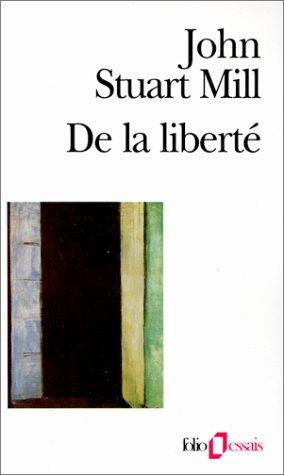 On Liberty 8.5/10John Stuart Mill · 1859 AD · England
Mill's 1859 treatise gave liberalism its core argument, the harm principle, and the claim that free speech and free thought are the only reliable engines of human progress.
Get the Great Books Wall Poster
All 350 books across 4,100 years, organized by era, with a checkbox for each. Print it, frame it, mark your progress. Enter your email and we'll send it over, plus the occasional reading path worth your time. No noise.
Free forever. Unsubscribe anytime. We never share your email.