The 25 Greatest Works of French Literature
Montaigne, Molière, Racine, Voltaire, Rousseau, Balzac, Flaubert, Baudelaire, Proust, Camus: the tradition that built the European novel and the modern essay.
No modern literature has mattered more, for longer, to more of Europe than the French. From the Chanson de Roland in the eleventh century through the prose of Montaigne, the tragedies of Racine, the essays of Pascal and Voltaire, the novels of Stendhal, Balzac, Flaubert, and Proust, and the twentieth-century work of Camus, Sartre, and Beauvoir, French writers have been the source from which other European literatures borrowed their forms. The essay as a literary genre is French. The modern novel of psychological realism is arguably French. The novel of ideas is unquestionably French.
France also produced the intellectual furniture of modernity. The Enlightenment, Voltaire, Rousseau, Diderot, Montesquieu, worked out the vocabulary of liberalism, secularism, and human rights that every subsequent political order in the West has had to contend with. The Revolution of 1789 was an event made possible by sixty years of French political writing. Three hundred years later, the French intellectual still occupies a cultural position that has no real equivalent in any other country, a public figure whose opinions on novels, wars, and philosophical questions are taken seriously by people who will never read his books.
The list below includes works by authors who worked in French, regardless of where they were born or eventually settled. It includes Francophone writers from North Africa and the Caribbean who made decisive contributions to the tradition. It ranks by Great Books of Mankind score, with chronological order breaking ties. Twenty-five is a small window on a vast literature; the selection is necessarily incomplete but is intended to represent the highlights fairly across genres and centuries.
For the century in which the French novel reached its peak, see the greatest books of the 19th century. For the form itself, see the greatest novels ever written.
Buy links are affiliate links. As an Amazon Associate I earn from qualifying purchases. We are also a Bookshop.org affiliate and earn from qualifying purchases there.
Get the Great Books Wall Poster
All 350 books across 4,100 years, organized by era, with a checkbox for each. Print it, frame it, mark your progress. Enter your email and we'll send it over, plus the occasional reading path worth your time. No noise.
Free forever. Unsubscribe anytime. We never share your email.
- 1
 In Search of Lost Time 9.5/10Marcel Proust · 1913 AD · France
Proust's four-thousand-page novel of memory, time, and Parisian society, the most thorough and exquisite act of self-examination ever set down in prose.
- 2
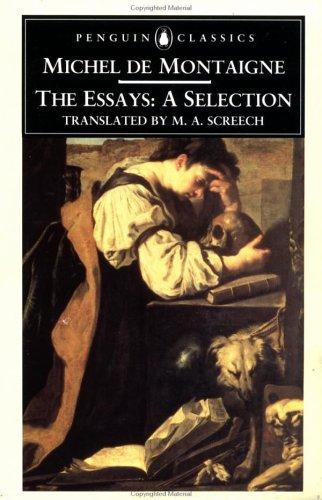 Essays 9/10Michel de Montaigne · 1580 AD · France
Montaigne invented the personal essay as a form, frank, digressive, self-questioning prose that became the model for everyone from Bacon to David Foster Wallace.
- 3
 Democracy in America 9/10Alexis de Tocqueville · 1835 AD · France (about USA)
Tocqueville's nineteenth-century French analysis of the young American republic, still the most penetrating book ever written about how democracy actually works.
- 4
 Waiting for Godot 9/10Samuel Beckett · 1952 AD · France (Ireland)
Beckett's 1952 play, two tramps waiting for someone who never arrives, stripped drama to its bones and invented absurdist theatre in a single stage.
- 5
 Dom Juan 8.5/10Molière (Jean-Baptiste Poquelin) · 1665 AD · France
Molière's 1665 comedy created one of Western culture's defining archetypes, the libertine seducer who would reappear in Mozart, Byron, Kierkegaard, and Camus.
- 6
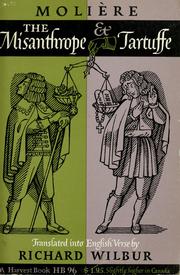 The Misanthrope / Tartuffe 8.5/10Molière (Jean-Baptiste Poquelin) · 1666 AD · France
Molière's greatest comedies, Tartuffe attacked religious hypocrisy so effectively Louis XIV banned it; his body of work is to French comedy what Shakespeare is to English drama.
- 7
 Pensées 8.5/10Blaise Pascal · 1670 AD · France
Pascal's unfinished fragments of Christian apologetics, containing the famous wager and some of the most penetrating psychology ever written about faith, doubt, and human misery.
- 8
 The Spirit of the Laws 8.5/10Montesquieu · 1748 AD · France
Montesquieu's 1748 treatise introduced the separation of powers, the constitutional principle every liberal democracy since has borrowed from it.
- 9
 The Social Contract 8.5/10Jean-Jacques Rousseau · 1762 AD · France/Geneva
Rousseau's 1762 treatise, "Man is born free, and everywhere he is in chains", set the intellectual charge that detonated in the French Revolution twenty-seven years later.
- 10
 Honoré de Balzac · 1835 AD · France
The gateway to Balzac's Comédie humaine, ninety interconnected novels that together map French society more completely than any fiction ever attempted before or since.
- Free Download
Get the Great Books Wall Poster
All 350 books across 4,100 years, organized by era, with a checkbox for each. Print it, frame it, mark your progress. Enter your email and we'll send it over, plus the occasional reading path worth your time. No noise.
Free forever. Unsubscribe anytime. We never share your email.
- 11
 Madame Bovary 8.5/10Gustave Flaubert · 1857 AD · France
Flaubert's 1857 novel set the standard for literary realism, precision, psychological detachment, and the obsessive search for le mot juste that every later novelist has envied.
- 12
 The Flowers of Evil 8.5/10Charles Baudelaire · 1857 AD · France
Baudelaire's 1857 collection founded modern poetry, the beauty found in decadence, urban alienation, and corruption that shaped Rimbaud, Eliot, and the entire twentieth century.
- 13
 Les Misérables 8.5/10Victor Hugo · 1862 AD · France
Hugo's 1862 thousand-page French epic of justice, mercy, and redemption, Jean Valjean and Javert remain two of the most enduring figures in popular fiction.
- 14
 L.-F. Céline · 1932 AD · France
Céline's 1932 debut shattered French literary prose with its raw, colloquial voice and its pitiless view of war, colonialism, and Depression-era America.
- 15
 Jean-Paul Sartre · 1938 AD · France
Sartre's philosophical treatise and its fictional companion, existence precedes essence, man is condemned to be free, the founding texts of postwar existentialism.
- 16
 The Stranger 8.5/10Albert Camus · 1942 AD · France (Algeria)
Camus's 1942 novel of the absurd, Meursault's refusal to perform the emotions society demands, the most widely read philosophical novel of the twentieth century.
- 17
 The Second Sex 8.5/10Simone de Beauvoir · 1949 AD · France
Beauvoir's 1949 founding text of modern feminism, "One is not born, but rather becomes, a woman", and the most rigorous philosophical analysis of women's condition ever attempted.
- 18
 Candide 8/10Voltaire · 1759 AD · France
Voltaire's 1759 novella demolished Leibnizian optimism with comic precision, the most quoted Enlightenment book, and "We must cultivate our garden" its most famous final sentence.
- 19
 Red and Black 8/10Stendhal · 1830 AD · France
Stendhal's 1830 novel of social ambition, Julien Sorel torn between passion and calculation in post-Napoleonic France; the first truly psychological novel.
- 20
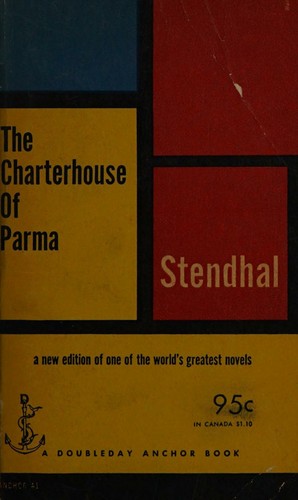 Stendhal · 1839 AD · France
Stendhal's 1839 novel of Napoleonic Italy, romantic and political intrigue told with psychological precision that Balzac called genius and Tolstoy built on.
- 21
 Arthur Rimbaud · 1873 AD · France
Rimbaud's complete poetic output, revolutionized French poetry before age twenty, then abandoned literature entirely; the foundational text of European modernism.
- 22
 The Little Prince 8/10Antoine de Saint-Exupéry · 1943 AD · France
Saint-Exupéry's philosophical fable, over 200 million copies sold, translated into 300+ languages, one of the most widely read non-religious books ever written.
- 23
 The Plague 8/10Albert Camus · 1947 AD · France
Camus's 1947 novel of an epidemic in Algerian Oran, an allegory of moral resistance against suffering, read again urgently during every pandemic since.
- 24
 Guy Debord · 1967 AD · France
Debord's 1967 critique, authentic social life replaced by its representation, the "spectacle", the foundational text of postwar critical theory and the prophetic book of the media age.
- 25
 The Count of Monte Cristo 7.5/10Alexandre Dumas · 1844 AD · France
Dumas's 1844 novel of wrongful imprisonment and elaborate revenge, the supreme adventure novel and the template for every later revenge narrative.
Get the Great Books Wall Poster
All 350 books across 4,100 years, organized by era, with a checkbox for each. Print it, frame it, mark your progress. Enter your email and we'll send it over, plus the occasional reading path worth your time. No noise.
Free forever. Unsubscribe anytime. We never share your email.