Where to Buy
As an Amazon Associate I earn from qualifying purchases. Thanks for supporting the project.
Read / Listen Free
Essays
9Michel de Montaigne
Ranked 49th of 350 in the Great Books of Mankind catalog, scored 9/10. How we rank
Montaigne invented the personal essay as a form, frank, digressive, self-questioning prose that became the model for everyone from Bacon to David Foster Wallace.
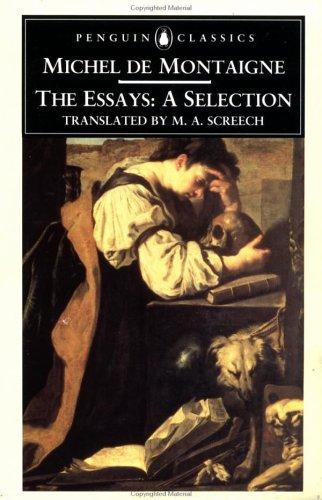
Get this book
ISBN 9780140446029Public-domain editions also available free, see below.
Summary & Critical Assessment (Score: 9/10)
Michel de Montaigne's Essays invented the essay as a literary form and pioneered the modern practice of self-examination. Through his skepticism, tolerance, and humanism, Montaigne created a new mode of writing that was at once deeply personal and universally resonant, inviting readers to examine their own assumptions and experiences alongside his own.
Drafted during the devastating French Wars of Religion, the Essays introduced the word "essai" (attempt or trial) into literary vocabulary, reflecting Montaigne's modest, exploratory approach to knowledge. Shakespeare read John Florio's English translation, and Montaigne's influence extends through Blaise Pascal, Ralph Waldo Emerson, and Friedrich Nietzsche. and Oxford.
The Renaissance & Reformation, c. 1532-1580
Martin Luther's 95 Theses (1517) ignite the Protestant Reformation, permanently fracturing Western Christianity. His German Bible translation (NT 1522, complete 1534) democratizes scripture and establishes modern literary German. Luther relegates the Catholic deuterocanonical books to an appendix he calls 'Apocrypha,' establishing the 66-book Protestant canon. The Reformation triggers devastating religious wars across Europe, culminating in the Thirty Years' War (1618-1648), which kills an estimated 8 million and devastates Central Europe. Meanwhile, Machiavelli separates politics from morality. Columbus has reached the Americas. The printing press transforms the spread of ideas. Copernicus publishes (1543). Montaigne invents the personal essay in France.
Awards & Adaptations
Invented essay form. Shakespeare read Florio. Core at Princeton/Oxford.
Recommended Edition
C. Cotton (1685-86); J. Florio (1603)