The Greatest Books by Women
From Sappho in the seventh century BC and Murasaki Shikibu in the eleventh to Austen, Eliot, Dickinson, Woolf, Morrison: the canon of women's writing in our catalog.
Women wrote fewer of the books in our catalog than men. This is not a judgment about the quality of their work; it is a historical fact about who had the education, the leisure, the legal standing, and the access to publishing that would let them compose works at the civilizational scale this catalog is concerned with. For most of literate history, writing seriously was a profession closed to women by law, custom, or circumstance. The surprise is not that the list below is shorter than the list of works by men, it is that the list exists at all, and that its earliest entry, Sappho, is roughly contemporaneous with Homer.
That earliest entry is worth pausing on. Sappho, writing on Lesbos in the seventh century BC, was already considered by Plato one of the great poets, "the tenth Muse." Murasaki Shikibu, writing in Kyoto a millennium and a half later, produced what is arguably the first novel in world history. These are not minor achievements granted grudging inclusion; they are, on the historical record, among the founding works of their respective traditions.
The centuries between Sappho and the eighteenth are thin. The opening of serious publishing to women in English is associated with Aphra Behn in the 1680s and continues in earnest with the novelists of the nineteenth century, Austen, the Brontës, Gaskell, Eliot. From roughly 1900 onward the list expands rapidly. The twentieth century produced more great writing by women than all prior centuries combined, and the trend has accelerated in the last fifty years: Morrison, Lessing, Gordimer, Munro, Atwood, Alexievich, Ernaux, Tokarczuk, Han Kang, Adichie.
The list below is ordered by Great Books of Mankind score, chronologically breaking ties. It represents the full set of works by women authors in our 350-title catalog, not a curated top selection.
Buy links are affiliate links. As an Amazon Associate I earn from qualifying purchases. We are also a Bookshop.org affiliate and earn from qualifying purchases there.
Get the Great Books Wall Poster
All 350 books across 4,100 years, organized by era, with a checkbox for each. Print it, frame it, mark your progress. Enter your email and we'll send it over, plus the occasional reading path worth your time. No noise.
Free forever. Unsubscribe anytime. We never share your email.
- 1
 The Tale of Genji 8.5/10Murasaki Shikibu · 1010 AD · Japan
Murasaki Shikibu's eleventh-century Heian-court novel is arguably the first novel in world history, psychologically deeper than anything in Europe until Austen.
- 2
 Frankenstein 8.5/10Mary Shelley · 1818 AD · England
Mary Shelley invented science fiction at age nineteen, the Promethean parable of a scientist who creates life he cannot control still frames every debate about biotechnology.
- 3
 Middlemarch 8.5/10George Eliot · 1871 AD · England
Eliot's novel of provincial English life, the book Virginia Woolf called "one of the few English novels written for grown-up people," and the deepest novel of nineteenth-century English fiction.
- 4
 Mrs Dalloway 8.5/10Virginia Woolf · 1925 AD · Britain
Woolf's 1925 novel compresses a single June day in post-war London into a masterpiece of stream-of-consciousness, and one of the founding works of literary feminism.
- 5
 The Second Sex 8.5/10Simone de Beauvoir · 1949 AD · France
Beauvoir's 1949 founding text of modern feminism, "One is not born, but rather becomes, a woman", and the most rigorous philosophical analysis of women's condition ever attempted.
- 6
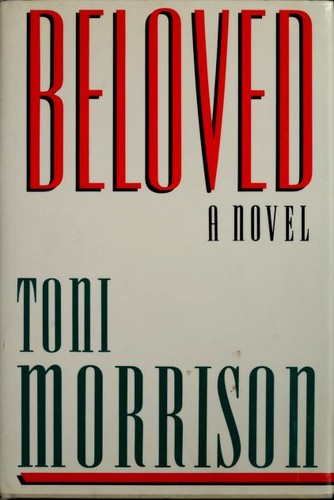 Beloved 8.5/10Toni Morrison · 1987 AD · United States
Morrison's 1987 novel confronts slavery's lasting trauma through the ghost of a child a mother killed to save from bondage, the novel that secured Morrison's Nobel and the American canon's reckoning with its founding wound.
- 7
 Pride and Prejudice 8/10Jane Austen · 1813 AD · England
Austen's 1813 novel of manners, Elizabeth Bennet, ironic social observation, and the model of free indirect discourse every later English novelist has studied.
- 8
 Wuthering Heights 8/10Emily Brontë · 1847 AD · England
Emily Brontë's only novel, the most violently Romantic love story in English fiction, a book whose darkness took more than a generation for Victorian critics to accept.
- 9
 Poems 8/10Emily Dickinson · 1890 AD · United States
Emily Dickinson's nearly 1,800 poems, almost entirely unpublished in her lifetime, the most original female poetic voice in American literature and one of its greatest regardless of gender.
- 10
 Emily Dickinson · 1890 AD · United States
The collected lyrics of Emily Dickinson, compressed, enigmatic, deploying slant rhyme and dashes to capture metaphysical insight at a density no American poet has matched since.
- Free Download
Get the Great Books Wall Poster
All 350 books across 4,100 years, organized by era, with a checkbox for each. Print it, frame it, mark your progress. Enter your email and we'll send it over, plus the occasional reading path worth your time. No noise.
Free forever. Unsubscribe anytime. We never share your email.
- 11
 Fragments/Poems 7.5/10Sappho · 600 BC · Greece (Lesbos)
Sappho's surviving fragments, the invention of the personal lyric voice in Western poetry; Plato called her "the Tenth Muse" and no later poet has quite caught up.
- 12
 The Golden Notebook 7.5/10Doris Lessing · 1962 AD · Britain (Zimbabwe)
Lessing's 1962 feminist classic, the fragmented narrative of Anna Wulf in four color-coded notebooks; the novel that earned Lessing the 2007 Nobel.
- 13
 Selected Stories 7.5/10Alice Munro · 2012 AD · Canada
Munro's selected stories, small-town Ontario rendered with Chekhovian precision; the 2013 Nobel Committee called her "the master of the contemporary short story."
- 14
 Secondhand Time 7.5/10Svetlana Alexievich · 2013 AD · Belarus
Alexievich's oral history of Soviet collapse, hundreds of edited testimonies into a choral portrait no single narrator could construct; documentary literature as a new art form, recognized with the 2015 Nobel.
- 15
 Nadine Gordimer · 1979 AD · South Africa
Gordimer's novels of apartheid South Africa, the moral predicaments of white liberal conscience under institutionalized racism; 1991 Nobel laureate.
- 16
 The Vegetarian 7/10Han Kang · 2007 AD · South Korea
Han Kang's 2007 novel, a woman's refusal to eat meat triggers escalating family violence; International Booker 2016, Nobel 2024, Korea's first Nobel laureate.
- 17
 Olga Tokarczuk · 2007 AD · Poland
Tokarczuk's novels, Flights's fragmentary meditation on movement, and The Books of Jacob's panorama of eighteenth-century Eastern European Jewry; 2018 Nobel.
- 18
 The Years 7/10Annie Ernaux · 2008 AD · France
Ernaux's 2008 collective autobiography, postwar French history through the lens of one woman's memory; the 2022 Nobel and a new form Ernaux essentially invented.
- 19
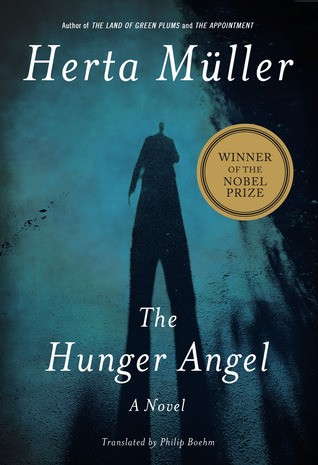 The Hunger Angel 7/10Herta Müller · 2009 AD · Germany (Romania)
Müller's novel of post-war Soviet labor camps, Romanian-German memory rendered in haunted prose; the 2009 Nobel and the most formally refined Holocaust-adjacent novel of its decade.
- 20
 The Piano Teacher 6.5/10Elfriede Jelinek · 1983 AD · Austria
Jelinek's 1983 novel of Austrian patriarchy and repression, the 2004 Nobel laureate's most widely read fiction, later filmed by Haneke.
Get the Great Books Wall Poster
All 350 books across 4,100 years, organized by era, with a checkbox for each. Print it, frame it, mark your progress. Enter your email and we'll send it over, plus the occasional reading path worth your time. No noise.
Free forever. Unsubscribe anytime. We never share your email.