The 20 Oldest Books Ever Written
From cuneiform tablets pressed into wet clay in 2100 BC to the Athenian theatre of the fifth century: the deep beginning of literature.
"Oldest" is a slippery word for a book. The Hebrew Bible contains material that may be older than anything else on this list, but as a finished text it dates from later. The Vedas were composed in oral form for centuries before they were written down. Homer's epics were sung by bards before any version of them was committed to writing. Even The Epic of Gilgamesh, our oldest entry, exists in multiple cuneiform recensions written across more than a thousand years.
What we mean by "oldest" here is something narrower and more useful: the earliest surviving works of literature whose composition can be reasonably dated, in the form in which they have come down to us. By that standard the list begins around 2100 BC with Gilgamesh, pressed into wet clay tablets in cuneiform script, then baked, then buried, then dug up by Victorian archaeologists in the ruins of Nineveh and only deciphered in the late nineteenth century. It ends in the late fifth century BC, when the great Athenian theatre of Aeschylus, Sophocles, and Euripides was producing the plays that would define Western tragedy for the next twenty-five hundred years.
What is striking about this list is how distributed it is across world civilizations. Mesopotamia produced Gilgamesh. India produced the Rigveda and the Upanishads. China produced the I Ching and the Analects. Greece produced Homer, Hesiod, and Sappho. The first thousand years of recorded literature were a polycentric phenomenon, none of these traditions knew much about the others, and yet they were all, simultaneously, inventing the basic vocabulary of human civilization: heroism, mortality, justice, the divine, the political community, the inner life.
Reading these works is the closest you can get to the experience of being a citizen of the ancient world, to seeing what its writers thought worth recording, and what they assumed their readers already knew. For the Western canon's longer arc, see the 50 greatest books of all time.
Buy links are affiliate links. As an Amazon Associate I earn from qualifying purchases. We are also a Bookshop.org affiliate and earn from qualifying purchases there.
Get the Great Books Wall Poster
All 350 books across 4,100 years, organized by era, with a checkbox for each. Print it, frame it, mark your progress. Enter your email and we'll send it over, plus the occasional reading path worth your time. No noise.
Free forever. Unsubscribe anytime. We never share your email.
- 1
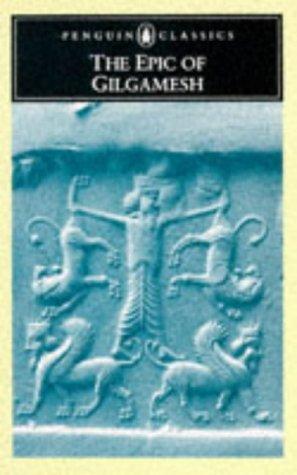 The Epic of Gilgamesh 10/10Anonymous · 2100 BC · Mesopotamia
Humanity's oldest surviving long poem, written on clay tablets four thousand years before paper, the source of every later story about a hero confronting his own death.
- 2
 The Rigveda 8/10Various Vedic poets · 1500 BC · India
The oldest Hindu text and the foundation of Indian civilization, 1,028 Vedic hymns that shaped three thousand years of South Asian religion, philosophy, and poetry.
- 3
 The I Ching 7.5/10Attr. King Wen · 1000 BC · China
The oldest Chinese classic, 64 hexagrams and three thousand years of continuous use; Leibniz credited its binary structure as inspiration for modern binary arithmetic.
- 4
 The Upanishads 8/10Various sages · 800 BC · India
India's foundational metaphysical treatises, Brahman, Atman, karma, texts that shaped not only Hinduism but Schopenhauer, Emerson, and the entire modern Western encounter with Eastern thought.
- 5
 The Iliad 10/10Homer · 750 BC · Greece
Homer founded Western literature in this poem, a portrait of human rage so exact that no later epic, from Virgil to Tolstoy, has escaped its shadow.
- 6
 The Odyssey 10/10Homer · 725 BC · Greece
The original journey narrative, its word entered every European language, and its plot architecture still structures storytelling from Joyce to Pixar three thousand years later.
- 7
 Theogony 8/10Hesiod · 700 BC · Greece
Hesiod's genealogy of the Greek gods, the mythological framework on which all Greek literature was built, and the text Herodotus said gave the Greeks their religion.
- 8
 Works and Days 7.5/10Hesiod · 700 BC · Greece
Hesiod's seventh-century BC practical-wisdom poem, the Five Ages of Man, agricultural instruction, and the first European work of moral didactic verse; a direct model for Virgil.
- 9
 Fragments/Poems 7.5/10Sappho · 600 BC · Greece (Lesbos)
Sappho's surviving fragments, the invention of the personal lyric voice in Western poetry; Plato called her "the Tenth Muse" and no later poet has quite caught up.
- 10
 Fragments 8/10Heraclitus · 500 BC · Greece (Ephesus)
Heraclitus's surviving fragments introduced the Logos, the flux doctrine, and the unity of opposites, concepts that shaped Plato, Hegel, Nietzsche, and Heidegger.
- Free Download
Get the Great Books Wall Poster
All 350 books across 4,100 years, organized by era, with a checkbox for each. Print it, frame it, mark your progress. Enter your email and we'll send it over, plus the occasional reading path worth your time. No noise.
Free forever. Unsubscribe anytime. We never share your email.
- 11
 The Analects 10/10Confucius · 500 BC · China
A collection of sayings that became the operating manual of East Asian civilization for two and a half millennia, shaping ethics, governance, and education across China, Korea, and Japan.
- 12
 The Art of War 8/10Sun Tzu · 500 BC · China
Sun Tzu's fifth-century BC Chinese treatise, the most influential military text ever written, still read in every war college, business school, and corporate strategy manual.
- 13
 Odes 7/10Pindar · 475 BC · Greece
Pindar's victory odes, the greatest ancient Greek choral lyric poet, whose elevated diction and dense imagery set the standard for the ode as a major literary form.
- 14
 The Persians 7/10Aeschylus · 472 BC · Greece (Athens)
Aeschylus's 472 BC play, the earliest surviving Greek tragedy, astonishingly sympathetic to the Persian enemy Athens had just defeated at Salamis.
- 15
 Prometheus Bound 8/10Aeschylus (attr.) · 460 BC · Greece (Athens)
Attributed to Aeschylus, the Titan punished for giving fire to humanity; the archetype of rebellion against divine tyranny that shaped Romanticism, Marx, and every modern revolutionary.
- 16
 The Oresteia 9.5/10Aeschylus · 458 BC · Greece (Athens)
Aeschylus's trilogy traces the birth of justice itself, the moment a civilization replaces blood vengeance with the institution of the law court.
- 17
 Antigone 9/10Sophocles · 441 BC · Greece (Athens)
Sophocles's drama of a woman who defies the king to bury her brother, the founding Western statement of conscience against the state, debated every century since.
- 18
 The Histories 9/10Herodotus · 440 BC · Greece
Herodotus invented history writing in this sprawling account of the Persian Wars, the first European prose work to ask not just what happened but why.
- 19
 Medea 9/10Euripides · 431 BC · Greece (Athens)
Euripides's play of a woman who murders her own children to revenge a faithless husband, the most disturbing portrait of female rage in ancient literature.
- 20
 Oedipus Rex 10/10Sophocles · 429 BC · Greece (Athens)
Sophocles wrote the play that defined tragedy itself, the form Aristotle dissected, Freud diagnosed, and every dramatist since has tried to escape.
Get the Great Books Wall Poster
All 350 books across 4,100 years, organized by era, with a checkbox for each. Print it, frame it, mark your progress. Enter your email and we'll send it over, plus the occasional reading path worth your time. No noise.
Free forever. Unsubscribe anytime. We never share your email.