The Greatest Russian Literature
Tolstoy, Dostoevsky, Pushkin, Gogol, Chekhov, Solzhenitsyn: the most intellectually serious literary tradition produced by any modern nation.
Russian literature has an unusual history. For most of European history, Russia was a cultural periphery, a territory somewhere east of the places where novels and operas got written. Then, in the space of about a century, beginning in the 1820s with Pushkin and Gogol and ending in the 1910s with Chekhov and the late Tolstoy, Russia produced what is by any reasonable measure the single most intellectually serious literary tradition of the modern world. Tolstoy, Dostoevsky, Turgenev, Lermontov, Pushkin, Goncharov, Leskov, Chekhov, the names run on, and every one of them wrote books that permanently changed what the novel could do.
What makes the Russian novel distinctive is its seriousness about first-order questions. English and French novels of the same period are often brilliantly skillful at tracing the social lives of their characters. The Russians, by contrast, seem unable to write a novel without asking whether God exists, whether suffering has meaning, whether political violence is ever justified, whether the intelligentsia has any business existing at all. This is either exhausting or intoxicating, depending on your temperament, but no serious reader finishes The Brothers Karamazov or Anna Karenina believing that the novel is a lightweight form.
The twentieth century disrupted this tradition savagely. The Revolution, the Civil War, the famines, the Terror, the Gulag, and the long Soviet period scattered Russia's writers into exile, silence, or the labor camps. But even under those conditions the tradition produced Bulgakov, Nabokov (writing in English but unmistakably Russian), Pasternak, Mandelstam, Akhmatova, Solzhenitsyn, and Brodsky. The list below includes all the Russian-language works in our catalog, Imperial, Soviet, and émigré, ranked by Great Books of Mankind score.
For a broader European frame, see the greatest books of the 19th century.
Buy links are affiliate links. As an Amazon Associate I earn from qualifying purchases. We are also a Bookshop.org affiliate and earn from qualifying purchases there.
Get the Great Books Wall Poster
All 350 books across 4,100 years, organized by era, with a checkbox for each. Print it, frame it, mark your progress. Enter your email and we'll send it over, plus the occasional reading path worth your time. No noise.
Free forever. Unsubscribe anytime. We never share your email.
- 1
 War and Peace 10/10Leo Tolstoy · 1869 AD · Russian Empire
Tolstoy's twelve-hundred-page panorama of Russia under Napoleon, the largest, fullest, most generous novel ever written, and the standard against which all later epics are measured.
- 2
 The Brothers Karamazov 10/10Fyodor Dostoevsky · 1880 AD · Russian Empire
Dostoevsky's final novel and his summation, a murder mystery, a theological argument, and a portrait of human freedom that Freud called the most magnificent novel ever written.
- 3
 Crime and Punishment 9.5/10Fyodor Dostoevsky · 1866 AD · Russian Empire
Dostoevsky's psychological novel of a murder and its aftermath, the work that inaugurated the modern novel of conscience and inspired everyone from Nietzsche to Kafka.
- 4
 Anna Karenina 9/10Leo Tolstoy · 1877 AD · Russian Empire
Tolstoy's other masterpiece, a portrait of adultery, family, and faith whose opening sentence is the most famous first line in fiction.
- 5
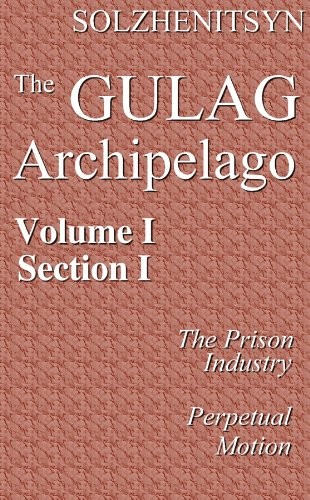 Aleksandr Solzhenitsyn · 1973 AD · Soviet Union
Solzhenitsyn's three-volume documentary indictment of the Soviet camp system, the book whose publication in 1973 ended Western intellectual sympathy with communism.
- 6
 Notes from Underground 8.5/10Fyodor Dostoevsky · 1864 AD · Russian Empire
Dostoevsky's 1864 novella, the first existentialist work in fiction; the Underground Man's corrosive monologue is the taproot of Nietzsche, Kafka, and Camus.
- 7
 The Idiot 8.5/10Fyodor Dostoevsky · 1869 AD · Russian Empire
Dostoevsky's attempt to portray a "positively beautiful man", a Christ-like prince destroyed by the corrupt society into which he enters.
- 8
 Demons 8.5/10Fyodor Dostoevsky · 1872 AD · Russian Empire
Dostoevsky's darkly prophetic 1872 novel foresaw, with uncanny precision, the revolutionary nihilism that would produce the totalitarian horrors of the twentieth century.
- 9
 Collected Stories 8.5/10Anton Chekhov · 1888 AD · Russian Empire
Chekhov's stories and plays, The Cherry Orchard, Three Sisters, Uncle Vanya, perfected an art of suggestion and understatement that shaped every later short-story writer.
- 10
 The Master and Margarita 8.5/10Mikhail Bulgakov · 1967 AD · Soviet Union
Bulgakov's wildly inventive novel, the Devil arrives in Stalinist Moscow, generally considered the greatest novel to emerge from the Soviet period, despite being unpublished until 1967.
- 11
 Dead Souls 8/10Nikolai Gogol · 1842 AD · Russian Empire
Gogol's 1842 satirical panorama of Russian provincial life, the foundational work of Russian prose fiction and the source of much of Dostoevsky's comedy and indignation.
- 12
 Leo Tolstoy · 1886 AD · Russian Empire
Tolstoy's compact novella on dying, the most unflinching confrontation with mortality in world fiction, and the work Tolstoy himself thought his best.
- 13
 Doctor Zhivago 8/10Boris Pasternak · 1957 AD · Soviet Union
Pasternak's 1957 novel of a poet-physician through the Russian Revolution, the book he was forced by Soviet authorities to decline the Nobel Prize for; its smuggling out of Russia is a story in itself.
- 14
 Quo Vadis 6.5/10Henryk Sienkiewicz · 1896 AD · Poland (Russian Empire)
Sienkiewicz's 1896 Rome-under-Nero epic, an international bestseller, the foundation of multiple film adaptations, and the book that secured the 1905 Nobel Prize.
- 15
 And Quiet Flows the Don 6.5/10Mikhail Sholokhov · 1928 AD · Soviet Union
Sholokhov's epic of Don Cossacks through revolution and civil war, the 1965 Nobel and the most widely read Soviet novel of its era, though its authorship has been contested.
- 16
 Ivan Bunin · 1930 AD · Russia (émigré)
Bunin's autobiographical novel and his late story collection, in 1933 the first Russian Nobel laureate; lyrical prose that preserved pre-Revolutionary Russia in exile.
Get the Great Books Wall Poster
All 350 books across 4,100 years, organized by era, with a checkbox for each. Print it, frame it, mark your progress. Enter your email and we'll send it over, plus the occasional reading path worth your time. No noise.
Free forever. Unsubscribe anytime. We never share your email.