The Greatest Works of Chinese Literature
From the Daoist meditations of Laozi and Zhuangzi and the moral philosophy of Confucius to the Four Great Classical Novels and the Nobel-winning fiction of Mo Yan: the longest continuous literary tradition on earth.
Chinese literature has the longest continuous written tradition of any civilization on earth. The oracle bones of the Shang dynasty, inscribed around 1200 BC, are the earliest Chinese writing we possess; the language has been in continuous use ever since, and the literate elite of every dynasty from the Han to the Qing studied the same canonical texts, the Five Classics and the Four Books, in roughly the same form. No European reader has ever stood in a comparable relation to Homer; no European text has shaped a continuous civilization for three thousand years in the way that the I Ching and the Analects have shaped China.
The tradition divides, roughly, into three great periods. The first is the classical age of the Zhou and the Warring States, when nearly all of the foundational works of Chinese thought were produced: the I Ching, the Tao Te Ching, the Analects, the Zhuangzi, and Sun Tzu's Art of War. These books did for China what the Hebrew Bible and the Greek philosophers together did for the West, they founded a civilization's vocabulary for thinking about ethics, politics, war, and the cosmos. They are still in print, still studied, still quoted in modern Chinese political speech.
The second great period is the high age of the classical novel, the Ming and early Qing dynasties, roughly 1370 to 1791. In this span the Chinese produced the four works known collectively as the Four Great Classical Novels (四大名著): Romance of the Three Kingdoms, Water Margin, Journey to the West, and Dream of the Red Chamber. Taken together they are one of the greatest novelistic achievements in any language. Romance is the founding work of historical fiction. Water Margin invented the genre of the righteous outlaw and seeded a thousand years of martial fiction. Journey to the West produced the Monkey King, the most globally recognizable character in East Asian storytelling. And Dream of the Red Chamber, written by Cao Xueqin in the eighteenth century, is regarded by most Chinese readers and most foreign sinologists as simply the greatest novel ever written in Chinese, a work of psychological subtlety and lyrical beauty comparable to anything in Proust or Tolstoy.
The third period is modern. After 1919 the Chinese literary world broke decisively with classical Chinese as a literary language and began writing in the vernacular. Lu Xun, Lao She, Eileen Chang, and dozens of others produced the first body of modern Chinese fiction; Mo Yan became the first Chinese-citizen Nobel laureate in 2012. The list below ranks the Chinese-tradition works in our catalog, by Great Books of Mankind score, with ties broken chronologically. It is the entry point for anyone who wants to read the literature of the civilization that has produced more readers, over more centuries, than any other.
Buy links are affiliate links. As an Amazon Associate I earn from qualifying purchases. We are also a Bookshop.org affiliate and earn from qualifying purchases there.
Get the Great Books Wall Poster
All 350 books across 4,100 years, organized by era, with a checkbox for each. Print it, frame it, mark your progress. Enter your email and we'll send it over, plus the occasional reading path worth your time. No noise.
Free forever. Unsubscribe anytime. We never share your email.
- 1
 The Analects 10/10Confucius · 500 BC · China
A collection of sayings that became the operating manual of East Asian civilization for two and a half millennia, shaping ethics, governance, and education across China, Korea, and Japan.
- 2
 Dao De Jing 9/10Laozi (attr.) · 400 BC · China
Eighty-one short verses that founded Daoism, the second pillar of Chinese philosophy, paradoxical, lapidary, and quietly the most influential short book ever written.
- 3
 Cao Xueqin · 1791 AD · China
Widely regarded as the greatest Chinese novel ever written, Cao Xueqin's eighteenth-century portrait of an aristocratic family's decline sustains an entire field of Chinese literary criticism (Hongxue) devoted to it.
- 4
 Journey to the West 8.5/10Wu Cheng'en · 1592 AD · China
China's most globally influential novel, Wu Cheng'en's sixteenth-century pilgrimage epic produced the Monkey King, whose adventures still shape East Asian popular culture from Dragon Ball to Hong Kong cinema.
- 5
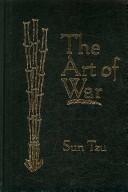 The Art of War 8/10Sun Tzu · 500 BC · China
Sun Tzu's fifth-century BC Chinese treatise, the most influential military text ever written, still read in every war college, business school, and corporate strategy manual.
- 6
 Luo Guanzhong · 1330 AD · China
One of China's Four Great Classical Novels, a fourteenth-century historical epic that has shaped East Asian understanding of loyalty, strategy, and political cunning for six hundred years.
- 7
 The I Ching 7.5/10Attr. King Wen · 1000 BC · China
The oldest Chinese classic, 64 hexagrams and three thousand years of continuous use; Leibniz credited its binary structure as inspiration for modern binary arithmetic.
- 8
 Shi Nai'an · 1370 AD · China
One of China's Four Great Classical Novels, a Ming-dynasty tale of 108 outlaw-heroes that founded Chinese martial fiction and remains a living source for opera, manga, and video games.
- 9
 Mo Yan · 1987 AD · China
Mo Yan's hallucinatory novels of rural Shandong, myth and folk tradition and the history of twentieth-century China; the 2012 Nobel and China's first laureate.
- 10
 The Good Earth 6.5/10Pearl S. Buck · 1931 AD · United States (about China)
Buck's 1931 Pulitzer and 1938 Nobel novel, Chinese peasant life rendered for Western readers; a vital cultural bridge between the United States and pre-revolutionary China.
- 11
 Soul Mountain 6.5/10Gao Xingjian · 1990 AD · China/France
Gao Xingjian's 2000 Nobel-winning novel, the Chinese writer who fled in exile, composed in France, and became China's first Nobel laureate in Literature.
Get the Great Books Wall Poster
All 350 books across 4,100 years, organized by era, with a checkbox for each. Print it, frame it, mark your progress. Enter your email and we'll send it over, plus the occasional reading path worth your time. No noise.
Free forever. Unsubscribe anytime. We never share your email.