24 Books That Changed the World
Not just great books: books whose publication had documented world-historical consequences. Wars, revolutions, religions, sciences, economies.
Most great books change individual readers. A small number of books change civilizations. The list below is restricted to that smaller set: works whose publication can be tied, with documentary evidence, to world-historical consequences. The Bible founded a civilization. The Quran founded another one. The Wealth of Nations reorganized European economic policy within a generation. On the Origin of Species ended teleology in biology and forced every Western religion to renegotiate its account of human origins. The Communist Manifesto, forty pages long, set in motion a chain of events that produced the Soviet Union, the Chinese Cultural Revolution, the Cold War, and the deaths of approximately one hundred million people.
The list is ordered chronologically rather than by ranking. Reading it as a timeline produces a useful picture of how Western civilization actually got assembled. The first three centuries of our era are dominated by sacred texts, the Hebrew Bible canon, the Christian New Testament, the Quran, that founded the religious orders within which all subsequent intellectual life would be conducted. The next thousand years are quieter, with Aquinas providing the great medieval synthesis. Then the Renaissance and Reformation reopen everything, and from Machiavelli forward the books that change the world become more numerous and faster-acting: Hobbes, Locke, Newton, Smith, Rousseau, Marx, Darwin, Freud, Einstein.
The twentieth century is unusual in that several of the most consequential books on the list were responses to catastrophes already in motion: The Road to Serfdom (Hayek's warning against postwar collectivism), The Second Sex (Beauvoir's diagnosis of women's condition), 1984 (Orwell's anatomy of the totalitarian state), and The Gulag Archipelago (Solzhenitsyn's documentation of what one of those states had actually done). These books changed the world by changing what their readers were able to see clearly.
For the broader canon these books sit within, see the 50 greatest books of all time.
Buy links are affiliate links. As an Amazon Associate I earn from qualifying purchases. We are also a Bookshop.org affiliate and earn from qualifying purchases there.
Get the Great Books Wall Poster
All 350 books across 4,100 years, organized by era, with a checkbox for each. Print it, frame it, mark your progress. Enter your email and we'll send it over, plus the occasional reading path worth your time. No noise.
Free forever. Unsubscribe anytime. We never share your email.
- 1
 The Analects 10/10Confucius · 500 BC · China
A collection of sayings that became the operating manual of East Asian civilization for two and a half millennia, shaping ethics, governance, and education across China, Korea, and Japan.
- 2
 Dao De Jing 9/10Laozi (attr.) · 400 BC · China
Eighty-one short verses that founded Daoism, the second pillar of Chinese philosophy, paradoxical, lapidary, and quietly the most influential short book ever written.
- 3
 Nicomachean Ethics 9.5/10Aristotle · 340 BC · Greece (Athens)
Aristotle's treatise on how to live well, the foundational text of Western moral philosophy and still, after twenty-three centuries, the clearest account of human flourishing ever written.
- 4
 Various (traditional) · 33 AD · Israel/Roman Empire
The single most influential book in human history, foundation of Western art, law, ethics, and language for two thousand years, and still the most widely read book on Earth.
- 5
 The Quran 10/10Revealed to Muhammad · 632 AD · Arabia
The book that built Islamic civilization, recited from Mecca to Mali within a century of its revelation, and read by more than a billion people today.
- 6
 Summa Theologica 9.5/10Thomas Aquinas · 1274 AD · Italy
Aquinas's three-thousand-page synthesis of Christianity and Aristotle, the intellectual architecture of the Catholic Church and the high-water mark of medieval thought.
- 7
 The Prince 9.5/10Niccolò Machiavelli · 1532 AD · Italy (Florence)
Machiavelli stripped the moral pretense from political power and produced the founding text of modern political realism, read every century, denied every century, applied every century.
- 8
 Martin Luther · 1534 AD · Germany
Luther's German Bible broke the Catholic Church's monopoly on scripture, standardized modern German, and lit the fuse on the Reformation.
- 9
 47 scholars, commissioned by King James I · 1611 AD · England
The most influential English book ever published, its cadences shaped Shakespeare's afterlife, Lincoln's speeches, and nearly all subsequent English prose.
- 10
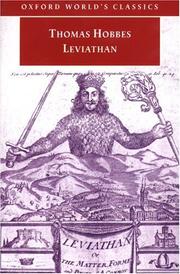 Leviathan 9/10Thomas Hobbes · 1651 AD · England
Hobbes built modern political philosophy from a single brutal premise, life without government is nasty, brutish, and short, and the state exists to prevent it.
- Free Download
Get the Great Books Wall Poster
All 350 books across 4,100 years, organized by era, with a checkbox for each. Print it, frame it, mark your progress. Enter your email and we'll send it over, plus the occasional reading path worth your time. No noise.
Free forever. Unsubscribe anytime. We never share your email.
- 11
 Isaac Newton · 1687 AD · England
Newton's three-volume foundation of modern physics, the book that proved the heavens and the earth obey the same mathematical laws, and rewrote Western science overnight.
- 12
 John Locke · 1689 AD · England
Locke's founding text of liberal democratic theory, natural rights to life, liberty, and property, and the right to overthrow governments that violate them.
- 13
 The Social Contract 8.5/10Jean-Jacques Rousseau · 1762 AD · France/Geneva
Rousseau's 1762 treatise, "Man is born free, and everywhere he is in chains", set the intellectual charge that detonated in the French Revolution twenty-seven years later.
- 14
 The Wealth of Nations 9.5/10Adam Smith · 1776 AD · Britain (Scotland)
Adam Smith's eighteenth-century anatomy of how markets work, the founding text of modern economics and the intellectual scaffolding of every capitalist economy on earth.
- 15
 Democracy in America 9/10Alexis de Tocqueville · 1835 AD · France (about USA)
Tocqueville's nineteenth-century French analysis of the young American republic, still the most penetrating book ever written about how democracy actually works.
- 16
 The Communist Manifesto 9.5/10Karl Marx & Friedrich Engels · 1848 AD · Germany/Belgium
Forty pages that reshaped the twentieth century, Marx and Engels wrote the most consequential political pamphlet in modern history, for better and for worse.
- 17
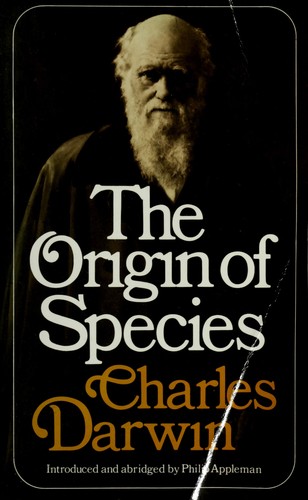 On the Origin of Species 9.5/10Charles Darwin · 1859 AD · England
Darwin's calm, careful book that ended teleology in biology and gave the modern world its only coherent account of where we came from.
- 18
 Das Kapital 9/10Karl Marx · 1867 AD · Germany/Britain
Marx's thousand-page anatomy of capitalism, surplus value, commodity fetishism, class struggle, the foundational text of every socialist movement since 1867.
- 19
 The Interpretation of Dreams 8.5/10Sigmund Freud · 1899 AD · Austria
Freud's 1899 book founded psychoanalysis, the unconscious, the Oedipus complex, dream interpretation, and the map of the modern mind that the twentieth century couldn't stop arguing with.
- 20
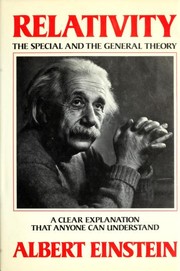 Albert Einstein · 1916 AD · Germany / Switzerland
Einstein's popular 1916 exposition of relativity, reshaping humanity's understanding of space, time, gravity, and the structure of the universe itself.
- 21
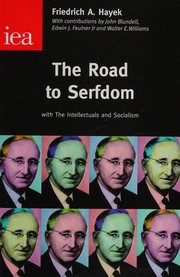 The Road to Serfdom 8.5/10Friedrich Hayek · 1944 AD · Britain (Austria)
Hayek's 1944 warning, that central planning leads inevitably to totalitarianism, became the intellectual foundation of postwar classical liberalism and the Thatcher–Reagan revolution.
- 22
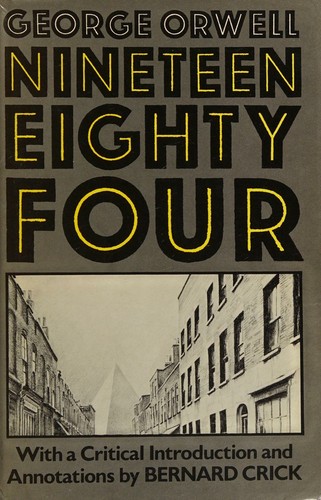 1984 9.5/10George Orwell · 1949 AD · Britain
Orwell's dystopia gave the language Big Brother, doublethink, thoughtcrime, and Newspeak, the most useful political vocabulary the twentieth century produced.
- 23
 The Second Sex 8.5/10Simone de Beauvoir · 1949 AD · France
Beauvoir's 1949 founding text of modern feminism, "One is not born, but rather becomes, a woman", and the most rigorous philosophical analysis of women's condition ever attempted.
- 24
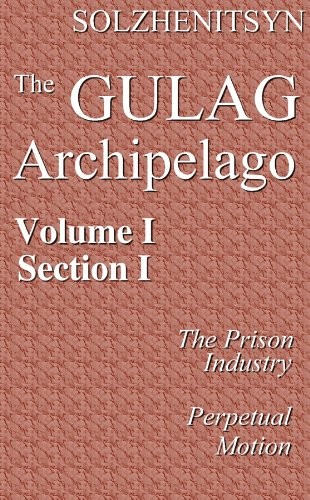 Aleksandr Solzhenitsyn · 1973 AD · Soviet Union
Solzhenitsyn's three-volume documentary indictment of the Soviet camp system, the book whose publication in 1973 ended Western intellectual sympathy with communism.
Get the Great Books Wall Poster
All 350 books across 4,100 years, organized by era, with a checkbox for each. Print it, frame it, mark your progress. Enter your email and we'll send it over, plus the occasional reading path worth your time. No noise.
Free forever. Unsubscribe anytime. We never share your email.