Where to Buy
As an Amazon Associate I earn from qualifying purchases. Thanks for supporting the project.
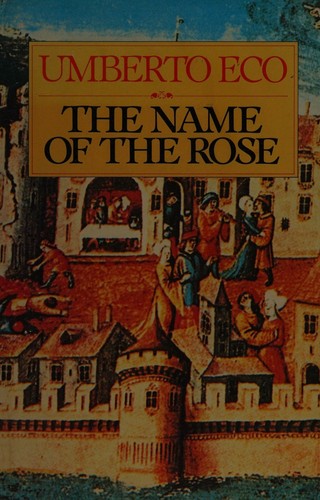
The Name of the Rose
8Umberto Eco
Ranked 196th of 350 in the Great Books of Mankind catalog, scored 8/10. How we rank
Eco's 1980 medieval murder mystery, a Benedictine abbey, William of Baskerville as Sherlock Holmes, and semiotics disguised as a bestseller; sold over 50 million copies.
Get this book
Summary & Critical Assessment (Score: 8/10)
Umberto Eco's The Name of the Rose is a remarkable feat of literary synthesis, a medieval murder mystery that doubles as an exploration of semiotics, literary theory, and the politics of knowledge. Set in a fourteenth-century Benedictine abbey, the novel deploys the conventions of detective fiction to investigate questions about the nature of signs, the dangers of interpretive certainty, and the relationship between laughter and power. Its enormous international success demonstrated that intellectually demanding fiction could reach a mass audience, and it remains a influential postmodern historical novels ever written.
Appearing in 1980, the novel arrived in a post-Vatican II cultural moment when the Catholic Church was itself grappling with questions of tradition, authority, and openness to the modern world. Eco, already renowned as one of Europe's leading semioticians, brought his academic expertise in medieval aesthetics and sign theory to bear on a narrative that is as much about how we read the world as it is about solving a crime. The acclaimed 1986 film adaptation starring Sean Connery brought the novel to an even wider audience and cemented its status as a breakthrough of late twentieth-century fiction.
1980
The Cold War's final decade begins. Reagan elected. Solidarity rises in Poland. Milosz wins the Nobel. Eco's Name of the Rose becomes a global bestseller. Toole's Confederacy published posthumously. Wolfe begins Book of the New Sun. John Lennon assassinated.
Awards & Adaptations
Sean Connery film (1986). International bestseller.
Recommended Edition
William Weaver (1983)