Where to Buy
As an Amazon Associate I earn from qualifying purchases. Thanks for supporting the project.
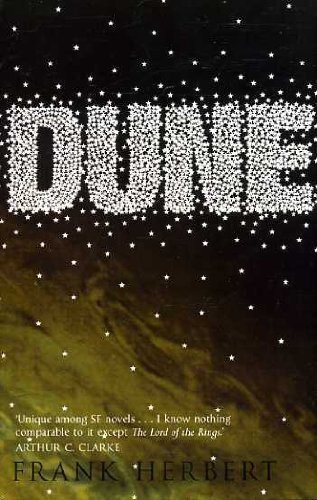
Dune
8Frank Herbert
Ranked 192nd of 350 in the Great Books of Mankind catalog, scored 8/10. How we rank
Herbert's 1965 novel, the desert planet of Arrakis, the spice, the ecology of power, generally considered the greatest science-fiction novel ever written.
Get this book
ISBN 9781101658055Summary & Critical Assessment (Score: 8/10)
Widely regarded as the greatest science fiction novel, Dune constructs an entire civilization on the desert planet of Arrakis, where control of the precious spice melange determines the fate of empires. Frank Herbert wove together themes of ecology, religion, political power, and messianic leadership into a narrative of singular complexity and imaginative scope, creating a work that transcends genre boundaries to engage with some of humanity's most persistent concerns. The novel won both the Hugo and Nebula Awards and has remained continuously in print, its influence extending across literature, film, and popular culture.
Originally composed during the Cold War era when anxieties about resource scarcity and geopolitical conflict over oil were intensifying, Dune translated contemporary concerns about ecology, imperial power, and religious fundamentalism into a richly imagined far-future setting. Denis Villeneuve's acclaimed film adaptations in 2021 and 2024 introduced Herbert's vision to new generations, confirming the novel's lasting relevance as both a thrilling adventure and a sustained meditation on the dangers of charismatic leadership and humanity's relationship with the natural world.
United States, 1965-1966
Vietnam escalation, counterculture, civil rights legislation. Herbert reimagines sci-fi. Dick asks what it means to be human. Pynchon explores paranoia. Williams's Stoner quietly appears. The Voting Rights Act passes. Malcolm X is assassinated.
Awards & Adaptations
Hugo & Nebula Awards. Villeneuve films (2021/24).
Recommended Edition
First ed. (1965)